Industry News
Home / News / Industry News / Flanged Bearings: Function, Types, and Selection Guide

Flanged Bearings: Function, Types, and Selection Guide

What Do Flanged Bearings Do

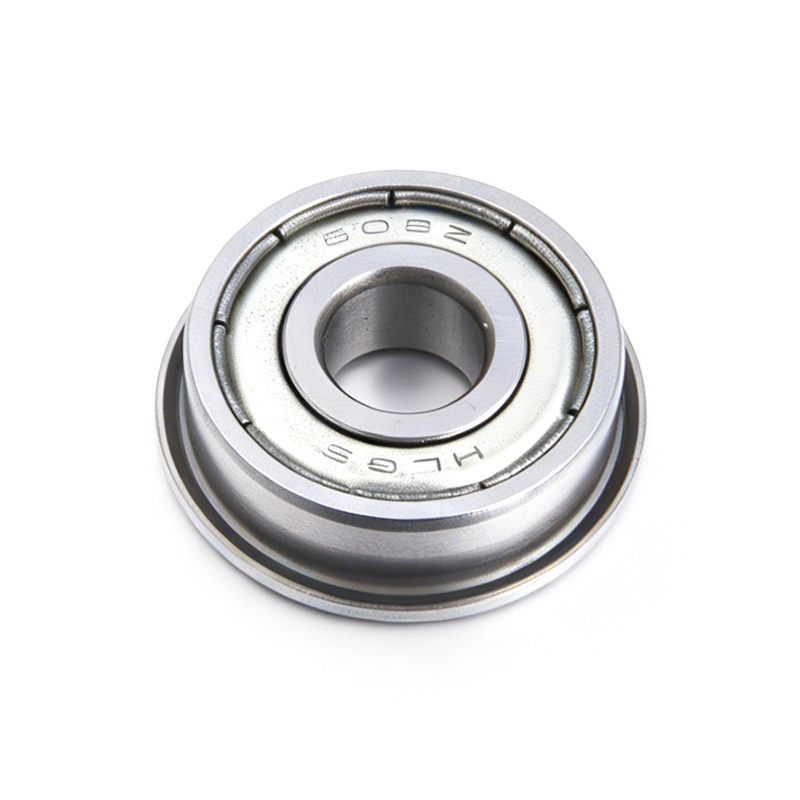
A flanged bearing supports a rotating shaft and locks it in a fixed axial position, using a built-in lip or collar (the flange) on the outer ring that bolts directly to a frame, wall, or housing. Instead of needing a separate bearing plus a mounting bracket, the flange itself becomes the mounting interface, which simplifies assembly and keeps the bearing from sliding sideways under thrust load.

In practical terms, a flanged bearing does three jobs at once: it lets the shaft spin with low friction, it carries the radial load pressing down on the shaft, and it resists axial (side-to-side) forces that would otherwise push the bearing out of place. This combination is why flanged designs show up so often in conveyors, gearboxes, pumps, and motors where the bearing has to be perpendicular-mounted rather than simply pressed onto a shaft.

How the Flange Changes Bearing Performance

The flange is not a separate bearing type on its own; it is an option added to an existing bearing, such as a ball bearing, roller bearing, or plain bushing. Adding the flange changes how the bearing behaves in three specific ways.

Axial Locking

If any force pushes along the length of the shaft, the flange acts as a shoulder that stops the bearing from shifting. This is critical in equipment that starts and stops frequently, such as conveyor drives, where repeated thrust would gradually walk an unflanged bearing out of position.

Vibration Resistance

Because the flange bolts directly to the housing, it resists loosening under vibration better than a plain interference or adhesive fit. This is one reason automotive components, which face constant vibration and heat cycling, frequently specify flanged bearings over plain press-fit designs.

Simplified Mounting

A flanged bearing can be bolted straight to a flat surface without machining a separate bore or housing pocket. This cuts assembly steps and part count, which matters on high-volume production lines and field repairs alike.

Main Types of Flanged Bearings by Internal Design

The flange can be added to several different internal bearing constructions, and the choice of internal design determines load capacity, speed rating, and cost. Four internal types are most common.

Type Load Handling Typical Use
Plain (journal) bearing Low to moderate radial, sliding contact Household appliances, light machinery
Cylindrical roller bearing High radial, moderate thrust Gearboxes, industrial drives
Spherical roller bearing High radial and axial, self-aligning Conveyors, heavy agricultural equipment
Tapered roller bearing High combined radial and thrust Vehicle hubs, heavy-duty gear drives
Comparison of common internal bearing designs used inside a flanged housing

Spherical roller bearings are especially common in flange-mounted units because their barrel-shaped rollers tolerate minor shaft misalignment, which is a frequent issue on long conveyor runs or equipment bolted to an imperfectly flat frame.

Flanged Bearing Types by Mounting Bolt Pattern

Separately from the internal rolling element, flanged bearings are also classified by how many mounting holes the flange has, since this determines how much axial and radial load the mounting itself can resist.

  • 2-bolt flange: Two holes on opposite sides, diamond or wing-shaped housing. Suited to light to medium loads and slow-rotating conveyor systems.
  • 3-bolt flange: A triangular bolt pattern that offers more resistance to rotation of the housing itself, used on moderate-load rotary equipment.
  • 4-bolt flange: A square or round pattern that gives the most stable mount, used on heavier loads and higher-vibration equipment such as pumps and fan assemblies.

As a general rule, more mounting bolts mean better resistance to twisting forces on the housing, so heavier or faster equipment tends to specify 4-bolt flanges even when the internal bearing itself would tolerate a lighter mount.

Common Applications Across Industries

Flanged bearings appear anywhere a shaft needs to be supported from a wall, frame, or plate rather than mounted inline. Typical examples include:

  1. Conveyor belt systems in material handling and baggage handling, where the bearing bolts directly to the frame rail
  2. Agricultural machinery, such as tillers and harvesters, where high vibration and dust demand a securely locked bearing
  3. Automotive components, including axles and steering assemblies, where thermal cycling and constant vibration rule out adhesive or press-fit mounting alone
  4. HVAC belt drives and fan assemblies, where the bearing must resist axial thrust from the belt tension
  5. Food processing and packaging equipment, where sealed flanged units keep contaminants out of the raceway

A commonly cited example is the F209 flanged unit, which pairs a deep groove ball bearing with a cast iron housing and is rated for combined radial and axial loads in mining, agriculture, and construction settings, illustrating how the flange and internal bearing work together in one compact assembly.

How to Choose the Right Flanged Bearing

Selecting a flanged bearing comes down to matching four factors to the application: load direction, speed, environment, and mounting space. Working through these in order avoids the most common selection mistakes.

Match the Load Type

If the application has significant axial thrust in addition to radial load, such as a belt-tensioned shaft, choose a spherical or tapered roller design rather than a plain bushing, since plain flanged bushings are best suited to light axial loads only.

Check the Speed and Temperature Range

Every flanged bearing has a maximum safe operating speed, which depends on lubrication and load. Running a bearing above its rated speed shortens its service life well before the statistically expected L10 rating life is reached.

Consider the Housing Material

Cast iron flanged housings resist wear and heavy loads well, making them a common choice for construction and mining equipment, while metal-polymer housings suit light to medium loads in cleaner environments such as electronics or household appliances.

Confirm the Bolt Pattern Fits the Frame

Before ordering, verify that the 2-bolt, 3-bolt, or 4-bolt hole spacing matches the existing frame or housing, since retrofitting a different bolt pattern onto an existing structure often costs more than simply specifying the correct flange from the start.

Recent Articles