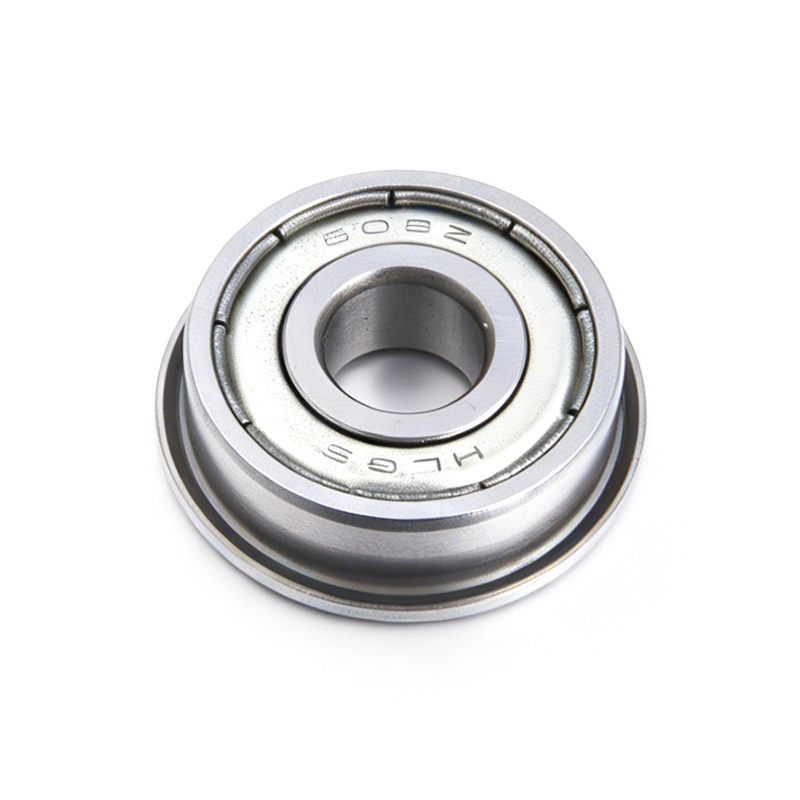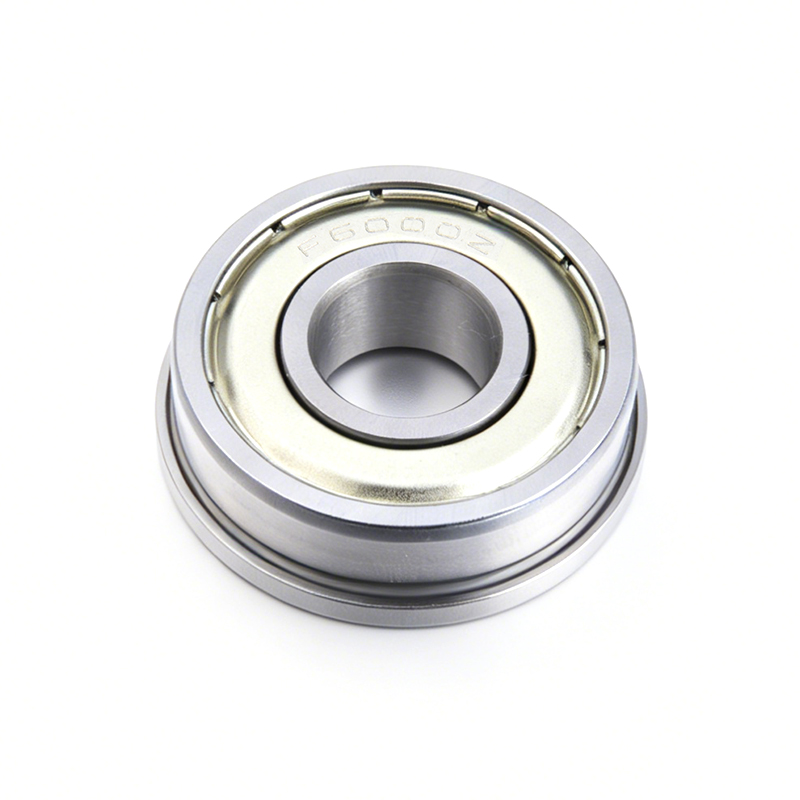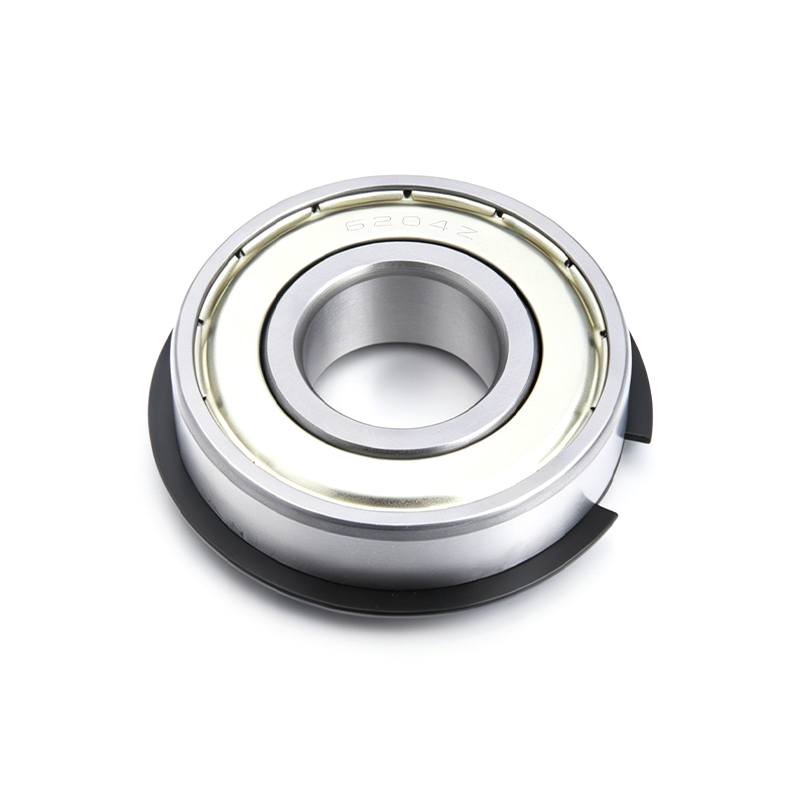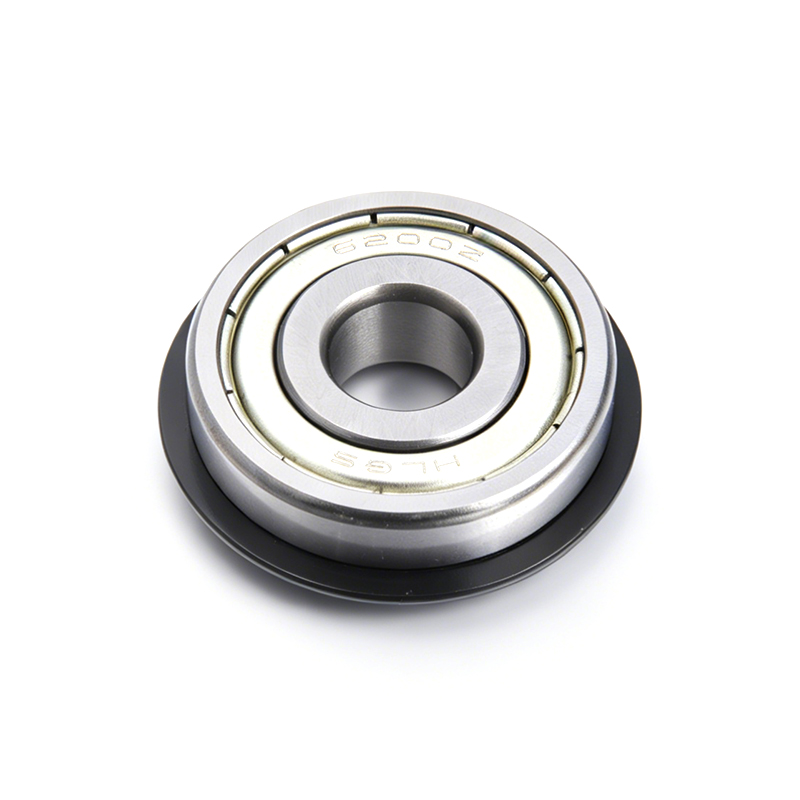
Custom Deep Groove Ball Bearings
Home / Products / Deep Groove Ball Bearings

Deep Groove Ball Bearings Manufacturers

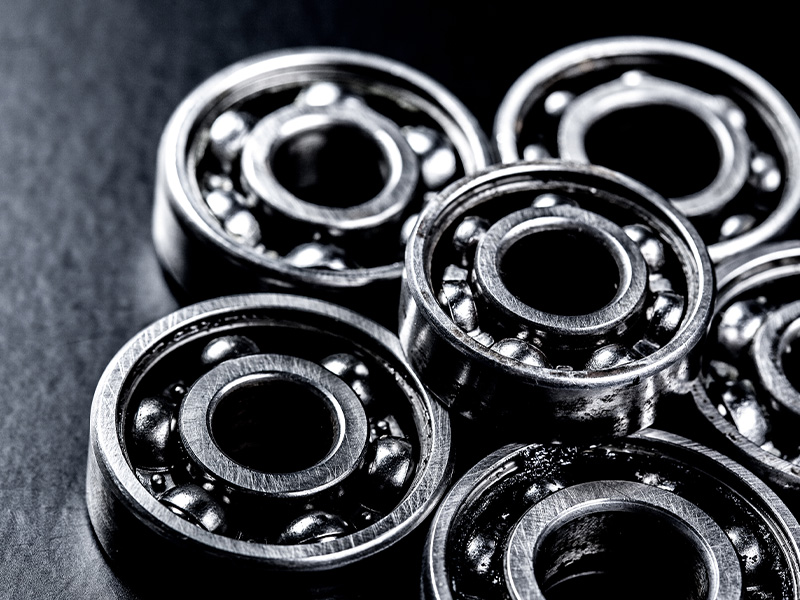
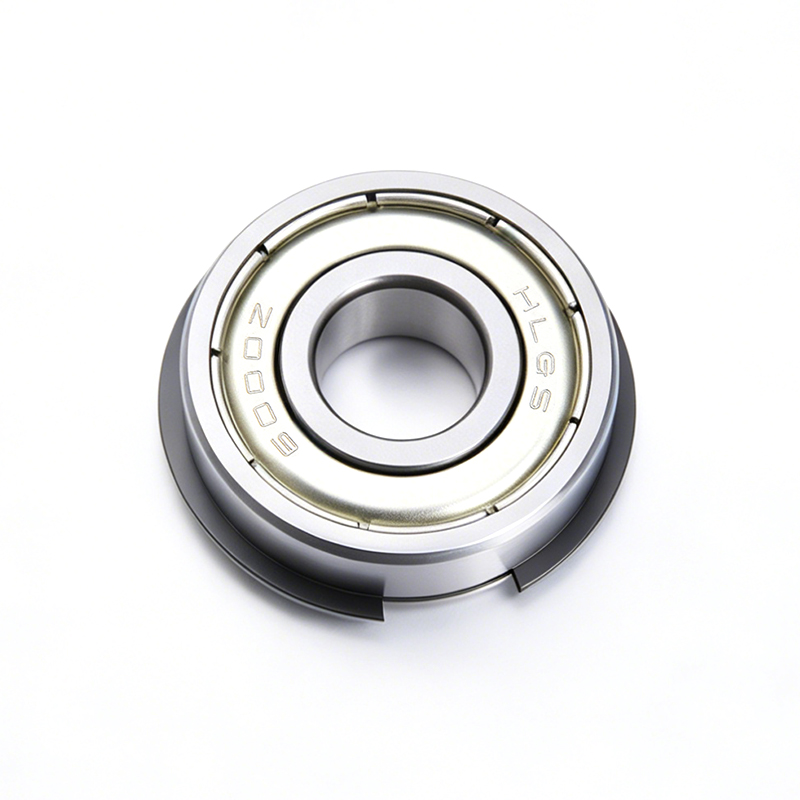
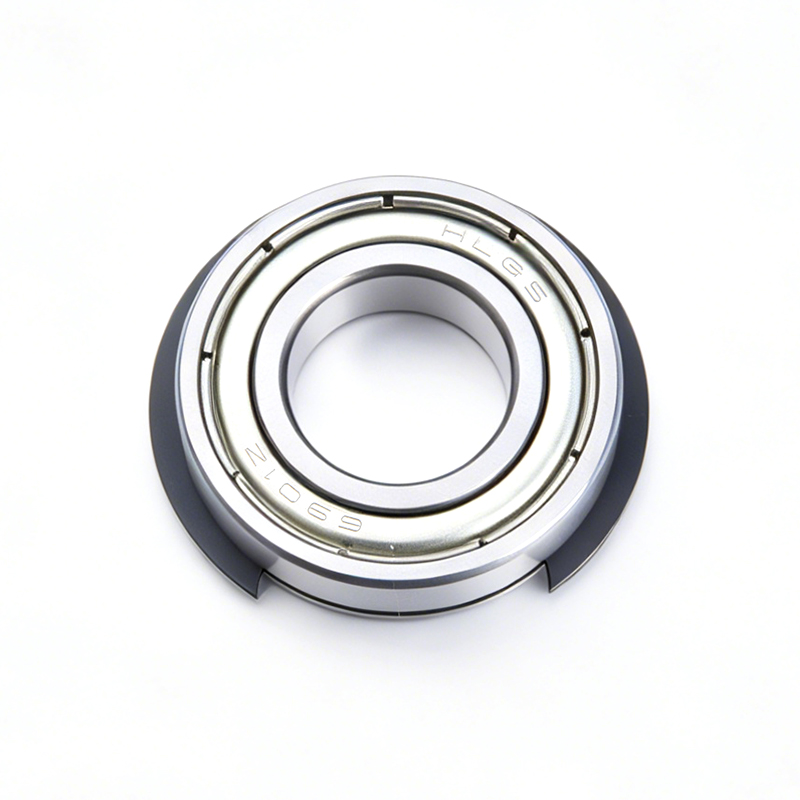
Deep groove ball bearings are the most widely used type of rolling bearings, mainly consisting of four parts: inner ring, outer ring, steel balls, and cage. Their structural feature is that the raceways of the inner and outer rings are deep groove-shaped, with steel balls rolling freely within the grooves to achieve low-friction operation.
Deep groove ball bearings have multiple significant advantages. They feature a low friction coefficient and high operational efficiency, which can reduce energy loss. They offer excellent speed performance, with standard products reaching over 10,000 revolutions per minute, and precision types even reaching tens of thousands of RPM. They have strong load-bearing capacity, capable of handling not only radial loads but also certain bidirectional axial loads. Additionally, deep groove ball bearings have a simple structure and low manufacturing cost, making them suitable for large-scale mass production. Maintenance is convenient, with sealed products enabling maintenance-free operation and open types allowing easy lubrication replenishment. Precision-grade deep groove ball bearings operate with low noise, making them ideal for equipment requiring quiet operation.
Deep groove ball bearings are used across a very wide range of applications. In the automotive industry, they are used in transmissions, wheel hubs, engine accessories, and electric drive systems for new energy vehicles. In the industrial machinery sector, they are commonly found in various motors, fans, water pumps, machine tools, and agricultural machinery. Home appliances also represent an important application scenario, including washing machines, air conditioner fans, vacuum cleaners, and other equipment. In electronic devices, hard drive motors, cooling fans, printers, and other precision equipment all require deep groove ball bearings for support. In the precision instrument field, medical devices, optical equipment, measuring instruments, and other equipment with high precision requirements will select high-precision grade deep groove ball bearings. In recent years, with the development of new technologies, demand for deep groove ball bearings in emerging fields such as drones, humanoid robots, and photovoltaic tracking mounts is also growing rapidly.
With their simple structure, reliable performance, and low cost, deep groove ball bearings have become the most widely used bearing type in the mechanical industry, accounting for more than 70% of total bearing usage. They play an important supporting role in both traditional manufacturing and emerging technology fields.

Recent Articles
  • How Do Miniature Bearings Power Precision Engineering and High-Speed Machinery

    Fundamental Definitions and Classifications of Miniature Transmission Systems In modern precision mechanical design, miniaturization has become the core driver of technological progress. From lightweight drone motors to precision handheld medical devices, miniature transmission systems play a role akin to "nerve endings" in critical functions. To understand this field, it is first necessary to define the boundaries between miniature bearings and micro bearings. Typically, we classify bearings with an outer diameter of less than 9mm and an inner diameter of 1mm to 3mm as miniature bearings, while products with even smaller outer diameters or those used in extremely compact spaces are termed "micro bearings." Although these components are tiny, they must withstand complex dynamic loads while ensuring extremely high rotational precision. The evolution of mini bearings reflects the human pursuit of space efficiency and energy optimization. In early precision watch mechanisms, miniature bearings achieved a qualitative shift in reducing frictional loss by minimizing physical contact areas. Today, in high-speed cooling fans or miniature gyroscopes, they ensure precise equipment control through high operational stability. For engineers, understanding industry standards for miniature bearings is vital. Currently, mainstream international size grading is based on ISO and ABEC standards, which specify not only inner diameter, outer diameter, and width values but also define rotational tolerances. Standardization not only reduces the difficulty of design and replacement but also makes global precision collaboration possible. To intuitively display the classification differences of these miniature components, the following table outlines their main technical parameter characteristics: Bearing Type Typical Size Characteristics (Outer Diameter) Core Application Fields Load Characteristics Standard Miniature Bearings 5mm - 9mm Household motors, fitness equipment Primarily radial load Ultra-miniature Bearings 2mm - 4mm Electronic equipment, precision instruments Light load, high speed Precision-grade Bearings 3mm - 9mm Medical devices, model aviation High rotational precision, low noise During the initial design phase, deviating from these standard sizes not only increases the cycle and cost of custom development but can also lead to premature bearing failure due to unreasonable lubrication channel design. Therefore, becoming familiar with these classifications is not just a technical requirement, but the first step in ensuring the long-term operation of miniature systems. In-depth Analysis: Ball Bearings and Geometric Diversity At the heart of miniature transmission systems, miniature ball bearings occupy an absolute market position due to their unique rolling structure. The core logic of ball bearings lies in achieving rolling friction through point contact, thereby greatly reducing mechanical energy loss. In deep groove structures, the raceway is machined into an arc slightly larger than the radius of the rolling ball. This design allows the bearing to withstand radial loads while also handling bidirectional axial loads to a certain extent. This is why it is so widely applied across various miniature rotating parts—it is sufficiently "versatile." However, based on differences in application scenarios, we have derived distinctions between micro ball bearings and mini ball bearings. The former focuses more on weight reduction in extreme spaces and is often used for supporting precision encoders or sensors, where requirements for starting friction torque are extremely high. The latter is used more for handling mechanical vibrations and is often found in remote-controlled models or small drive devices, where structural strength and sealing levels are prioritized. In cross-border engineering collaboration, the global interoperability of metric miniature bearings is extremely high. Compared to non-metric series, metric designs often have superior tolerance adaptability when matching shaft diameters. The following table compares the operational characteristics of metric miniature bearings across different precision grades: Precision Grade (ABEC/ISO) Typical Radial Runout Limit Recommended Application Scenarios Lubrication Friction Characteristics P0 (General Grade) Relatively high General industrial use, DIY models Stable friction coefficient P5 (Precision Grade) Stringent High-speed fans, high-speed motors Minimal frictional heat P4 (Ultra-precision Grade) Ultimate Medical scanning equipment, lab turntables Extremely low friction, minimal thermal expansion impact This classification system based on metric standards allows designers to achieve iterative performance upgrades in tiny spaces simply by changing the precision grade rather than the structure. Whether pursuing the ultimate rotational speed for a motor or requiring stringent noise levels for household precision equipment, metric miniature bearings provide the broadest engineering "language." Special Design Bearings: Addressing Complex Motion Requirements When a single radial support cannot meet complex dynamic environments, engineers must turn to bearing structures designed for specific mechanical properties. The "special designs" of miniature bearings are not merely changes in geometric shape, but are intended to distribute loads, limit displacement, or simplify assembly processes in tiny spaces. Miniature deep groove ball bearings remain the cornerstone of this field. Their raceway curvature radius is slightly larger than the steel ball radius, allowing the bearing to be in an ideal contact state when subjected to pure radial force. This design is highly suitable for high-speed rotation, and because its friction torque is small, it is often used in precision micromotors sensitive to energy efficiency. When facing situations requiring precise positioning and the presence of axial loads, miniature angular contact bearings demonstrate their advantages. Unlike deep groove ball bearings, their inner and outer ring raceways have relative displacement, specifically designed to withstand unidirectional axial loads or combined loads. These bearings are usually used in pairs, applying preload to eliminate axial clearance and enhance the rigidity of the entire rotating system. For forces perpendicular to the axis, miniature thrust bearings provide dedicated axial support. They function like a tiny "load-bearing gasket," effectively handling pressure from the shaft end. In addition, miniature flanged bearings are highly valuable in assembly. Their outer ring edge has a protruding flange, allowing the bearing to be positioned directly against the surface of a hole. This eliminates the need to machine complex notches in the housing, greatly simplifying the structural design of small equipment and ensuring axial stability. To assist in engineering decisions, the following table compares the load-handling capabilities of these special designs: Bearing Structure Type Radial Load Capacity Axial Load Capacity Ease of Installation Core Engineering Advantage Deep Groove Ball Bearings Excellent Fair High Versatile, adapts to high speeds Angular Contact Bearings Moderate High Moderate High rigidity, resists axial movement Miniature Thrust Bearings Very Low Ultimate Low Dedicated to continuous axial pressure Flanged Bearings Excellent Fair Very High Simplifies housing positioning, resists lateral shift When selecting these special bearings, the overall motion trajectory of the system must be considered. For instance, if equipment frequently experiences axial vibration during operation, choosing angular contact bearings or flanged deep groove ball bearings often significantly improves the overall lifespan and reliability more than simply pursuing a higher precision standard. Combining these structures reasonably is the key to achieving efficient rotation in miniature systems. The Application of Roller Technology in Miniature Fields While ball bearings dominate in miniature applications, tiny roller bearings are often the top choice for engineers when dealing with higher loads or extreme requirements for space rigidity. Unlike the point contact of ball bearings, roller bearings distribute loads over a wider area via line contact. This geometric advantage allows them to carry larger loads within smaller sizes. Miniature roller bearings usually come in forms such as cylindrical rollers, needle rollers, and tapered rollers. In extremely restricted spaces, such as in the output shafts of miniature gearboxes or small actuators, needle roller bearings become the prime choice for saving space in high-load environments due to their extremely thin cross-sectional height. However, the design of miniature roller bearings also faces unavoidable engineering constraints. Due to the line contact characteristic, stress concentration easily occurs at the ends of the rollers. Furthermore, during high-speed rotation, the relative sliding velocity between the rollers and the raceway is much higher than in ball bearings, leading to increased frictional heat, which imposes near-demanding requirements on the integrity of the lubricating oil film. To ensure the stable operation of miniature rollers at high speeds, structural optimization of the cage is the core of the design. The cage not only secures the position of the rollers but also guides lubricant within the tiny gaps, reducing "skewing" wear caused by rolling element tilting. The following is a performance comparison between roller bearings and ball bearings in miniature application environments: Performance Dimension Miniature Roller Bearings Miniature Ball Bearings Radial Load Capacity High (Line contact) Moderate (Point contact) Limiting Speed Lower (Higher frictional heat) Extremely High (Lower frictional heat) Space Usage (Cross-section) Extremely Low (Needle type) Moderate Axial Load Capacity Almost zero (unless special structure) Moderate Sensitivity to Misalignment High Lower Engineering Best Practices: When selecting roller technology, the operating conditions of the equipment must be carefully evaluated. If the system needs to cope with high-frequency, intense radial impacts and the speed is within a controllable range, the durability of miniature roller bearings far exceeds that of ball bearings. Conversely, for precision motors pursuing low starting torque and high stability, avoid roller structures and use deep groove ball bearings. For miniature roller bearings, the choice of oil film determines the upper limit of their lifespan; it is recommended to introduce forced lubrication or highly targeted grease filling solutions during the design stage to handle the high local pressure brought by line contact. Precision Manufacturing and High-Performance Material Selection In the field of miniature transmission, the performance ceiling of a bearing is often determined by the combination of materials science and manufacturing processes. As applications expand into extreme environments (such as vacuum, ultra-low temperatures, and corrosive conditions), miniature ceramic bearings are increasingly entering the mainstream. Silicon nitride (Si3N4) as a core material has a density only 40% that of steel, meaning it significantly reduces centrifugal force during high-speed operation, thereby dramatically increasing the bearing's speed limit. Furthermore, the inherent electrical insulation of ceramic material effectively avoids electrical erosion problems in miniature motors. However, the key to determining final product quality lies in the manufacturing tolerance control of precision miniature bearings. In the micrometer world, the roundness of the inner and outer rings, the surface roughness of the raceway, and the dimensional consistency of the rolling elements directly determine the noise level and lifespan of the equipment. The machining process for micro miniature bearings is extremely complex. It involves not only micro-machining, turning, and grinding but also a series of special control processes such as ultrasonic cleaning and clean-room assembly. Any microscopic dust or metal debris inside the bearing can become a "trigger" for failure. Therefore, the quality control system for miniature precision bearings typically includes fully automated laser inspection and vibration acceleration measurement to eliminate even the slightest processing flaws. To better understand the contribution of different materials and manufacturing grades to performance, the following table compares material properties and the influence of precision on bearing performance: Key Parameters Chrome Steel (Standard) Full Ceramic (Silicon Nitride) Hybrid Ceramic (Steel Ring + Ceramic Ball) Density High Low (Lightweight) Moderate Thermal Expansion High Low (Resists deformation) Moderate Electrical Insulation None Excellent Good Lubrication Dependency High Low (Can run dry) Moderate Typical Environment General Industry Aerospace/Extreme Environments High-speed Motors/High-performance Rotors In practical selection, one cannot simply assume that ceramic material is the "master key." While ceramic bearings hold an absolute advantage in speed and chemical resistance, precision steel bearings perform better in toughness and impact resistance. If your application environment involves frequent start-stop impacts, even in high-performance scenarios, a hybrid ceramic structure is often the best balance between cost and lifespan. Additionally, manufacturing precision grades (e.g., ABEC 5 vs. ABEC 7) have significant performance differences in miniature applications. ABEC 5 grade bearings are suitable for the vast majority of precision speed control scenarios, while ABEC 7 or higher grade bearings mean smaller vibration amplitudes and higher rotational consistency, which is critical in precision optical instruments or high-frequency vibration sensing equipment. Choosing the right grade of bearing is essentially "customizing" the performance boundary for the equipment's operating environment. Best Practices for Installation, Lubrication, and Troubleshooting Even with top-tier precision bearings, performance will be severely compromised if installation and maintenance methods are improper. In the field of miniature transmission, "precision" is not only reflected in manufacturing but also in the respect for the installation environment. Cleanliness is a Lifeline: The clearance of miniature bearings is often only a few micrometers. If dust or metal particles invisible to the naked eye exist at the installation site, they will directly embed into the raceway, leading to premature wear. Operations must be carried out in a dry, clean, controlled environment (such as a clean workbench). Do not remove the bearing's sealed packaging prematurely to prevent contaminants from entering. Key Installation Methods: Directly striking the end face of the bearing inner or outer ring is strictly prohibited, as this will cause dents in the raceway from the rolling elements. A dedicated sleeve should be used to ensure uniform force on the face of the ring being interference-fitted. If conditions permit, a heat-fitting method can be used (slightly heating the bearing to about 80°C so it expands for easy installation onto the shaft). However, with miniature bearings, the heating time must be strictly controlled to prevent altering the material's heat treatment state or damaging the plastic cage. The "Golden Balance" of Lubrication: Excessive grease filling is one of the most common causes of miniature bearing damage. In high-speed environments, too much grease creates intense stirring friction, leading to abnormal temperature rises and lubricant deterioration. Generally, the fill amount in a miniature bearing should be controlled to between one-third and one-half of the internal space. Comparison of lubrication strategies for different application scenarios: Lubrication Type Applicable Conditions Advantages Limitations Light Mineral Oil Very high speed, light load Extremely low resistance, good heat dissipation Short duration, easy to leak Synthetic High-Temp Grease Med-high speed, long duration Strong adhesion, long life Higher starting resistance Solid Lubrication (MoS2) Vacuum, extreme temp swings No evaporation, non-contaminating Limited life, lower load capacity A Quick Guide to Troubleshooting: If abnormalities occur during bearing operation, the cause of failure can be initially judged through the following characteristics: Increased Noise: Usually caused by lubrication failure or flaking due to tiny foreign particles in the raceway. Check if the seal is loose. High Temperature: Primarily check for excessive grease filling or an overly tight installation fit (clearance completely eliminated). Rough Rotation: Check for fretting wear or if the housing hole caused inner ring deformation due to machining errors. Remember, failures in miniature bearings are often not due to the quality of the bearing itself, but because the tolerances of the mating parts (shaft or housing) were not designed properly. Regularly monitoring temperature rise and vibration frequency can often reveal problems before the bearing fails completely. Frequently Asked Questions (FAQ) Q1: How to distinguish between deep groove and angular contact structures in miniature bearings? Visually, the inner and outer ring shoulders of a deep groove ball bearing are symmetrical and can handle bidirectional axial loads. In contrast, the shoulders of an angular contact bearing are typically asymmetrical (one high, one low), which dictates that it can only withstand unidirectional axial loads. If you select the wrong orientation in a device, the bearing will fail quickly as the load point exceeds the raceway. Q2: Are ceramic materials always better than steel when choosing miniature bearings? Not necessarily. While silicon nitride balls possess excellent wear resistance and speed limits, the hardness difference between ceramic balls and metal raceways can cause plastic deformation of the raceway under intense impact. If you are pursuing high speed and insulation, choose ceramic; if you are looking for cost-effectiveness and impact resistance, high-quality chrome steel remains the industry mainstream. Q3: Why does my miniature equipment produce noise soon after running? In the vast majority of cases, it is a lubrication issue or contamination. It is recommended to check whether the seal ring was crushed during installation. Additionally, if the fit tolerance between the shaft and the bearing inner bore is too tight, the original tiny clearance will be "crushed," forcing the balls to slide rather than roll, resulting in a whistling sound. Q4: Can metric and imperial miniature bearings be interchanged? No. The size systems for metric (e.g., ISO standard) and imperial (e.g., R-series bearings) are completely different. Even if the values look similar, their combinations of inner diameter, outer diameter, and width often differ. Forced interchange will lead to loose fits or inability to assemble. Design benchmarks must be determined. Q5: What are the special precautions for installing flanged bearings? The flange is a positioning surface; ensure it fits perfectly against the housing end face during installation. If the flange face is subjected to uneven force due to tilting during press-fitting, it is very easy to cause breakage at the connection between the flange and the outer ring. Using a flat-faced press tool can effectively reduce such risks. Q6: How should the preload of miniature bearings be controlled? In systems requiring high rotational precision, preload is necessary, usually achieved through wave spring washers or adjustment shims. If the preload is too high, frictional heat increases; if too low, system vibration cannot be suppressed. It is recommended to account for the thermal expansion coefficient of the device during operation and leave a tiny margin of clearance.

  • Flanged Bearings: Function, Types, and Selection Guide

    What Do Flanged Bearings Do A flanged bearing supports a rotating shaft and locks it in a fixed axial position, using a built-in lip or collar (the flange) on the outer ring that bolts directly to a frame, wall, or housing. Instead of needing a separate bearing plus a mounting bracket, the flange itself becomes the mounting interface, which simplifies assembly and keeps the bearing from sliding sideways under thrust load. In practical terms, a flanged bearing does three jobs at once: it lets the shaft spin with low friction, it carries the radial load pressing down on the shaft, and it resists axial (side-to-side) forces that would otherwise push the bearing out of place. This combination is why flanged designs show up so often in conveyors, gearboxes, pumps, and motors where the bearing has to be perpendicular-mounted rather than simply pressed onto a shaft. How the Flange Changes Bearing Performance The flange is not a separate bearing type on its own; it is an option added to an existing bearing, such as a ball bearing, roller bearing, or plain bushing. Adding the flange changes how the bearing behaves in three specific ways. Axial Locking If any force pushes along the length of the shaft, the flange acts as a shoulder that stops the bearing from shifting. This is critical in equipment that starts and stops frequently, such as conveyor drives, where repeated thrust would gradually walk an unflanged bearing out of position. Vibration Resistance Because the flange bolts directly to the housing, it resists loosening under vibration better than a plain interference or adhesive fit. This is one reason automotive components, which face constant vibration and heat cycling, frequently specify flanged bearings over plain press-fit designs. Simplified Mounting A flanged bearing can be bolted straight to a flat surface without machining a separate bore or housing pocket. This cuts assembly steps and part count, which matters on high-volume production lines and field repairs alike. Main Types of Flanged Bearings by Internal Design The flange can be added to several different internal bearing constructions, and the choice of internal design determines load capacity, speed rating, and cost. Four internal types are most common. Type Load Handling Typical Use Plain (journal) bearing Low to moderate radial, sliding contact Household appliances, light machinery Cylindrical roller bearing High radial, moderate thrust Gearboxes, industrial drives Spherical roller bearing High radial and axial, self-aligning Conveyors, heavy agricultural equipment Tapered roller bearing High combined radial and thrust Vehicle hubs, heavy-duty gear drives Comparison of common internal bearing designs used inside a flanged housing Spherical roller bearings are especially common in flange-mounted units because their barrel-shaped rollers tolerate minor shaft misalignment, which is a frequent issue on long conveyor runs or equipment bolted to an imperfectly flat frame. Flanged Bearing Types by Mounting Bolt Pattern Separately from the internal rolling element, flanged bearings are also classified by how many mounting holes the flange has, since this determines how much axial and radial load the mounting itself can resist. 2-bolt flange: Two holes on opposite sides, diamond or wing-shaped housing. Suited to light to medium loads and slow-rotating conveyor systems. 3-bolt flange: A triangular bolt pattern that offers more resistance to rotation of the housing itself, used on moderate-load rotary equipment. 4-bolt flange: A square or round pattern that gives the most stable mount, used on heavier loads and higher-vibration equipment such as pumps and fan assemblies. As a general rule, more mounting bolts mean better resistance to twisting forces on the housing, so heavier or faster equipment tends to specify 4-bolt flanges even when the internal bearing itself would tolerate a lighter mount. Common Applications Across Industries Flanged bearings appear anywhere a shaft needs to be supported from a wall, frame, or plate rather than mounted inline. Typical examples include: Conveyor belt systems in material handling and baggage handling, where the bearing bolts directly to the frame rail Agricultural machinery, such as tillers and harvesters, where high vibration and dust demand a securely locked bearing Automotive components, including axles and steering assemblies, where thermal cycling and constant vibration rule out adhesive or press-fit mounting alone HVAC belt drives and fan assemblies, where the bearing must resist axial thrust from the belt tension Food processing and packaging equipment, where sealed flanged units keep contaminants out of the raceway A commonly cited example is the F209 flanged unit, which pairs a deep groove ball bearing with a cast iron housing and is rated for combined radial and axial loads in mining, agriculture, and construction settings, illustrating how the flange and internal bearing work together in one compact assembly. How to Choose the Right Flanged Bearing Selecting a flanged bearing comes down to matching four factors to the application: load direction, speed, environment, and mounting space. Working through these in order avoids the most common selection mistakes. Match the Load Type If the application has significant axial thrust in addition to radial load, such as a belt-tensioned shaft, choose a spherical or tapered roller design rather than a plain bushing, since plain flanged bushings are best suited to light axial loads only. Check the Speed and Temperature Range Every flanged bearing has a maximum safe operating speed, which depends on lubrication and load. Running a bearing above its rated speed shortens its service life well before the statistically expected L10 rating life is reached. Consider the Housing Material Cast iron flanged housings resist wear and heavy loads well, making them a common choice for construction and mining equipment, while metal-polymer housings suit light to medium loads in cleaner environments such as electronics or household appliances. Confirm the Bolt Pattern Fits the Frame Before ordering, verify that the 2-bolt, 3-bolt, or 4-bolt hole spacing matches the existing frame or housing, since retrofitting a different bolt pattern onto an existing structure often costs more than simply specifying the correct flange from the start.

  • Is an Electric Hair Clipper quieter than a Rotary Clipper during operation?

    Direct Answer: Load Capacity Comparison In terms of raw load capacity, a Cylindrical Roller Bearing generally outperforms a Deep Groove Ball Bearing, particularly under radial loads. This is because roller bearings use line contact between the rolling elements and the raceway, distributing load across a larger surface area, while a Deep Groove Ball Bearing relies on point contact, which concentrates stress into a smaller zone. As a result, for the same bore size, a Cylindrical Roller Bearing can typically handle radial loads that are 30% to 50% higher than a comparable Deep Groove Ball Bearing. However, the Deep Groove Ball Bearing holds a clear advantage in handling combined radial and axial loads, as well as in applications requiring higher rotational speeds and lower friction. Choosing between the two ultimately depends on the direction and magnitude of the load, the required speed, and the available installation space. Below, we break down the technical reasoning behind these differences and provide practical guidance for selecting the right bearing type. Why Contact Geometry Determines Load Capacity The fundamental difference between these two bearing types lies in how the rolling elements interact with the inner and outer raceways. A Deep Groove Ball Bearing uses spherical balls that touch the raceway at a single point. A single row deep groove ball bearing is the most common configuration, offering a balanced combination of radial and limited axial load support, but the point contact inherently limits how much load can be transferred before stress concentration causes premature wear or deformation. A Cylindrical Roller Bearing, by contrast, uses cylindrical rollers that make line contact with the raceway. This line contact spreads the applied load over a much larger surface, significantly reducing contact stress per unit area. This is why Cylindrical Roller Bearings are the preferred choice in heavy-duty industrial machinery such as gearboxes, rolling mills, and large electric motors, where radial loads are substantial and axial loads are minimal or nonexistent. Contact Stress and Fatigue Life Lower contact stress in a Cylindrical Roller Bearing translates directly into longer fatigue life under heavy radial loads. According to standard bearing life calculations (based on the L10 fatigue life model), a Cylindrical Roller Bearing can achieve a rated dynamic load capacity roughly 40% higher than a same-size Deep Groove Ball Bearing, assuming identical operating speed and lubrication conditions. Load Capacity Data Comparison The table below illustrates typical dynamic load rating differences for bearings of comparable bore size, based on common industry reference values. Bore Size (mm) Deep Groove Ball Bearing (kN) Cylindrical Roller Bearing (kN) 30 19.5 28.6 50 35.8 52.0 80 58.2 89.5 Approximate dynamic load ratings for comparable bore sizes, illustrating the general capacity advantage of Cylindrical Roller Bearings under radial loading. These figures are representative rather than absolute, since actual load ratings vary by series, cage design, and material grade. Still, the pattern is consistent: as bore size increases, the gap in radial load capacity between the two bearing types tends to widen further. Axial Load Handling: Where the Deep Groove Ball Bearing Excels While Cylindrical Roller Bearings dominate in pure radial load scenarios, they are largely incapable of supporting axial (thrust) loads unless specifically designed with flanges or combined with a separate thrust bearing. A Deep Groove Ball Bearing, by contrast, can support axial loads in both directions simultaneously with radial loads, making it far more versatile for applications where shaft loading is not purely radial. This is particularly relevant in electric motors, fans, pumps, and household appliances, where a single-row deep groove ball bearing is often chosen specifically because it eliminates the need for a secondary thrust bearing, simplifying design and reducing overall system cost. Typical Axial-to-Radial Load Ratio Deep Groove Ball Bearing: can typically handle axial loads up to 50% to 70% of the radial load capacity, depending on internal clearance and contact angle. Cylindrical Roller Bearing: axial load capacity is minimal or zero in standard configurations, requiring flanged or specialized designs for any thrust support. Speed Capability and Its Relationship to Load Load capacity does not exist in isolation from speed. A Deep Groove Ball Bearing generates less friction due to point contact, allowing it to operate at higher rotational speeds under lighter loads. A Cylindrical Roller Bearing, while capable of carrying heavier loads, tends to generate more heat at high speeds due to the larger contact area, which can reduce its effective speed rating unless enhanced lubrication or cooling is applied. This creates a practical trade-off: applications requiring high speed with moderate loads, such as spindles or small motors, often favor the single row deep groove ball bearing, while applications requiring heavy radial loads at moderate speeds, such as industrial gearboxes, favor the Cylindrical Roller Bearing. Practical Selection Guidelines Selecting between these two bearing types should be based on a clear understanding of the application's load profile. The following considerations can help guide the decision. Determine whether the load is purely radial, purely axial, or combined. Combined loads generally favor a Deep Groove Ball Bearing. Assess the magnitude of the radial load. Heavy radial loads with minimal axial component favor a Cylindrical Roller Bearing. Evaluate required rotational speed, since higher speeds typically favor a single row deep groove ball bearing due to lower friction. Consider space constraints, as Cylindrical Roller Bearings often require slightly more radial space for equivalent load capacity. Factor in maintenance and lubrication access, since Deep Groove Ball Bearings are generally more tolerant of minor misalignment and less frequent lubrication cycles. Summary of Key Differences Characteristic Deep Groove Ball Bearing Cylindrical Roller Bearing Radial Load Capacity Moderate High Axial Load Capacity Moderate (Bidirectional) Minimal or None Speed Capability High Moderate Misalignment Tolerance Better Limited General performance comparison summarizing the trade-offs between Deep Groove Ball Bearings and Cylindrical Roller Bearings. In conclusion, neither bearing type is universally superior. The Cylindrical Roller Bearing wins on pure radial load capacity, while the Deep Groove Ball Bearing offers greater versatility across combined loading conditions, higher speeds, and simpler installation. A single row deep groove ball bearing remains one of the most widely used bearing types precisely because it balances these factors effectively across a broad range of general-purpose industrial and commercial applications. References / Sources AIMS Industrial. Deep Groove Ball Bearing Guide: 6200/6300, Seals & Brands. aimsindustrial.com.au(2025). Ningbo Sanya Bearing Co., Ltd. Grooved vs. Deep Groove Ball Bearings: Key Differences & Applications. sanyabearing.com Lily Bearing. Spherical vs. Cylindrical Roller Bearings: Engineer's Guide. blog.lily-bearing.com BearingBrain. Ball Bearing vs Roller Bearing: When to Use Which. bearingbrain.com

development: 2001- Future
  • 0+

    Established in

  • 0million

    Annual output of 100 million

  • 0

    Factory Area

Look To The Future,
Make A Brilliant Future.

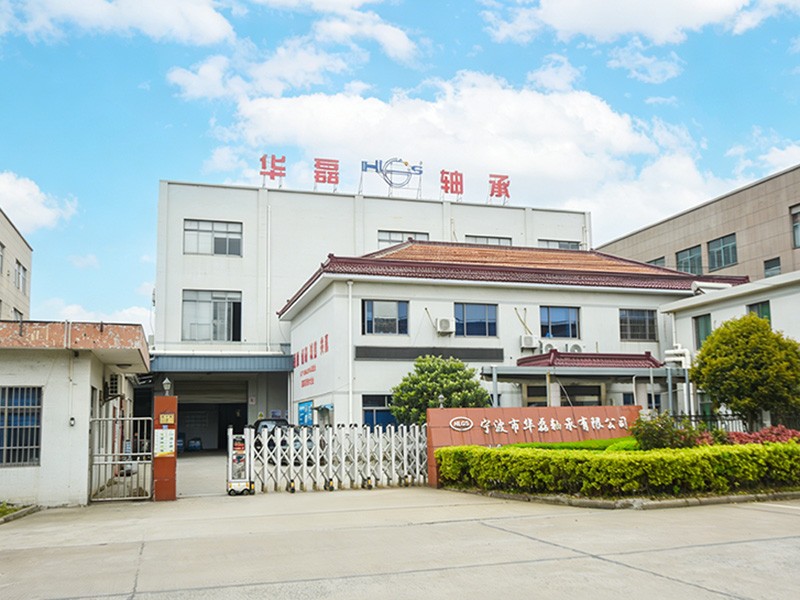
As China Deep Groove Ball Bearings Manufacturers and Deep Groove Ball Bearings Factory,Ningbo Zhenhai Hualei Bearing Co., Ltd. was established in 2001 and is a professional manufacturer of miniature deep groove ball bearings. We provide a series of deep groove ball bearings with different models. We have registered the trademark "HLGS", and our products have been widely used in a majority of areas, such as food machinery, household appliances, automotive electromechanical, electric tools, mechanical transmission devices, and motors.

We are always in line with the business philosophy of "sincere trust and efficient service. After a decade of accumulation, we have established a good reputation with our customers. All products are strictly tested by advanced equipment, and our company strictly follows the ISO9001 and ISO/TS 16949 management systems. In 2016, we established a subsidiary, Ningbo Hotex Mechanical & Electrical Technology Co., Ltd., as the Import & Export Department. We expect sincere cooperation with friends from the homeland and abroad.

Qualification Certification

We not only have a comprehensive system certification, but also use it as a cornerstone to transform compliance management into our core competitiveness.

Stay Updated With
Our Latest News
Deep Groove Ball Bearings

Deep Groove Ball Bearings Industry knowledge

Why Choose a Professional Deep Groove Ball Bearings Manufacturer for Your Industrial Applications?

Deep Groove Ball Bearings are among the most widely used rolling bearings in modern mechanical systems due to their excellent versatility, stable performance, and long service life. From industrial machinery and electric motors to automotive components and precision equipment, these bearings play an essential role in ensuring smooth rotation, reducing friction, and improving overall operating efficiency.

With the continuous development of global manufacturing industries, the requirements for bearing quality, consistency, and reliability have become increasingly strict. Selecting an experienced Deep Groove Ball Bearings Manufacturer is not only about obtaining standard bearing products but also about establishing a reliable supply relationship with a manufacturer that understands engineering requirements, production standards, and different application environments.

Ningbo Zhenhai Hualei Bearing Co.,Ltd. is a professional manufacturer specializing in the production of high-quality deep groove ball bearings. With advanced manufacturing equipment, experienced technical teams, and strict quality management procedures, the company is committed to providing reliable bearing solutions for various industries around the world.

A professional bearing manufacturer needs to control every production stage, including raw material selection, precision machining, heat treatment, assembly, lubrication, and final inspection. Any small deviation during manufacturing may affect bearing performance, especially in applications requiring high-speed rotation or continuous operation. Therefore, reliable manufacturing capability is one of the most important factors when selecting a long-term bearing partner.

Key Manufacturing Capability Importance for Bearing Performance
Precision machining technology Ensures accurate dimensions and stable rotation performance
High-quality raw materials Improves durability and resistance to wear
Strict inspection procedures Guarantees consistent product quality
Advanced production equipment Supports efficient and stable mass production
Professional technical support Helps provide suitable bearing solutions

Deep Groove Ball Bearings are designed with simple but highly efficient structures. The inner ring, outer ring, rolling elements, and cage work together to provide smooth movement with low friction. Compared with other bearing types, they offer excellent balance between load capacity, rotational speed, noise control, and cost efficiency.

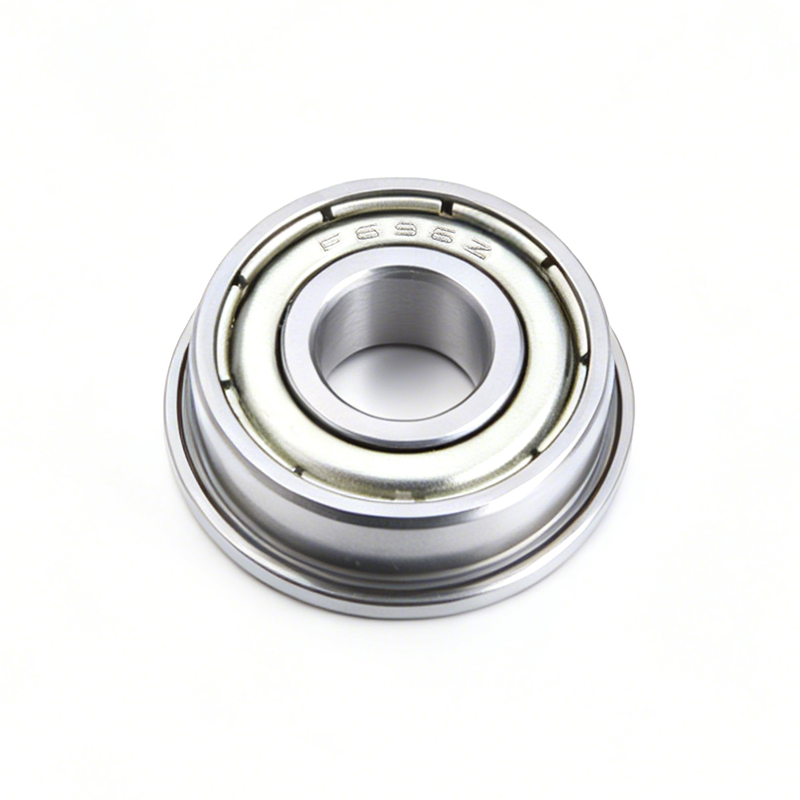
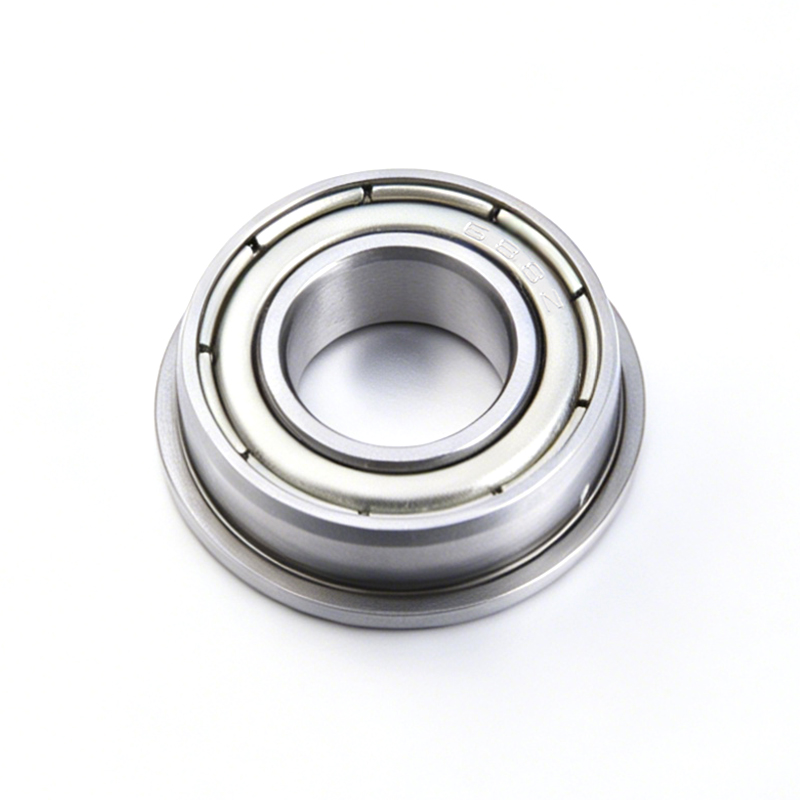
Depending on different application requirements, deep groove ball bearings can be manufactured in various designs, including open bearings, shielded bearings, sealed bearings, stainless steel bearings, and miniature bearings. Different sealing structures and materials allow the bearings to perform effectively in various working environments.

For example, sealed deep groove ball bearings are suitable for applications where dust prevention and maintenance reduction are important. Shielded bearings are commonly used in electric motors and general machinery where additional protection against contaminants is required. Stainless steel versions provide better corrosion resistance for special environments.

Ningbo Zhenhai Hualei Bearing Co.,Ltd. focuses on providing diversified deep groove ball bearing solutions according to different industry requirements. Through continuous improvement of production technology and quality control systems, the company ensures that each bearing meets strict performance expectations.

The advantages of cooperating with a professional manufacturer include:

  • Stable product consistency for repeated applications
  • Flexible production capacity for different order volumes
  • Professional suggestions for bearing selection
  • Customized solutions according to equipment requirements
  • Reliable delivery and technical communication

In addition, modern industrial applications often require more than standard bearing dimensions. Different machines may require specific tolerances, lubrication conditions, sealing methods, or material characteristics. An experienced manufacturer can analyze these requirements and provide suitable solutions instead of simply supplying standard products.

With years of experience in bearing manufacturing, Ningbo Zhenhai Hualei Bearing Co.,Ltd. understands the importance of precision, reliability, and service. The company continuously improves manufacturing processes and inspection standards to provide customers with dependable deep groove ball bearings suitable for global industrial applications.

Choosing a professional manufacturer means choosing a stable foundation for equipment performance. High-quality bearings can help reduce maintenance frequency, improve machine efficiency, and extend the service life of mechanical systems.

How Do Deep Groove Ball Bearings Improve Equipment Performance and Reliability?

In mechanical equipment, the performance of bearings directly influences the efficiency, stability, and operating lifespan of the entire system. As a key transmission component, Deep Groove Ball Bearings are responsible for supporting rotating shafts, reducing friction, and maintaining smooth mechanical movement.

A high-quality bearing can significantly improve equipment reliability by minimizing energy loss, reducing vibration, and maintaining stable operation under different working conditions. This is why deep groove ball bearings are widely used in industries such as automation equipment, motors, power tools, household appliances, transportation systems, and industrial machinery.

The main advantage of deep groove ball bearings is their ability to handle both radial loads and moderate axial loads while maintaining excellent rotational performance. Their optimized raceway design allows the rolling elements to move smoothly, reducing friction between components and improving operating efficiency.

Performance Feature Benefits for Industrial Equipment
Low friction operation Reduces energy consumption and improves efficiency
High-speed capability Suitable for motors and precision machinery
Strong durability Extends service intervals and reduces replacement frequency
Low noise performance Creates smoother equipment operation
Multiple sealing options Adapts to different environmental conditions

One of the most important factors affecting bearing performance is manufacturing precision. Even a small dimensional error can cause uneven loading, increased vibration, and premature failure. Professional manufacturers use advanced processing equipment and inspection technologies to ensure that bearing components maintain accurate dimensions and reliable performance.

Ningbo Zhenhai Hualei Bearing Co.,Ltd. pays close attention to every manufacturing detail, from material selection to final assembly. By implementing strict quality control procedures, the company ensures that deep groove ball bearings provide stable performance during long-term operation.

Different applications have different requirements. For example:

  • Electric motors require bearings with low noise and high-speed performance.
  • Industrial machines require strong load capacity and durability.
  • Precision instruments require high rotation accuracy.
  • Outdoor equipment requires better protection against dust and moisture.

To meet these different requirements, deep groove ball bearings are available in various specifications and designs. Manufacturers can provide different sizes, cage structures, sealing methods, and lubrication solutions based on application conditions.

For industries where equipment operates continuously, bearing reliability directly affects production efficiency. A bearing failure may lead to unexpected downtime, increased maintenance costs, and reduced operational efficiency. Therefore, selecting bearings with stable quality is an important step in improving overall equipment performance.

Ningbo Zhenhai Hualei Bearing Co.,Ltd. integrates manufacturing experience with quality management to develop bearing products that deliver consistent performance. The company focuses on improving product durability, operational stability, and application adaptability.

Another important advantage of high-quality deep groove ball bearings is reduced maintenance requirements. Properly designed and manufactured bearings can maintain smooth operation for extended periods, reducing the need for frequent replacement and inspection.

Modern industries are also placing greater emphasis on energy efficiency and sustainability. Bearings with lower friction characteristics can help reduce power consumption and improve the efficiency of mechanical systems. This makes deep groove ball bearings an important component in energy-saving equipment designs.

By choosing reliable deep groove ball bearings, equipment manufacturers and industrial users can achieve better machine performance, longer service life, and improved operational stability. Ningbo Zhenhai Hualei Bearing Co.,Ltd. continues to provide dependable bearing solutions that support various industrial applications worldwide.

What Should Global Companies Consider When Selecting a Deep Groove Ball Bearings Supplier?

Selecting a suitable Deep Groove Ball Bearings Supplier is an important decision for companies that require stable mechanical components for their products and equipment. Although deep groove ball bearings have a relatively simple structure, their manufacturing precision, material quality, and performance consistency directly affect the reliability of the final application. Therefore, choosing a supplier with professional manufacturing capabilities, strict quality management, and long-term industry experience is essential.

A reliable bearing supplier should not only provide standard products but also understand different application requirements and offer professional solutions. Factors such as bearing dimensions, load conditions, rotational speed, operating temperature, environmental conditions, and lubrication requirements all influence the selection of the most suitable bearing type.

Ningbo Zhenhai Hualei Bearing Co.,Ltd. is a professional Deep Groove Ball Bearings Manufacturer with experience in developing and producing various types of deep groove ball bearings. The company focuses on precision manufacturing, product quality control, and continuous improvement of production processes to provide reliable bearing solutions for international markets.

When evaluating a bearing supplier, production capability is one of the most important considerations. A manufacturer with strong production capacity can ensure stable product availability and consistent quality during long-term cooperation. This is particularly important for industries that require continuous manufacturing and regular bearing replacement.

Evaluation Factor Why It Matters
Manufacturing experience Ensures professional understanding of bearing technology and applications
Production capacity Supports stable supply and efficient order fulfillment
Quality inspection system Reduces performance risks and improves product reliability
Customization capability Provides solutions for special application requirements
Export experience Ensures smooth international cooperation and communication

Quality control is another essential factor when selecting a deep groove ball bearing supplier. Bearings usually operate under high-speed rotation and repeated mechanical stress, meaning even minor defects may affect service life and equipment performance.

Professional manufacturers typically establish strict inspection procedures covering multiple production stages. These processes may include raw material inspection, dimensional accuracy testing, hardness testing, vibration testing, noise testing, rotation testing, and final product inspection.

Ningbo Zhenhai Hualei Bearing Co.,Ltd. emphasizes quality throughout the entire manufacturing process. From selecting suitable materials to controlling machining accuracy and assembly quality, the company follows strict production standards to ensure that every bearing delivers stable performance.

Another important consideration is customization capability. Different industries often have unique requirements that cannot always be satisfied by standard bearing models. For example, some applications may require special sealing structures, different lubrication solutions, corrosion-resistant materials, or customized dimensions.

A professional bearing manufacturer should have the ability to communicate technical requirements and provide suitable solutions based on actual application conditions. This not only improves product compatibility but also helps optimize equipment performance.

Common customized options for deep groove ball bearings include:

  • Different bearing sizes and dimensions
  • Various sealing and shielding designs
  • Special lubrication requirements
  • Stainless steel or corrosion-resistant materials
  • Customized packaging solutions
  • OEM manufacturing services

In addition to product quality and customization, delivery capability is also a key factor. A stable supplier should have efficient production planning, inventory management, and logistics coordination capabilities. These advantages help ensure that products can be delivered according to expected schedules.

For global industrial markets, communication and technical support are also important parts of cooperation. A professional supplier should be able to provide clear product information, technical documents, and application suggestions to help customers select suitable bearing solutions.

Ningbo Zhenhai Hualei Bearing Co.,Ltd. is committed to building long-term cooperation through reliable products and professional service. With a focus on deep groove ball bearing manufacturing, the company continuously improves its technology, production efficiency, and quality management system to meet the changing requirements of global industries.

The company understands that bearing performance is closely related to the success of mechanical equipment. Therefore, every production process is carefully managed to ensure products achieve excellent durability, smooth operation, and consistent quality.

By selecting an experienced Deep Groove Ball Bearings Supplier, companies can reduce potential operational risks, improve equipment reliability, and create a more efficient production system. A professional manufacturer provides not only bearing products but also technical confidence and long-term support.

How Does Ningbo Zhenhai Hualei Bearing Co.,Ltd. Ensure High-Quality Deep Groove Ball Bearings?

The quality of deep groove ball bearings depends on many factors, including material selection, manufacturing technology, precision control, and inspection procedures. As mechanical components that often operate under continuous load and high-speed conditions, bearings must maintain excellent performance throughout their service life.

Ningbo Zhenhai Hualei Bearing Co.,Ltd. focuses on manufacturing reliable Deep Groove Ball Bearings by combining advanced production technology with strict quality management. The company is committed to providing durable and precise bearing products that meet the requirements of different industrial applications.

From product design to final inspection, quality control is integrated into every stage of production. This comprehensive approach helps ensure that each bearing has stable dimensions, smooth rotation, and dependable operating performance.

Quality Control Process Purpose
Raw material inspection Ensures material strength and reliability
Precision machining control Maintains accurate bearing dimensions
Heat treatment management Improves hardness and wear resistance
Assembly inspection Ensures smooth bearing operation
Performance testing Verifies reliability before delivery

Material quality is the foundation of bearing performance. High-quality bearing steel provides excellent strength, wear resistance, and fatigue resistance, allowing bearings to operate effectively under demanding conditions.

During manufacturing, precision machining plays a critical role. The inner ring, outer ring, and rolling elements must maintain accurate dimensions and surface quality. Any inconsistency may result in increased friction, vibration, or reduced service life.

Ningbo Zhenhai Hualei Bearing Co.,Ltd. applies professional manufacturing methods and inspection procedures to maintain product consistency. By controlling production accuracy and improving process management, the company ensures that deep groove ball bearings achieve reliable performance.

The company also understands that different industries have different expectations for bearing products. Therefore, it provides various bearing solutions suitable for different applications, including:

  • Industrial machinery
  • Electric motors
  • Automation systems
  • Automotive equipment
  • Household appliances
  • Precision instruments

For applications requiring quiet operation, low vibration, and high rotational accuracy, carefully manufactured deep groove ball bearings can provide significant advantages. For equipment exposed to dust, moisture, or challenging environments, suitable sealing designs can help improve service life.

In addition to standard bearing production, Ningbo Zhenhai Hualei Bearing Co.,Ltd. also focuses on flexible manufacturing capabilities. The company can support different product specifications and technical requirements, helping customers find suitable solutions for their specific applications.

A professional bearing manufacturer must also maintain continuous improvement. As industries develop, equipment becomes more precise and efficient, creating higher requirements for bearing performance. Manufacturers need to continuously upgrade production technology and quality systems to remain competitive.

Ningbo Zhenhai Hualei Bearing Co.,Ltd. follows this development philosophy by improving manufacturing processes, strengthening quality management, and focusing on customer application needs. The company’s goal is to provide dependable bearing products that contribute to safer, more efficient, and more durable mechanical systems.

High-quality deep groove ball bearings are not only components but also important factors influencing the performance of complete machines. Through professional manufacturing, strict inspection, and reliable service, Ningbo Zhenhai Hualei Bearing Co.,Ltd. continues to deliver bearing solutions trusted by industries worldwide.

FAQ About Deep Groove Ball Bearings

Q1: What are Deep Groove Ball Bearings mainly used for?

Deep Groove Ball Bearings are widely used in various mechanical applications, including electric motors, industrial machinery, automotive systems, pumps, fans, automation equipment, and household appliances. Their simple structure, smooth operation, and excellent versatility make them one of the most commonly used bearing types.

Q2: What advantages do Deep Groove Ball Bearings provide compared with other bearing types?

Deep Groove Ball Bearings offer several advantages, including low friction, high rotational speed capability, stable operation, low noise, and easy installation. They can handle both radial loads and moderate axial loads, making them suitable for many different mechanical systems.

Q3: How can I select the right Deep Groove Ball Bearings for an application?

The selection process should consider several factors, including bearing size, load capacity, rotation speed, operating temperature, working environment, lubrication requirements, and sealing conditions. A professional manufacturer can provide technical suggestions based on specific equipment requirements.

Q4: Does Ningbo Zhenhai Hualei Bearing Co.,Ltd. provide customized bearing solutions?

Yes. Ningbo Zhenhai Hualei Bearing Co.,Ltd. can provide customized solutions according to different application requirements. Custom options may include bearing dimensions, sealing structures, lubrication methods, materials, packaging, and OEM services.

Q5: What quality tests are performed on Deep Groove Ball Bearings?

Professional bearing manufacturers usually conduct multiple inspections, including dimensional accuracy testing, material inspection, hardness testing, vibration testing, noise testing, rotation performance testing, and final appearance inspection to ensure stable product quality.

Q6: Why is choosing an experienced Deep Groove Ball Bearings Manufacturer important?

An experienced manufacturer has better control over production processes, quality standards, and technical requirements. Working with a professional supplier helps ensure consistent product performance, reliable delivery, and long-term technical support.

Q7: What industries commonly use Deep Groove Ball Bearings?

Deep Groove Ball Bearings are widely applied in industrial automation, electrical equipment, transportation systems, mechanical manufacturing, agricultural machinery, medical equipment, and many other fields where smooth and reliable rotation is required.

Q8: How does Ningbo Zhenhai Hualei Bearing Co.,Ltd. maintain product reliability?

Ningbo Zhenhai Hualei Bearing Co.,Ltd. maintains product reliability through strict material selection, precision manufacturing, comprehensive inspection procedures, and continuous improvement of production technology. These measures help ensure that each bearing provides stable performance in practical applications.