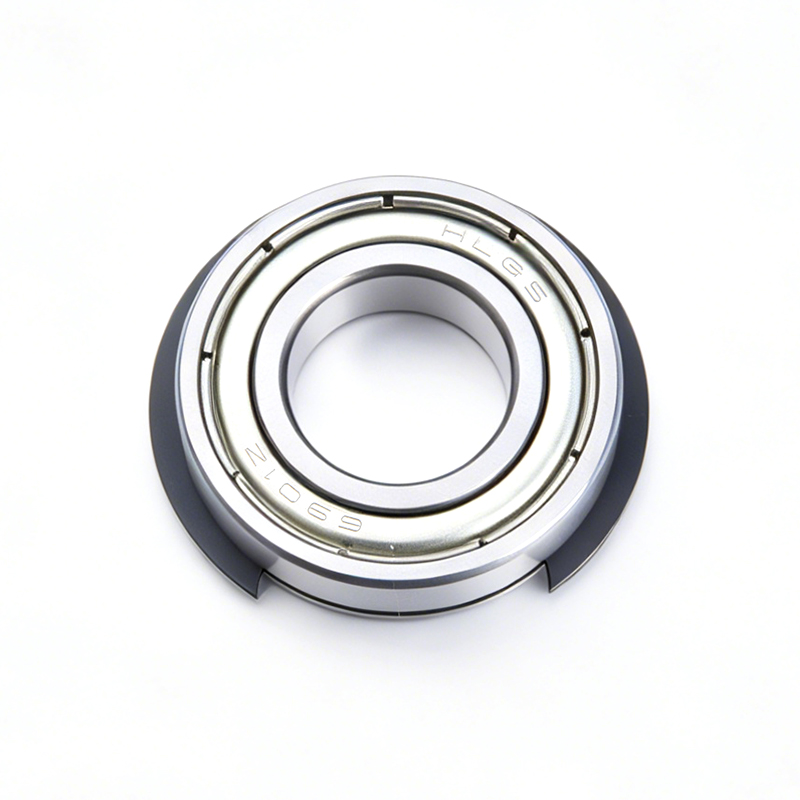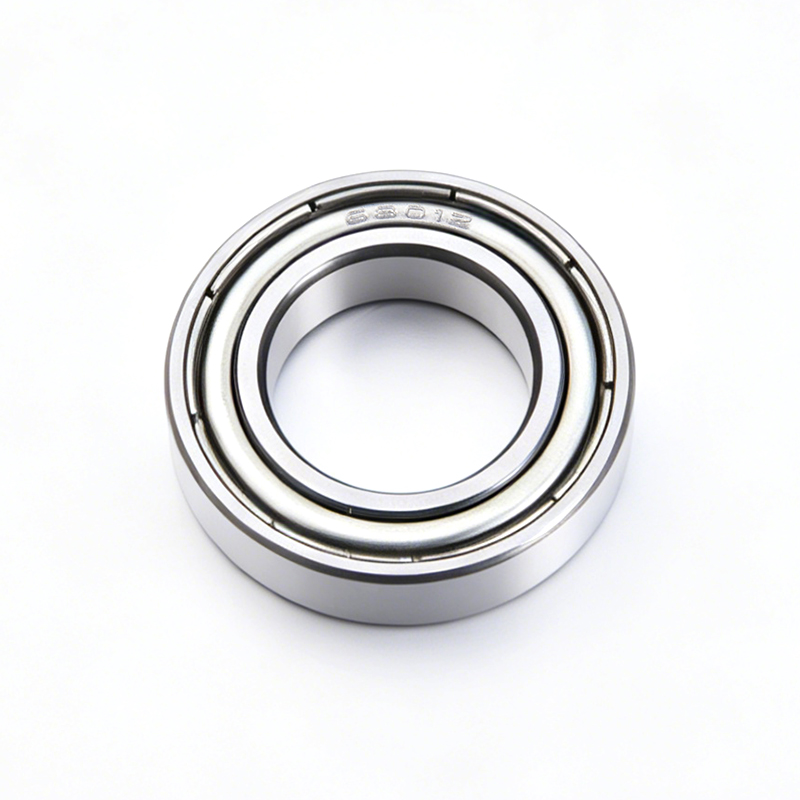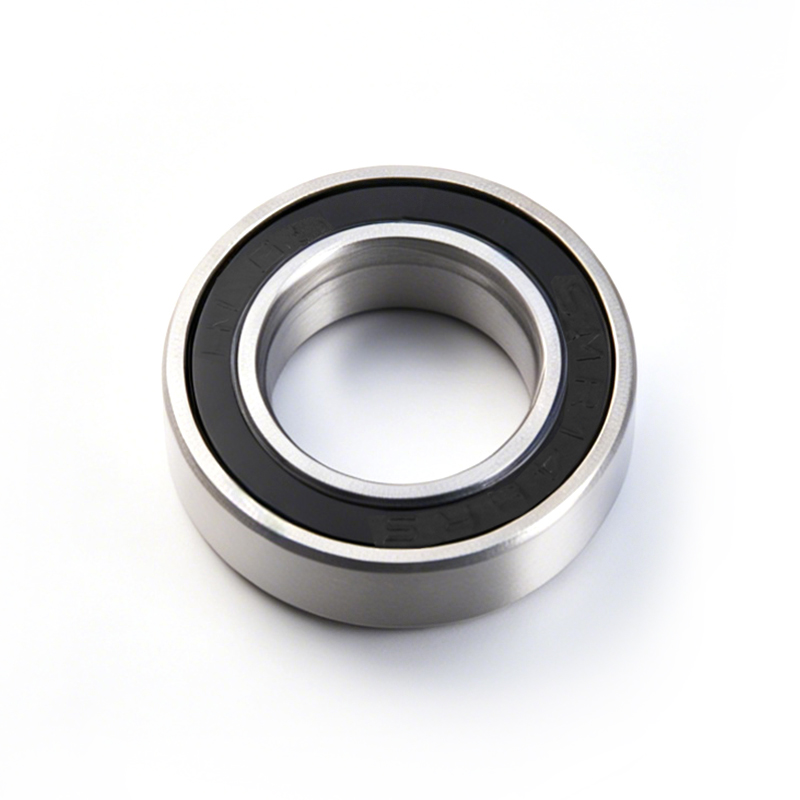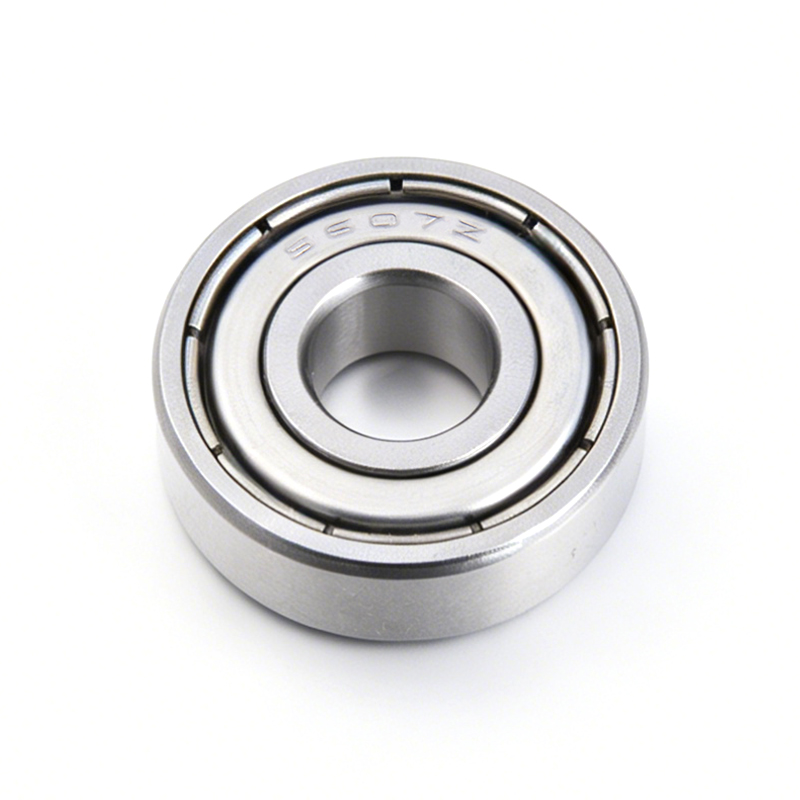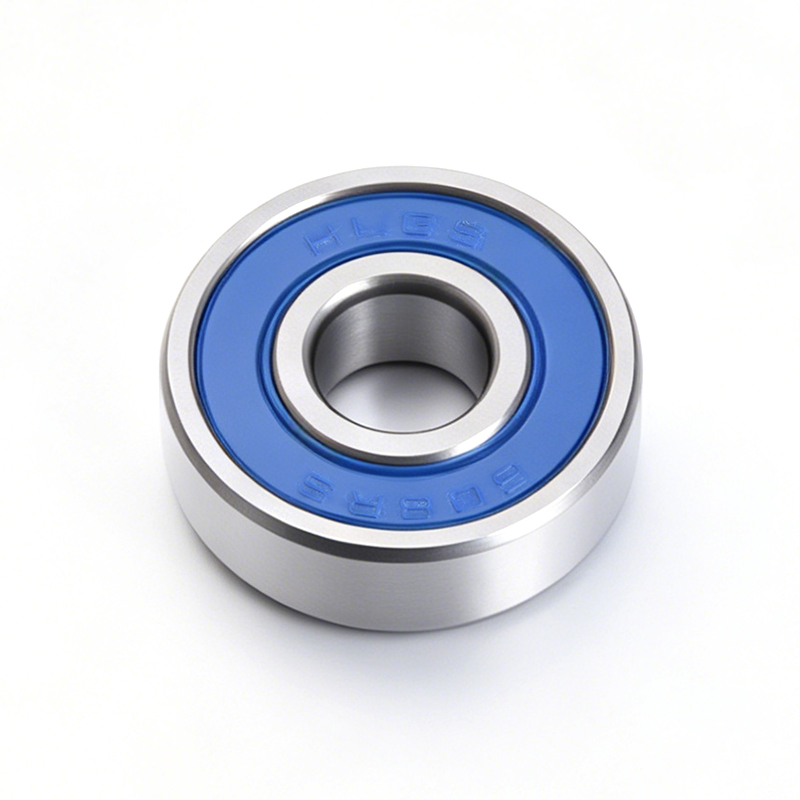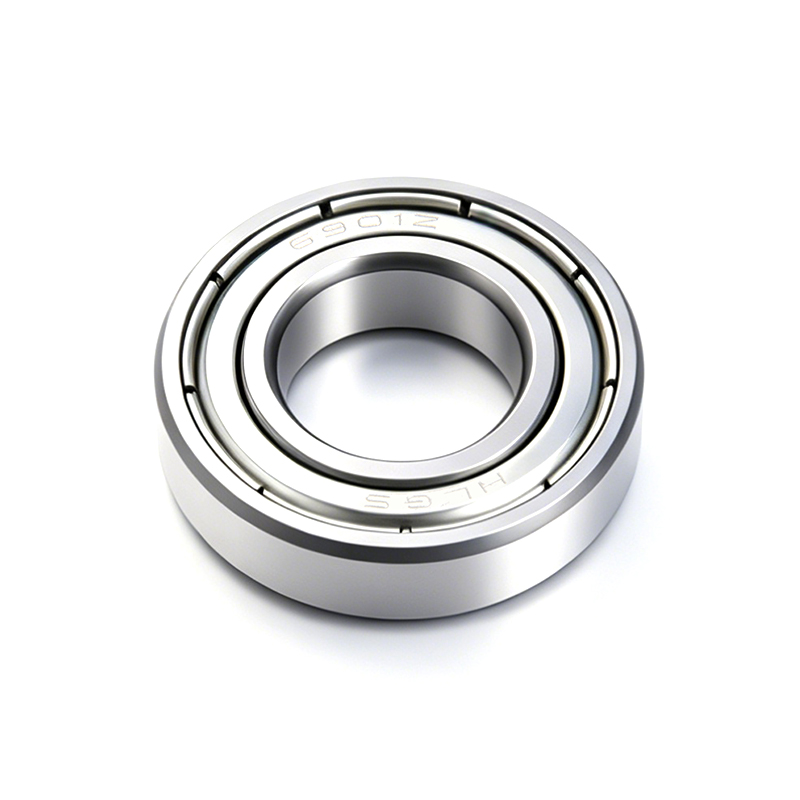
For most general-purpose applications — small motors, fans, toys, and basic instrumentation — ABEC 1 / ISO Normal class miniature bearings are sufficient and represent the most cost-effective choice. For applications requiring higher rotational accuracy and lower vibration, such as precision instruments, medical devices, or optical equipment, ABEC 5 / ISO P5 class is the common middle-ground standard. Only applications with extreme accuracy demands — gyroscopes, high-speed dental drills, aerospace actuators, or precision measurement equipment — justify the cost premium of ABEC 7 or ABEC 9 / ISO P4 or P2 class bearings, which can cost 3–8 times more than standard-grade equivalents for a marginal, though sometimes critical, improvement in accuracy.
The core mistake many purchasing engineers make is over-specifying precision class "to be safe," which inflates procurement cost without improving product performance. The sections below explain exactly what precision class measures, how the major classification systems compare, and how to match a class selection to real application requirements using concrete tolerance data.
Precision class is not a single number but a set of standardized tolerance limits covering several distinct dimensional and rotational characteristics. Understanding what is actually being measured is the first step to making an informed selection.
This covers the allowable deviation in bore diameter, outer diameter, and width from the nominal specification. For a miniature bearing with a 3mm bore, standard-grade tolerance might allow a deviation of a few microns, while a higher precision class tightens that range considerably, which matters directly for press-fit assembly consistency.
This includes radial runout (how much the shaft wobbles off-center during rotation) and axial runout (how much the bearing shifts along its rotational axis). Running accuracy is usually the single most important factor for applications sensitive to vibration or positional accuracy, such as optical scanning equipment or precision spindles.
Higher precision classes also require tighter control over ball diameter variation and raceway groove consistency, which directly affects noise level and smoothness of rotation. In miniature bearings, where balls may be as small as 0.5mm to 3mm in diameter, even minor variation has a proportionally larger effect on performance than in standard-size bearings.
Purchasing engineers frequently encounter two parallel classification systems, and confusion between them is one of the most common sourcing errors. Knowing how they map to each other is essential when comparing quotes from different manufacturers or regions.
The ABEC (Annular Bearing Engineering Committee) system, used primarily in North America, and the ISO system, used internationally, both classify bearings by precision but use different numbering conventions. ABEC 1 corresponds roughly to ISO Normal class, while higher grades run in parallel but not always in exact numerical correspondence, which is why relying on the standard name alone — without checking the actual tolerance table — can lead to mismatched expectations between buyer and supplier.
| ABEC Class | ISO Equivalent | Relative Accuracy Level | Typical Price Multiplier |
|---|---|---|---|
| ABEC 1 | Normal (P0) | Standard | 1x (baseline) |
| ABEC 3 | P6 | Improved | 1.3–1.8x |
| ABEC 5 | P5 | High | 2–3x |
| ABEC 7 | P4 | Very High | 4–6x |
| ABEC 9 | P2 | Ultra High | 6–8x |
ABEC ratings primarily define dimensional and running tolerances but do not directly specify factors like internal clearance, lubrication quality, or cage material — all of which also affect real-world performance. Two ABEC 5 bearings from different manufacturers can perform noticeably differently if one uses a lower-grade lubricant or a less consistent cage design, which is why precision class should be treated as one factor among several, not the sole spec to check.
The most efficient sourcing decision comes from working backward: identifying what your application actually needs, rather than starting from an assumption about what class "sounds right."
Higher rotational speeds generally benefit from tighter precision classes, since dimensional inconsistencies become more pronounced — and more damaging — at higher RPMs. A miniature bearing operating below 10,000 RPM in a low-vibration environment rarely needs more than ABEC 1 or ABEC 3, while applications exceeding 30,000–50,000 RPM, such as dental handpieces or small precision spindles, typically require ABEC 5 or higher to maintain stability and minimize heat generation from vibration.
If the end application involves precise positioning — such as an optical lens actuator, a scanning mirror, or a measurement instrument — radial and axial runout become critical. In these cases, even a few microns of runout can translate into measurable error at the output stage, making ABEC 5 or P5 class a reasonable minimum starting point rather than an optional upgrade.
Consumer electronics and medical devices often have strict acoustic or vibration requirements. Since higher precision classes generally correlate with tighter ball uniformity and smoother raceway finishes, moving up one class level can meaningfully reduce operating noise — an important consideration for applications like hearing aid motors or portable medical pumps, even when raw rotational accuracy is not the primary concern.
Since higher precision classes carry a substantial cost premium, it is worth calculating whether the performance gain translates into measurable product value. For a component being produced at high volume, jumping from ABEC 1 to ABEC 5 unnecessarily can add a significant amount to per-unit cost with no functional benefit to the end user — a common and avoidable procurement inefficiency.
The following breakdown reflects commonly observed industry practice across typical miniature bearing use cases, and can serve as a practical starting reference during specification review.
Even experienced procurement teams occasionally fall into avoidable errors when specifying precision class. Being aware of these patterns helps prevent both overspending and underperformance.
As noted earlier, defaulting to a higher precision class without a specific performance justification is one of the most common and costly mistakes in bearing procurement, particularly at scale where the price difference compounds across large order volumes.
Precision class and internal clearance class (C2, CN, C3, etc.) are separate specifications that are sometimes conflated. A high precision class paired with the wrong clearance class for the application's thermal and fit conditions can still result in poor performance, so both should be specified together rather than assuming one determines the other.
As mentioned earlier, precision class ratings can vary in real-world consistency between manufacturers. Requesting actual inspection reports and runout test data, rather than relying solely on the stated ABEC or ISO class, is a reliable way to confirm that a supplier's product genuinely meets the claimed tolerance before committing to a bulk order.
A lower precision class bearing that fails prematurely due to vibration-related wear can end up costing more in warranty claims and field replacements than the upfront savings justified. Precision class decisions should account for expected product lifespan and failure cost, not just unit price.
When preparing a purchasing specification or requesting quotes from suppliers, the following checklist helps ensure precision class is documented clearly and unambiguously.
Choosing the right precision class for miniature bearings ultimately comes down to matching the tolerance requirements of the application to the appropriate standard, rather than defaulting to the highest available grade. To summarize the key decision points:
By applying this structured, requirement-driven approach, purchasing engineers can avoid both the performance risk of under-specifying and the unnecessary cost of over-specifying — resulting in a bearing selection that is both technically sound and commercially efficient.
Fundamental Definitions and Classifications of Miniature Transmission Systems In modern precision me...
The Direct Answer: A Deep Groove Ball Bearing Supports Both Radial and Axial Loads Using a Simple, ...
What Do Flanged Bearings Do A flanged bearing supports a rotating shaft and locks it in a fixed axi...
Quality is the best, safety first. During business development expenditure, the most core element fo...