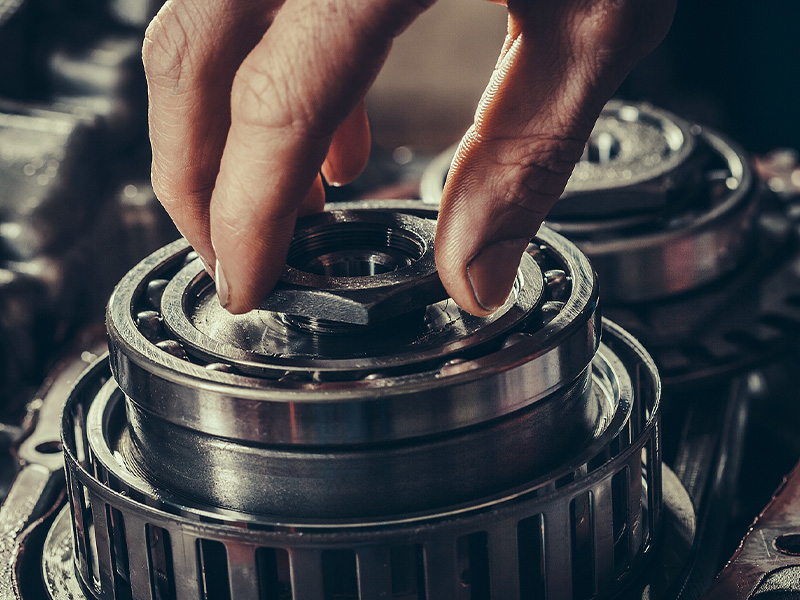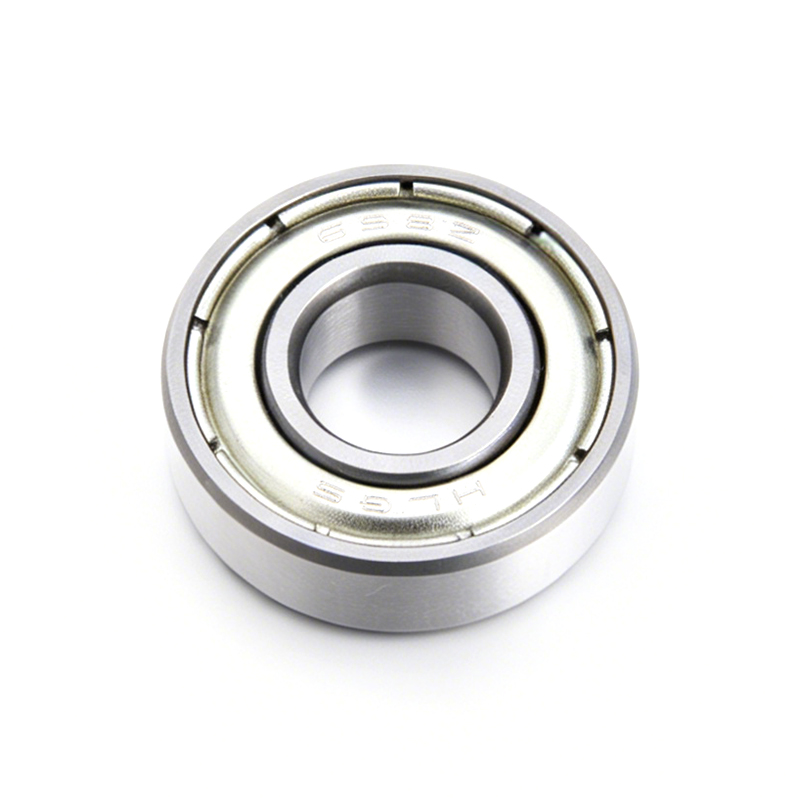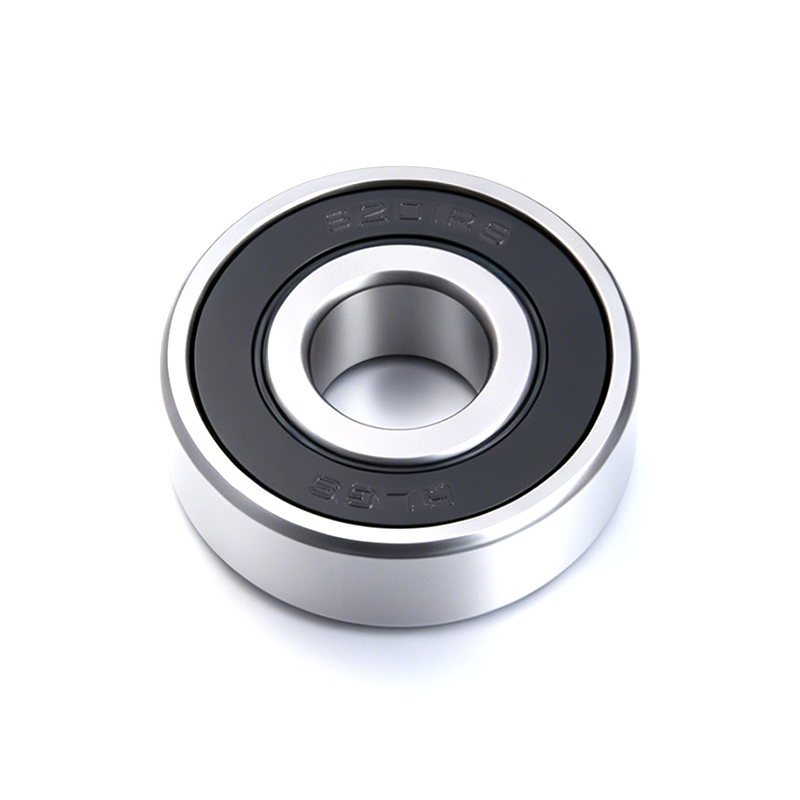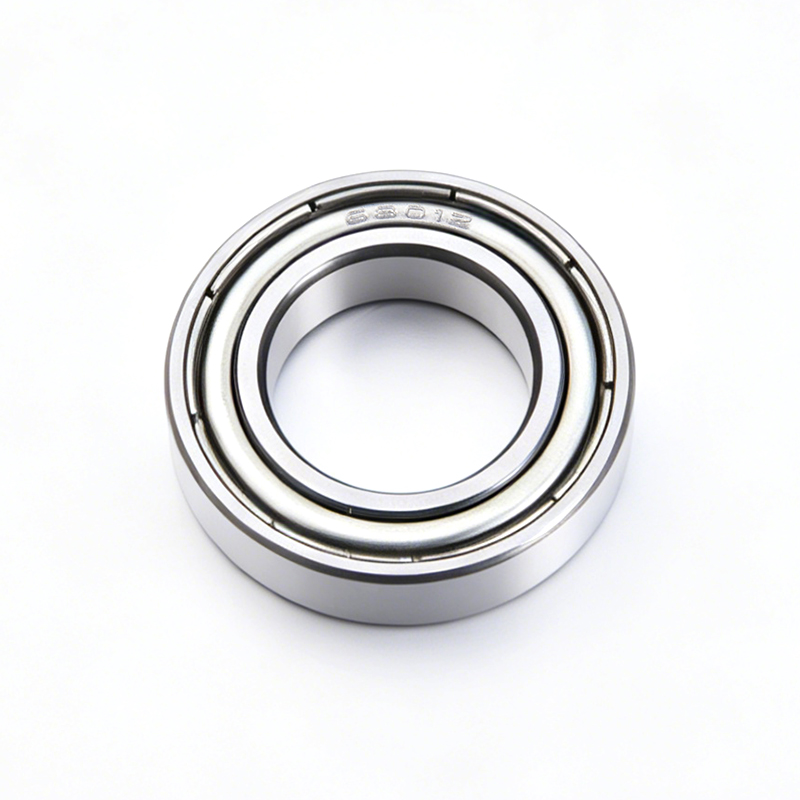
A deep groove ball bearing is a type of rolling-element bearing built around a simple structure: an inner ring, an outer ring, a set of steel balls, and a cage that keeps the balls evenly spaced. The defining feature is the deep, uninterrupted groove machined into both the inner and outer raceways, which allows the bearing to carry radial loads (forces perpendicular to the shaft) as well as moderate axial loads (forces along the shaft) in both directions — something many other bearing types cannot do without additional components.
This combination of load versatility, low friction, and mechanical simplicity is exactly why deep groove ball bearings account for an estimated over 80% of all rolling bearings used globally across electric motors, household appliances, automotive components, and general industrial machinery. The rest of this guide breaks down the internal structure piece by piece, explains how the working principle translates into real performance, and covers the practical factors that determine which variant is right for a given application.
Understanding the structure starts with breaking the bearing down into its four primary components, each of which plays a distinct mechanical role.
The inner ring mounts onto the rotating shaft, while the outer ring fits into the stationary housing. Both rings are machined with a curved groove (the raceway) that closely matches the curvature of the balls — typically the groove radius is slightly larger than the ball radius, usually by a factor known as the osculation ratio, commonly around 51–54% of the ball diameter. This close conformity is what allows the bearing to distribute load evenly across a wider contact area rather than concentrating stress at a single point.
The balls are the rolling elements that sit between the inner and outer raceways. They are typically manufactured from high-carbon chromium steel (such as AISI 52100) and ground to extremely tight tolerances — often within a few tenths of a micron for precision-grade bearings. Because the balls make point contact (rather than line contact, as in roller bearings) with the raceways, friction is minimized, which is a key reason deep groove ball bearings are favored in high-speed applications.
The cage keeps the balls evenly spaced around the raceway, preventing them from clustering together or colliding with one another during rotation. Cages are typically made from stamped steel, machined brass, or molded polymer (such as nylon 66), with the material choice depending on speed requirements and operating temperature — polymer cages, for instance, are common in high-speed applications due to their light weight and low inertia.
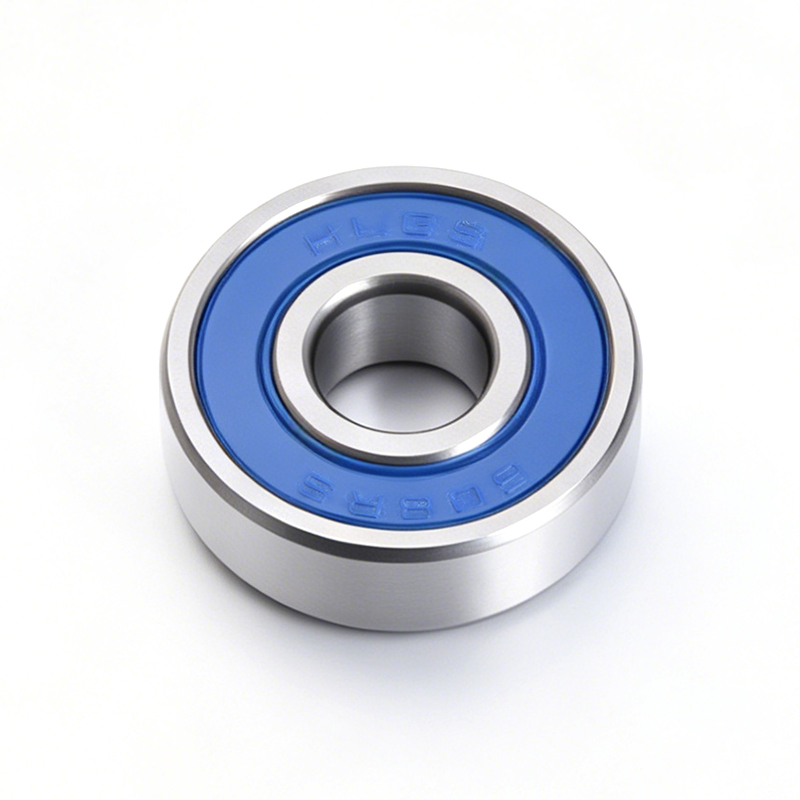
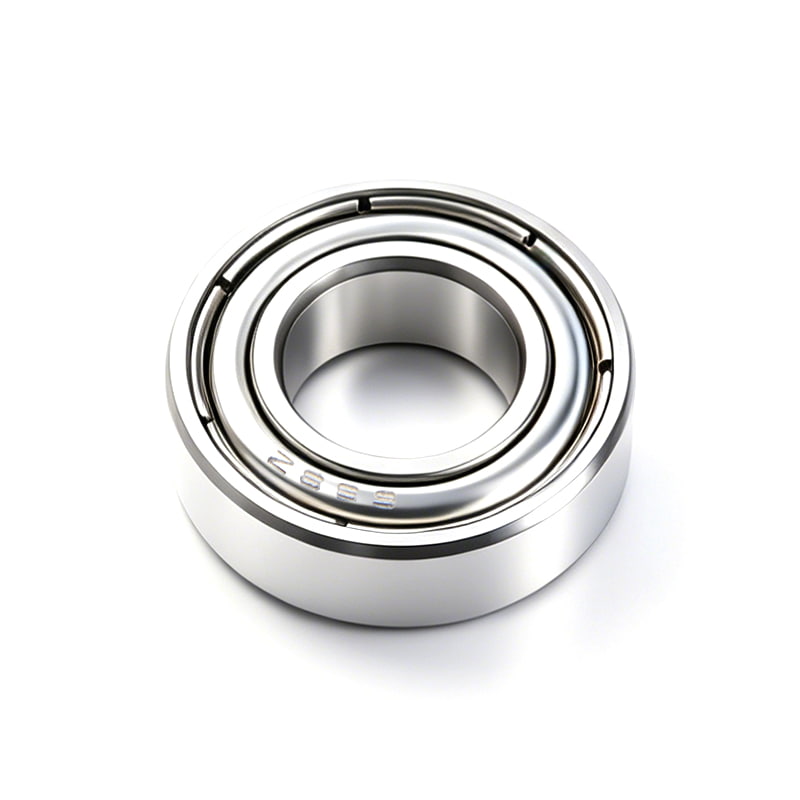
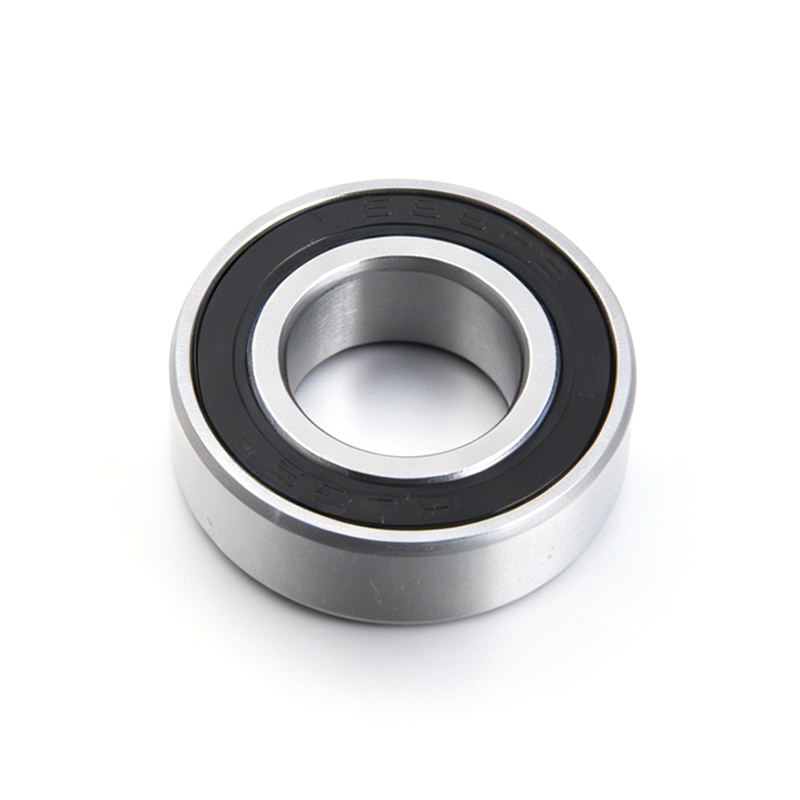
Many deep groove ball bearings include seals or shields on one or both sides to keep lubricant in and contaminants out. These are denoted by suffixes in the bearing's part number, such as -2RS (rubber seals on both sides) or -2Z (metal shields on both sides), and the choice between them affects both sealing performance and maximum operating speed.
The mechanical behavior of a deep groove ball bearing comes down to how the balls interact with the curved raceways under load.
When a radial force is applied to the shaft, it is transmitted through the inner ring, into the balls, and out through the outer ring into the housing. Because the raceway groove is deep and continuous, the contact zone between the ball and the raceway remains stable even as the balls rotate through the load zone, allowing the bearing to carry substantial radial loads relative to its size.
The deep groove design also allows the bearing to resist axial loads in both directions, unlike angular contact bearings which typically handle thrust in only one direction per bearing. However, this capacity is limited — deep groove ball bearings are generally rated to handle axial loads up to roughly 50–70% of their radial load rating, depending on internal geometry and clearance class, which is why applications with heavy, sustained thrust loads often pair them with dedicated thrust bearings.
Internal clearance — the small amount of play between the balls and the raceways before load is applied — directly affects noise, vibration, and load distribution. Standard clearance classes (C2, CN, C3, C4, C5, from tightest to loosest) are selected based on factors like expected operating temperature and fit tolerances; for example, a tighter fit on the shaft often calls for a slightly looser internal clearance class to compensate for the resulting reduction in clearance during installation.
One of the most practically important characteristics of deep groove ball bearings is their ability to operate at high rotational speeds, which comes down to two structural factors.
Because the balls contact the raceway at a single point rather than along a line, rolling friction is significantly lower compared to roller-type bearings. This lower friction translates directly into lower heat generation at high speeds, which is why deep groove ball bearings are the standard choice in applications like electric motor shafts, spindle assemblies, and high-speed fans.
Manufacturers typically publish a limiting speed value for each bearing size, often expressed in a "dN value" (bore diameter in millimeters multiplied by rotational speed in RPM). Standard-grade deep groove ball bearings commonly achieve dN values in the range of 300,000–500,000, while specialized high-speed variants with ceramic balls or optimized cage designs can exceed this considerably. The actual limiting speed for a given application also depends heavily on lubrication type, cooling, and load conditions.
While the basic principle remains consistent, several structural variations exist to address different application needs.
| Variant | Structural Feature | Typical Use Case |
|---|---|---|
| Open Type | No seals or shields | Applications with external lubrication systems |
| Shielded (Z / 2Z) | Metal shield, non-contact | Moderate contamination, higher speed tolerance |
| Sealed (RS / 2RS) | Rubber seal, light contact | Dusty or humid environments requiring grease retention |
| Filling Slot Type | Notch cut into raceway shoulders | Higher ball count for increased radial load capacity |
| Flanged Type | Integrated outer ring flange | Simplified axial positioning in housing bores |
Lubrication is integral to how the bearing's working principle functions in practice, not simply a maintenance add-on.
Under load, a thin film of lubricant separates the ball surface from the raceway surface, a phenomenon known as elastohydrodynamic lubrication (EHL). This film, often only a fraction of a micron thick, prevents direct metal-to-metal contact, which is what allows the bearing to achieve its rated fatigue life rather than wearing out prematurely through surface damage.
Most sealed deep groove ball bearings come pre-packed with grease sufficient for the bearing's operating life under normal conditions. Oil lubrication, by contrast, is typically reserved for higher-speed or higher-temperature applications where continuous circulation and cooling are needed, such as in machine tool spindles or turbine auxiliary systems.
The structural characteristics described above directly explain why deep groove ball bearings appear across such a wide range of industries.
Understanding the internal structure directly informs which specification details matter most when selecting a bearing for a given application.
Bearing bore size must match the shaft diameter, while the dynamic and static load ratings (listed in manufacturer catalogs) determine whether the bearing can handle the expected operating forces with an appropriate service life margin, typically calculated using the L10 fatigue life formula.
Precision classes (ABEC or ISO P0–P6 systems) define dimensional and rotational accuracy. Standard-grade bearings (ABEC 1 / ISO P0) are sufficient for most general industrial use, while higher precision grades are reserved for applications like precision machine tools where rotational accuracy directly affects product quality.
The operating environment should guide the choice between open, shielded, and sealed types — using a sealed bearing in a clean, well-lubricated environment adds unnecessary friction, while using an open bearing in a dusty environment shortens service life considerably.
Deep groove ball bearings achieve their widespread use through a structurally simple but mechanically effective design: a deep, continuous raceway groove that allows point-contact balls to carry both radial and moderate axial loads with low friction. Understanding this structure clarifies several practical takeaways:
With this foundational understanding of structure and working principle in place, selecting the right deep groove ball bearing for a specific machine or system becomes a matter of matching these structural characteristics to the actual load, speed, and environmental conditions the bearing will face in operation.
What Do Flanged Bearings Do A flanged bearing supports a rotating shaft and locks it in a fixed axi...
Fundamental Definitions and Classifications of Miniature Transmission Systems In modern precision me...
Quality is the best, safety first. During business development expenditure, the most core element fo...
Direct Answer: Load Capacity Comparison In terms of raw load capacity, a Cylindrical Roller Bearing...