A motor that has run for years rarely announces a bearing failure early. The first sign is a low hum, then a rising vibration, and finally a seized rotor. In most motors and rotating machines, the component standing between normal service and an expensive breakdown is a deep groove ball bearing. It is the most widely used rolling bearing in industry, for good reason: it carries radial and axial loads at the same time, runs at high speed, fits into a compact envelope, and comes in standardized metric sizes that are easy to replace.
The short answer to what are deep groove ball bearings used for is that they keep rotating shafts running smoothly in electric motors, pumps, compressors, gearboxes, fans, home appliances, power tools, robotics, and food machinery. The sections below explain how the design works, where it appears in real equipment, and what to check when you specify or source it.
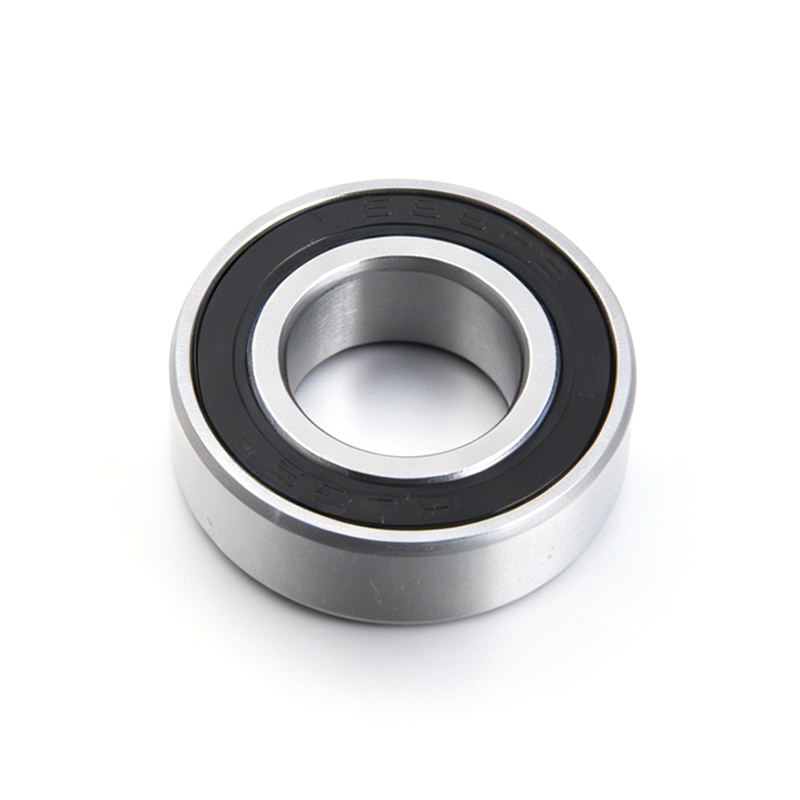
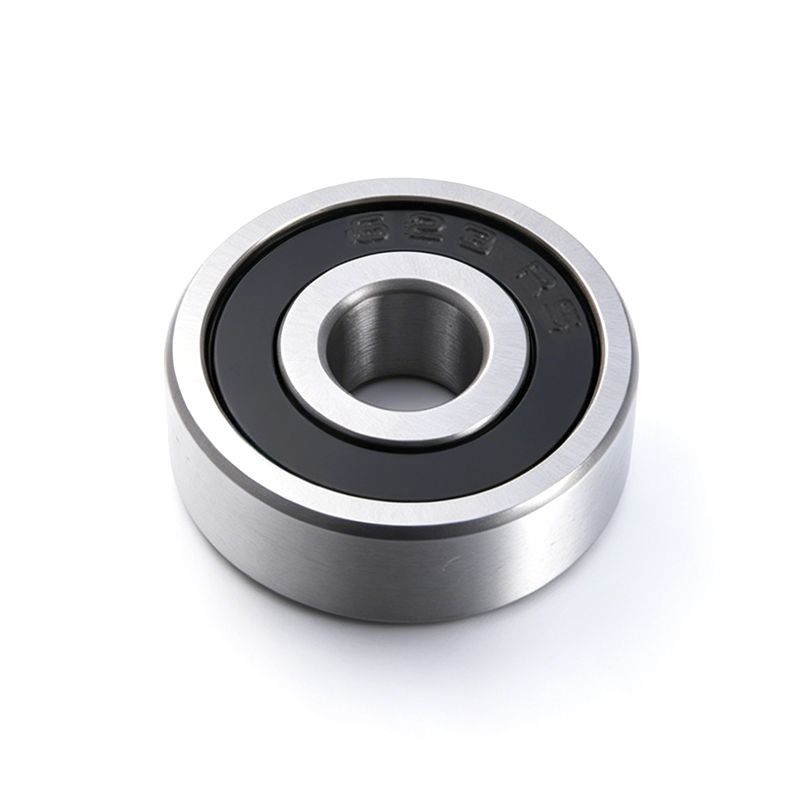
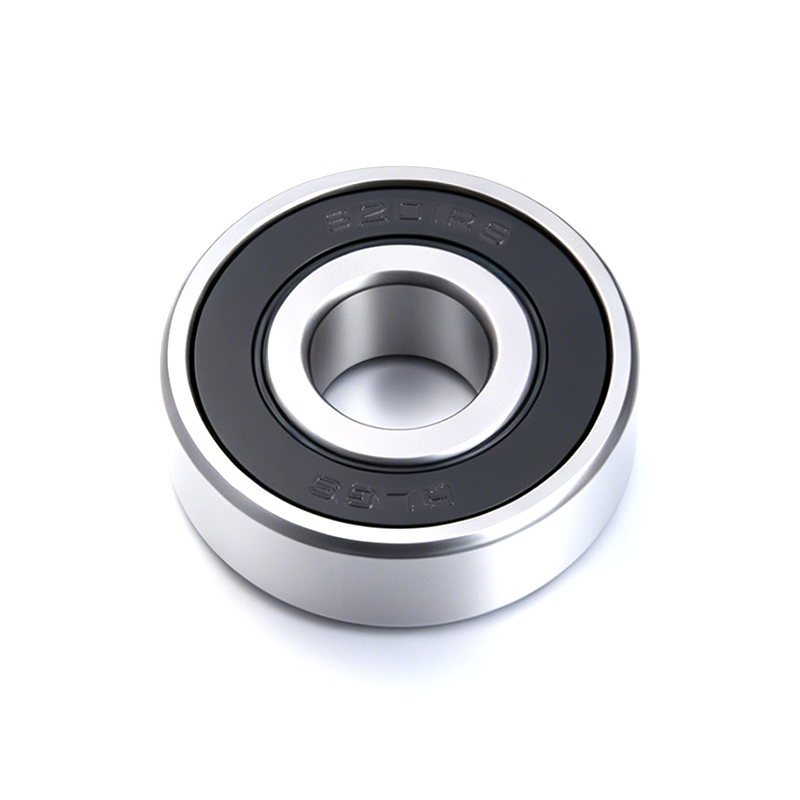
A deep groove ball bearing consists of an inner ring, an outer ring, a complement of precision steel balls, and a cage that keeps the balls evenly spaced. The raceway grooves on both rings are deeper than those of other ball bearing types, which gives the bearing its name. The deep, continuous grooves let the balls contact the raceways over a large area, so the bearing carries a substantial radial load while also accepting moderate axial loads in both directions. That combination is the main reason the type appears in such a wide range of machines.
The design is compact too. Its cross-section is thinner than a roller bearing of the same bore size, saving space inside motor end caps and gearbox housings. Metric dimensions follow the 60xx, 62xx, 68xx, and 69xx series, so bearings from different manufacturers are interchangeable in the same housing. Sizes run from miniature bearings with a bore of only a few millimetres up to large-bore bearings for heavy industrial shafts. For an overview of the available variants, see our deep groove ball bearing product range.
Deep groove ball bearings are used wherever a shaft must rotate with low friction under a combination of radial and axial forces. Five application groups cover most real-world installations.
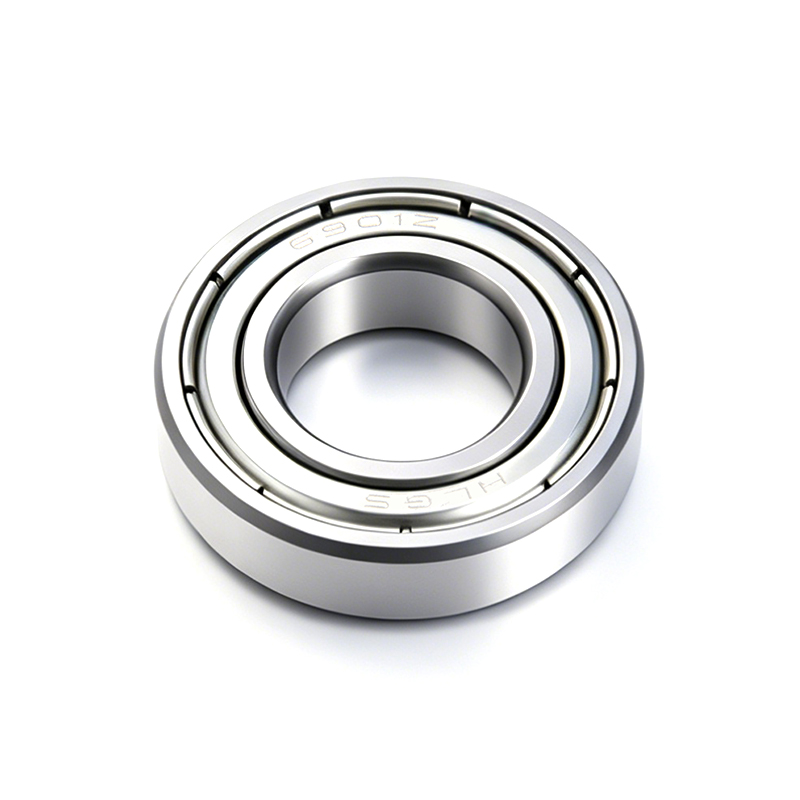
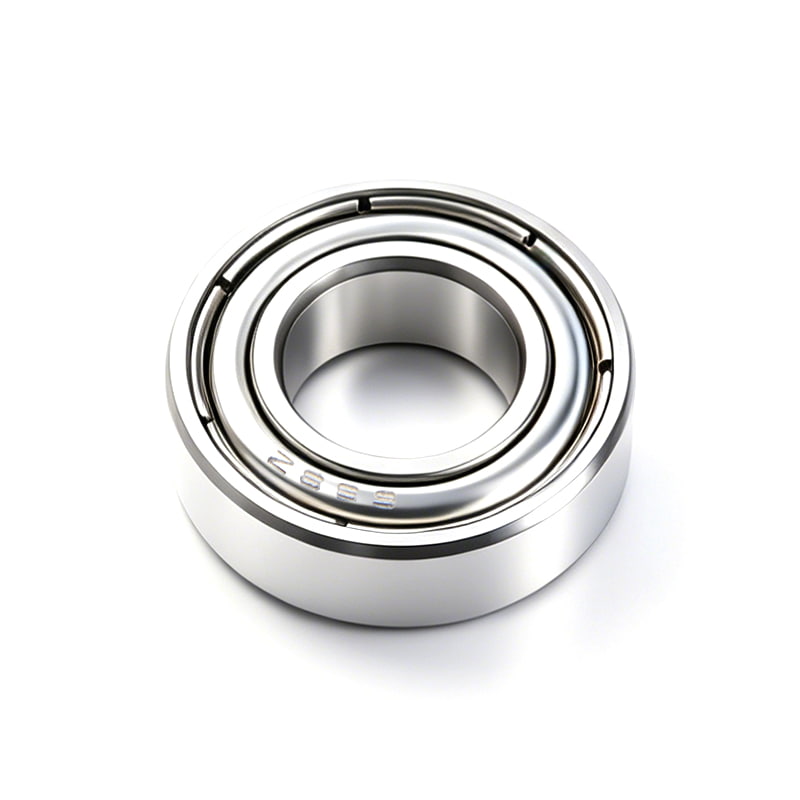
Electric motors are the largest single application. A typical AC motor carries two deep groove ball bearings, one at each end of the rotor, to keep the shaft centred while it spins at speeds from a few hundred to tens of thousands of revolutions per minute. The bearings support the radial load of the rotor plus any belt or coupling force, and they absorb the small axial loads from thermal expansion and magnetic pull. Low noise matters as much as load capacity, because a quiet bearing reduces total motor noise without extra damping. In small motors, fans, and electronic devices where radial space is tight, the 6901ZZ compact ball bearing is a frequent specification.
Wholesale 6901ZZ Compact Ball Bearing for Fans, Motors and Electronic Devices SuNingbo Zhenhai Hualei Bearing Co.,Ltd. is China wholesale 6901ZZ Compact Ball Bearing for Fans, Motors and Electronic Devices Suppliers a...View Product →
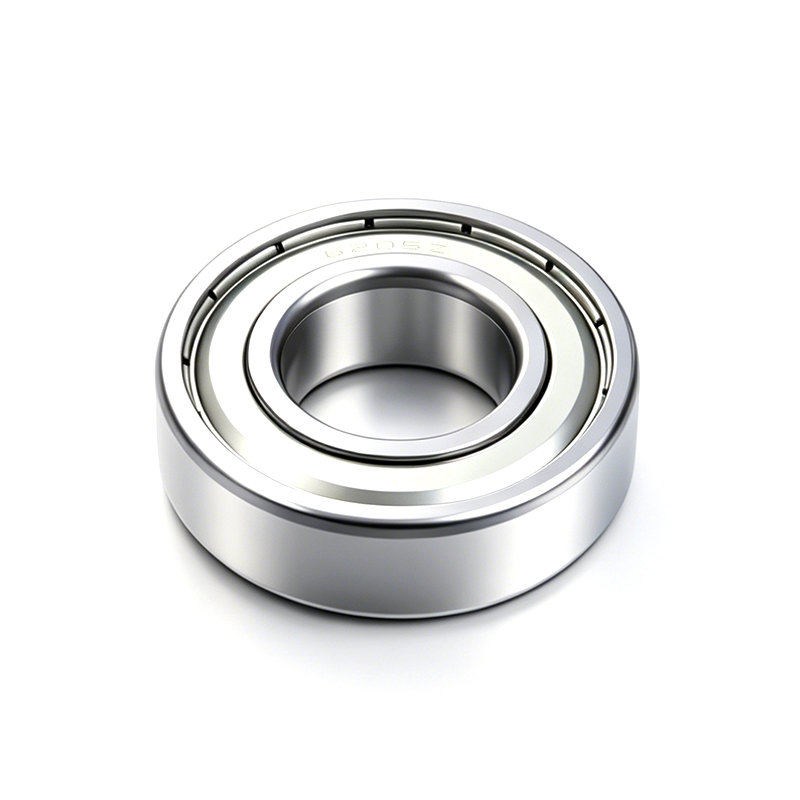
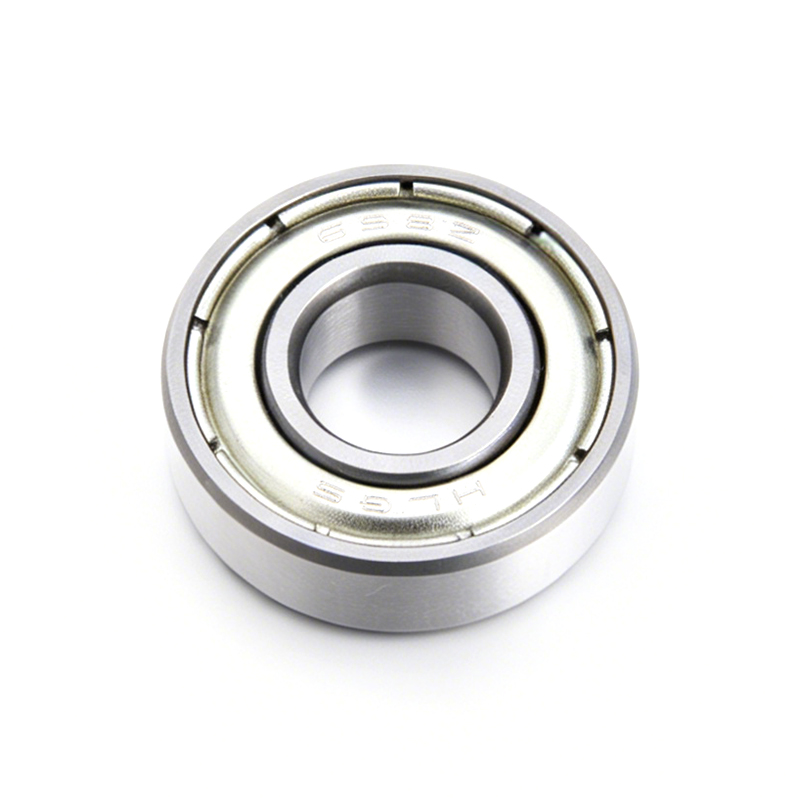
Pumps and compressors use deep groove ball bearings at both shaft ends to support the impeller and handle the radial forces created by fluid pressure and shaft deflection. The 6205 series is among the most widely specified bearings in this class, appearing in centrifugal pumps, gearboxes, conveyors, and general machines. These duties value load capacity and a robust cage over absolute quietness; the industrial-grade 6205ZZ ball bearing is designed for motors, pumps, and machinery that run for long shifts. Automotive applications follow the same logic, with deep groove ball bearings supporting alternators, gearbox shafts, and wheel hubs while handling both radial and cornering loads.
Wholesale 6205ZZ Industrial Grade Ball Bearing for Motors, Pumps and Machinery SNingbo Zhenhai Hualei Bearing Co.,Ltd. is China wholesale 6205ZZ Industrial Grade Ball Bearing for Motors, Pumps and Machinery Suppliers ...View Product →
The deep groove design also tolerates a degree of shaft misalignment and deflection better than more rigid bearing types, which extends service life in machines that see moderate shock loads.
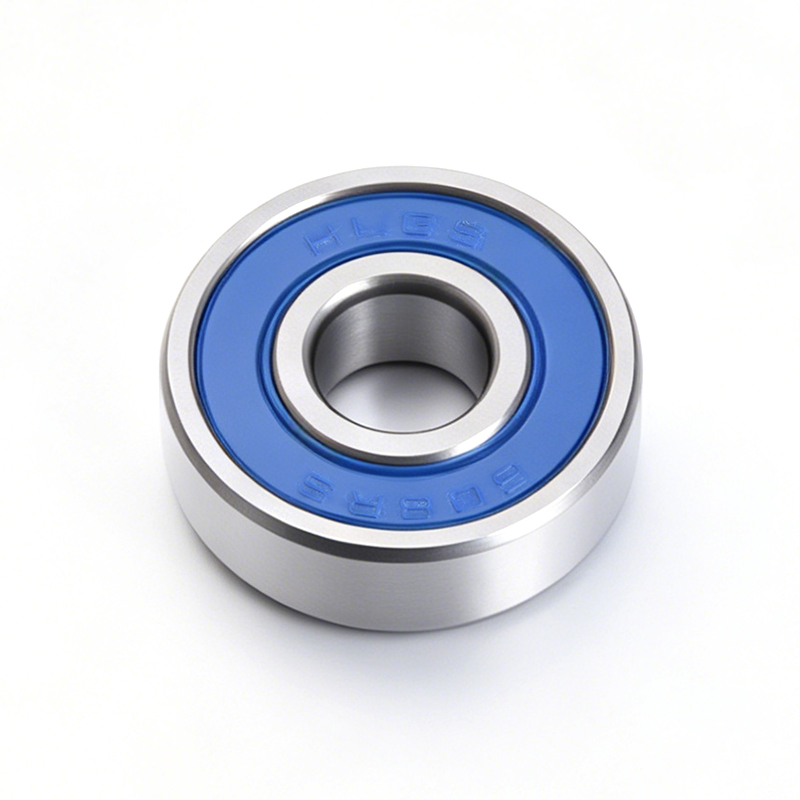
Washing machines, vacuum cleaners, food processors, mixers, and electric garden tools use small deep groove ball bearings in their motors and drive trains. The priorities are low noise, long maintenance-free life, and low cost. Sealed versions with rubber contact seals keep grease in and detergent, dust, or moisture out, so the appliance runs for years without a service visit. Power tools add impact and vibration; the bearing must hold its internal clearance stable under load reversals and occasional shock.
Robotic arms, servo drives, encoders, and CNC machines need smooth, predictable rotation with minimal clearance. Miniature deep groove ball bearings are the standard solution because their compact geometry reduces inertia, improving positioning accuracy and response speed. The same basic design that carries heavy radial loads in a pump also delivers the low-friction rotation that precision mechanisms depend on; our guide to how miniature bearings power precision engineering and high-speed machinery explains why this versatility is possible.
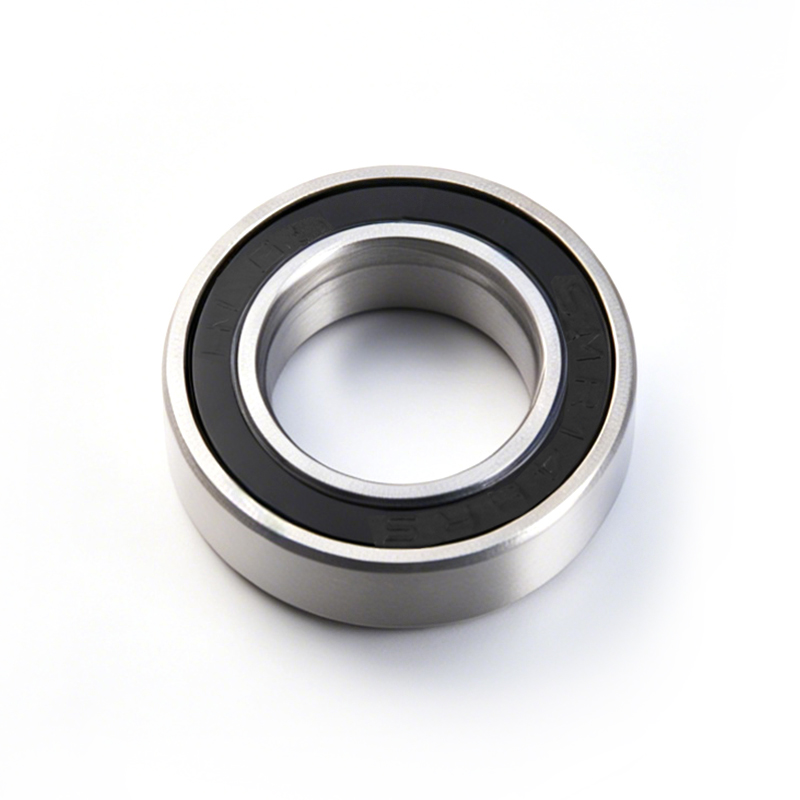
When moisture reaches the joint, stainless steel prevents corrosion. The SMR148-2RS miniature stainless steel bearing is intended for small motors and robots that need smooth rotation plus moisture resistance.
Wholesale SMR148-2RS Miniature Bearing Is Ideal for Small Motors, Robots and MecNingbo Zhenhai Hualei Bearing Co.,Ltd. is China wholesale SMR148-2RS Miniature Bearing Is Ideal for Small Motors, Robots and Mechanical M...View Product →
Food processing lines, including conveyors, mixers, fillers, slicers, and packaging machines, expose bearings to water, steam, caustic cleaners, and acidic ingredients. Chrome steel corrodes in those conditions, so stainless steel deep groove ball bearings are the preferred answer in washdown zones. The same material suits medical equipment, beverage dispensers, and outdoor devices. When cleanliness is critical, sealed stainless bearings keep the lubricant captive, block ingress, and lower the risk of grease contamination.
Several technical and commercial reasons explain the type's dominance:
In practice, select the bearing so the equivalent dynamic load stays within its published rating and the expected L10 life matches the machine's design life. For most standard motors and gearboxes, the bearing is not the limiting component: it outlasts the winding or the gear contact when lubrication and sealing are correct.
Selection starts with the envelope: the bore diameter must suit the shaft journal, and the outer diameter and width must fit the housing. The second step is load. Radial load dominates in most applications, but the axial component matters too; the deep groove design handles moderate axial loads, while heavy pure thrust loads point to a different bearing type. Speed, operating temperature, and required life follow from the machine specification.
The most important operating decision is the seal or shield arrangement.
| Design | Code | Friction | Speed capability | Protection | Typical application |
|---|---|---|---|---|---|
| Open bearing | — | Lowest | Highest | None; relies on housing seals | Oil-lubricated gearboxes, clean environments |
| Metal shields | ZZ | Low | High | Blocks large particles; retains grease | Electric motors, general industrial machinery |
| Rubber contact seals | 2RS | Higher | Reduced | Keeps grease in, liquid and dust out | Food machinery, wet, dusty or washdown areas |
The trade-off is straightforward: rubber seals protect the bearing from contamination but add friction and reduce the maximum speed, while shielded bearings run faster with less protection. A motor that runs many hours a day is usually best served by a ZZ bearing with grease lubrication; a pump in a dusty plant is safer with 2RS seals.
Chrome steel (GCr15 or SUJ2) is the standard material and covers most applications. Stainless steel adds corrosion resistance for food, medical, and marine equipment. Flanged outer rings locate the bearing axially in a housing bore without a separate circlip, saving parts and machining; our flanged bearing selection guide compares the design options in detail. Snap-ring versions (NR designation) locate the bearing with a circlip and are common in motors and small power equipment. If no standard size fits the envelope, non-standard bearings can be manufactured to your drawing, which is a practical route for OEM projects with unusual constraints.
Buying bearings for production differs from replacing a failed part. A production buyer must be confident that every batch matches the approved sample in dimensions, noise, internal clearance, and grease fill, and that the supplier keeps that consistency for years. This is one reason OEMs prefer working directly with a manufacturer rather than a trading intermediary.
The company behind the HLGS brand has specialized in miniature and small-sized deep groove ball bearings since 2001 and describes itself as a trusted direct manufacturer that welcomes OEM and ODM cooperation. It states that every product is tested before shipment, that each production step is controlled, and that its quality management systems are aligned with ISO 9001 and ISO/TS 16949. When a quality engineer evaluates a new supplier, the useful questions are concrete: how is noise measured and what limits apply? What is the dimensional sampling plan? Can a batch be traced to raw material and production date? Is internal clearance delivered as CN or C3? A direct manufacturer answers these questions from its own process records instead of forwarding them to another factory.
Deep groove ball bearings are not the most exotic bearing type, but they are the workhorse behind most rotating equipment. Their combination of load capacity, speed, low noise, compactness, standardization, and cost makes them the first choice in most rotating machines. When specifying one, the four decisions that shape most of its service life are bore size, sealing arrangement, material, and the quality system behind the supplier. Get those right, and the bearing is usually the last component you will need to worry about.
The Direct Answer: A Deep Groove Ball Bearing Supports Both Radial and Axial Loads Using a Simple, ...
What Do Flanged Bearings Do A flanged bearing supports a rotating shaft and locks it in a fixed axi...
The Direct Answer: Flanges Solve Axial Positioning and Simplify Mounting Without Extra Hardware A f...
Fundamental Definitions and Classifications of Miniature Transmission Systems In modern precision me...