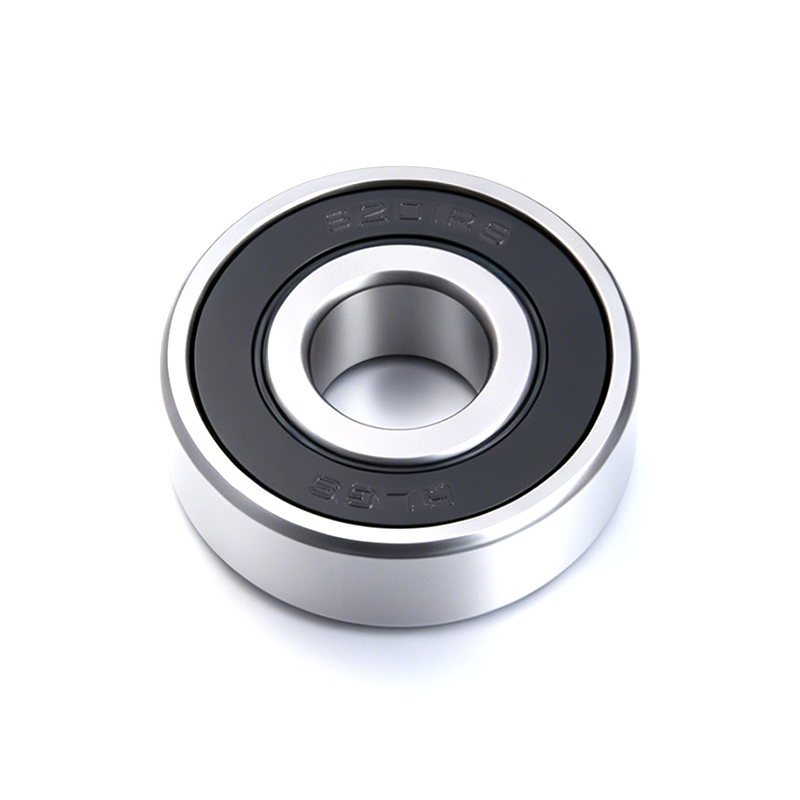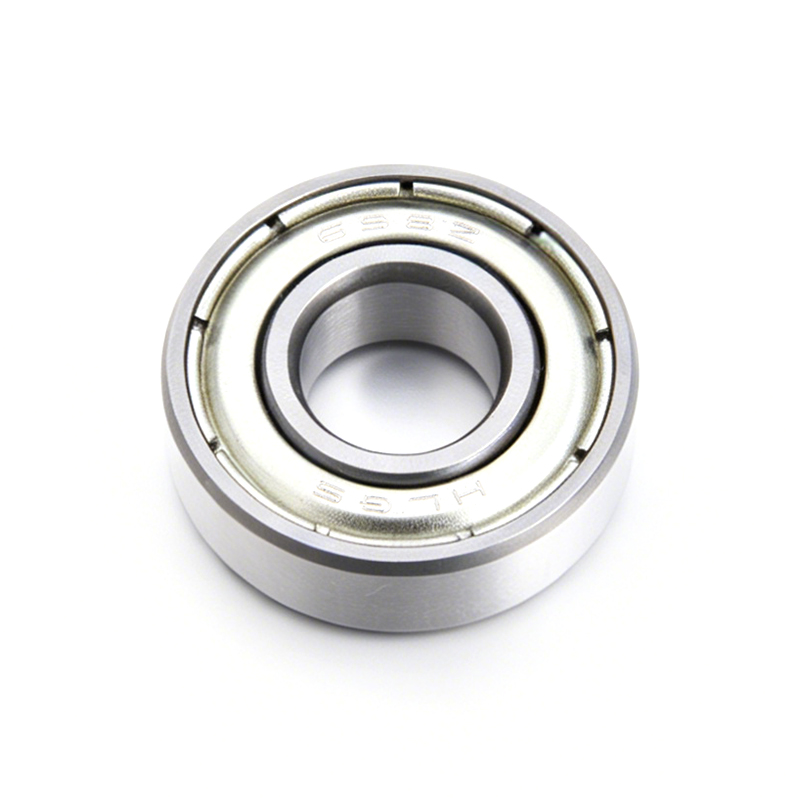
If you are selecting a deep groove ball bearing for a motor, pump, or gearbox, the first question is not “which brand” but “how much radial load and how much axial load will the bearing see.” Radial load usually drives the bearing size; axial load determines whether a standard deep groove ball bearing is still a safe choice. In practice, the combination of these two forces is the most common reason for premature bearing failure.
Radial load acts perpendicular to the shaft. A belt pulling on a pulley, the weight of a rotor, or the meshing force of a gear all produce radial load. Axial load acts parallel to the shaft. Examples include the thrust from a helical gear, the magnetic pull of an electric motor, or a shaft pushing into a housing during assembly.
A deep groove ball bearing is optimized for radial load because its raceways are deep and the balls have a small contact angle. This geometry lets the bearing take a certain amount of axial load in both directions, but there is a practical limit. If the axial component is too large, the balls slide instead of roll, and the contact ellipse moves toward the edge of the raceway.
Publicly available technical data from bearing manufacturers gives a useful rule of thumb: for standard single-row deep groove ball bearings, the axial load capacity is often 10–30% of the static radial load rating. Thin-section and miniature bearings tend to sit at the lower end because their raceways are shallower and the balls are smaller.
The static radial load rating, C0, is a reference value for the load that causes a permanent deformation of a certain size. The dynamic load rating, C, is used for life calculation. When engineers compare the axial load to the radial load, they should check the ratio against C0, not against C. Exceeding the recommended axial-to-radial ratio does not mean the bearing stops instantly. It means the stress distribution becomes irregular, the grease film breaks down, and the bearing loses service life faster than the standard L10 calculation predicts.
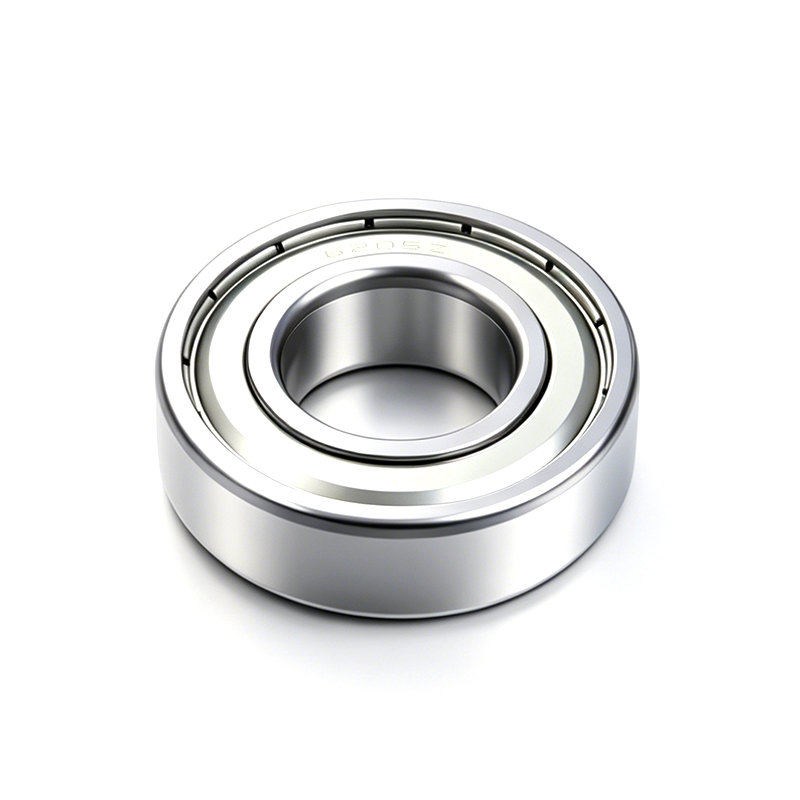
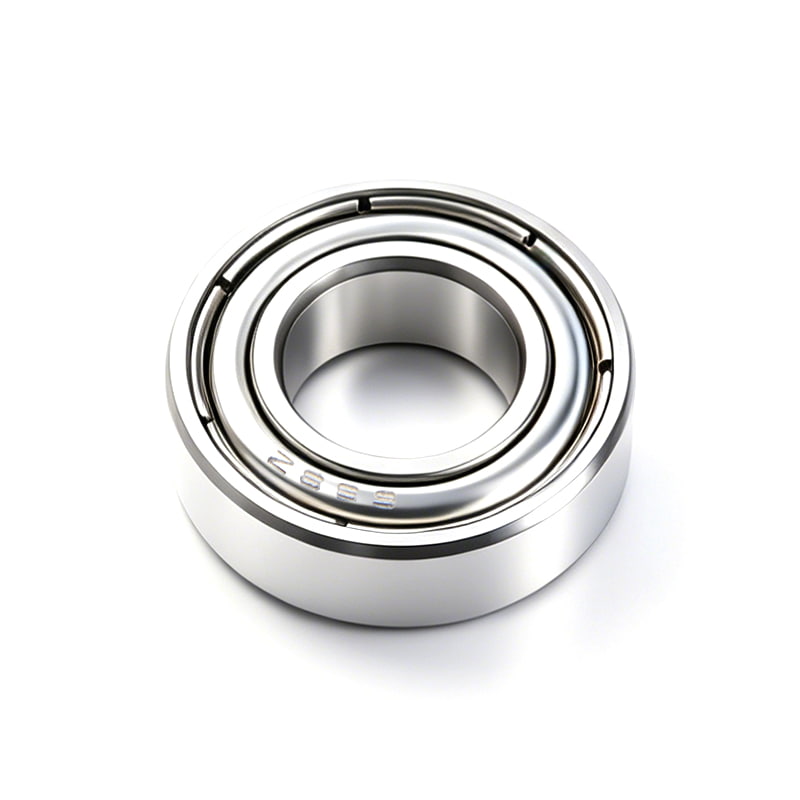
6205ZZ Deep Groove Ball Bearing for Motors and PumpsA 25×52×15mm shielded bearing made of GCr15 steel, suitable for medium radial loads in industrial equipment. Its double metal shields protect against dust and moisture, supporting reliable operation in motors, pumps, and machinery.View Product →
For industrial equipment, our 6205ZZ bearing is a common choice for motors, pumps, and machinery, but it still needs the axial load check before final selection.
When the axial load exceeds the bearing’s practical limit, the rolling elements and raceways behave differently. The contact angle increases locally, and the balls push against the edge of the raceway. This creates edge loading, which is a concentrated stress condition that can cause early flaking, indentation, and vibration.
In a motor, you may notice increased temperature and noise. In a fan or small electric device, the bearing may become rough after a short period of operation. The failure is not always obvious from the outside because the seal still looks intact. Only when the system is disassembled can you see the uneven wear pattern on the inner and outer rings.
This is also a procurement risk. If a purchasing specification only lists the radial dynamic load rating C and ignores axial load, the actual life of the bearing in the field can be significantly shorter than the calculated life. That leads to unexpected downtime, rework, and warranty claims.
The practical process starts with the application data. Determine the radial force and its direction, then the axial force and its direction. For combined loads, calculate the equivalent dynamic load using the standard relationship P = XFr + YFa. For deep groove ball bearings, when the ratio of axial to radial load is small, you can simplify the calculation and treat the radial load as the governing factor. When the axial share grows, the calculation must include a higher equivalent load.
Another point is internal clearance. A bearing with C3 clearance can tolerate a slightly higher axial load before edge loading appears, but it may run noisier. For quiet operation in fans, choose a normal clearance or even a C2. This is why your bearing supplier should know both the load and the noise requirements.
Flanged deep groove ball bearings, for example, simplify axial location in small motor and pump assemblies. The flange acts as a locating feature, but it does not increase the axial load rating. The same is true for snap-ring bearings: the ring prevents shaft movement, but the ball path remains a deep groove design.
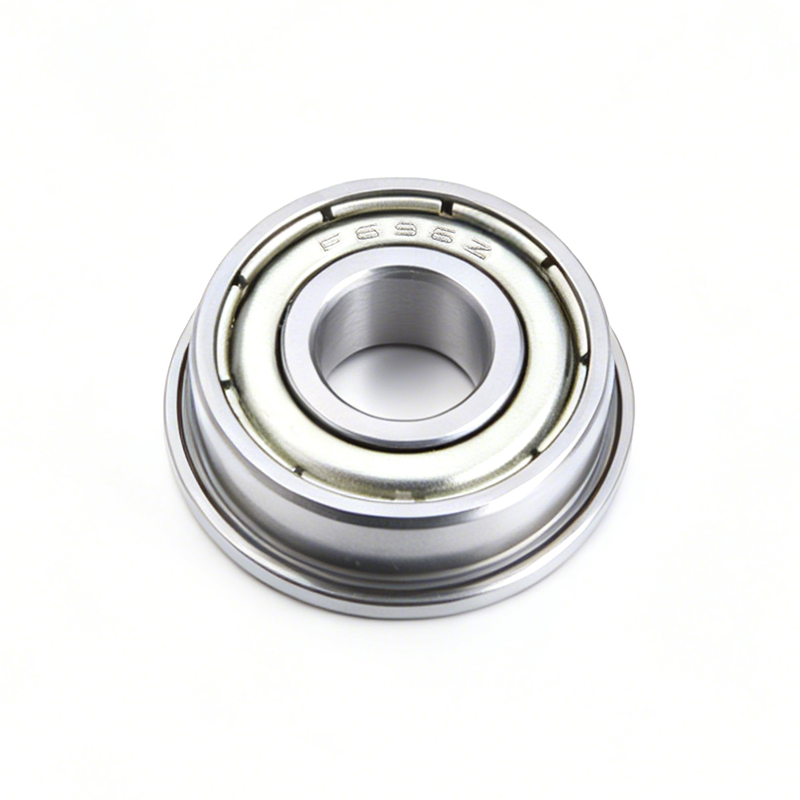
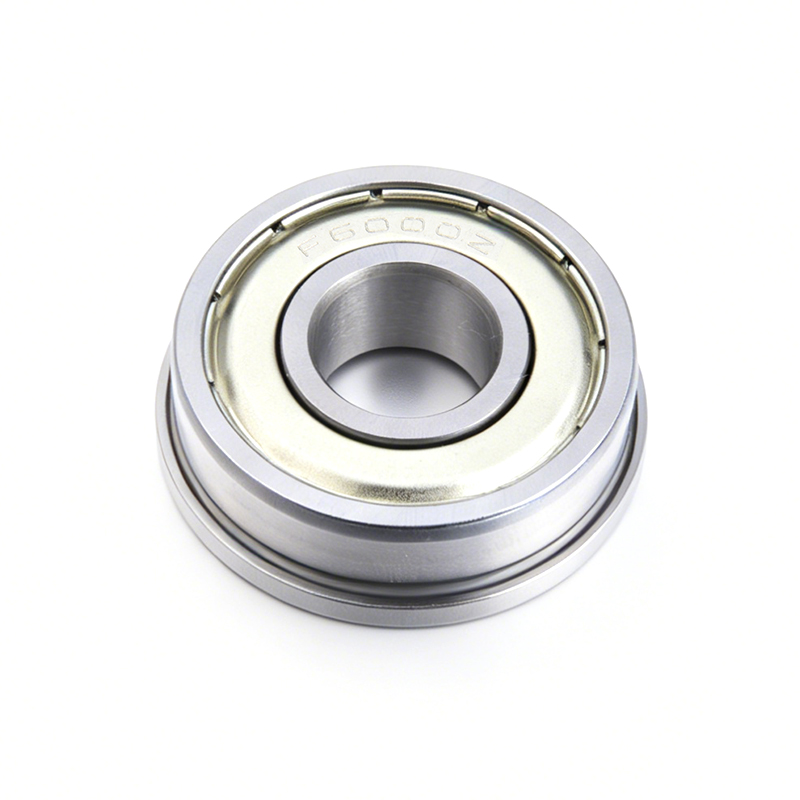
F696ZZ Flanged Bearing for Small Motors and Precision InstrumentsA 6×15×5mm flanged bearing with an integrated flange for axial positioning in compact assemblies. It provides smooth rotation and stability, ideal for micro motors, electronics, and precision devices where space is limited.View Product →
In a compact motor or small power tool, our F696ZZ shielded flange bearing helps to fix the shaft position while maintaining smooth rotation for small motor applications.
A typical electric motor has radial load from gravity and, often, from a drive belt. The axial load is usually small unless the motor drives a helical gear or a worm gearbox. In those cases, a deep groove ball bearing can still handle the load if the axial force stays below the recommended percentage of the static rating.
Fans and electronic devices often use compact bearings such as 6901ZZ. These bearings must rotate quietly and smoothly at high speed. A small amount of axial load is acceptable, but a heavy thrust load would make the bearing noisy and short-lived.
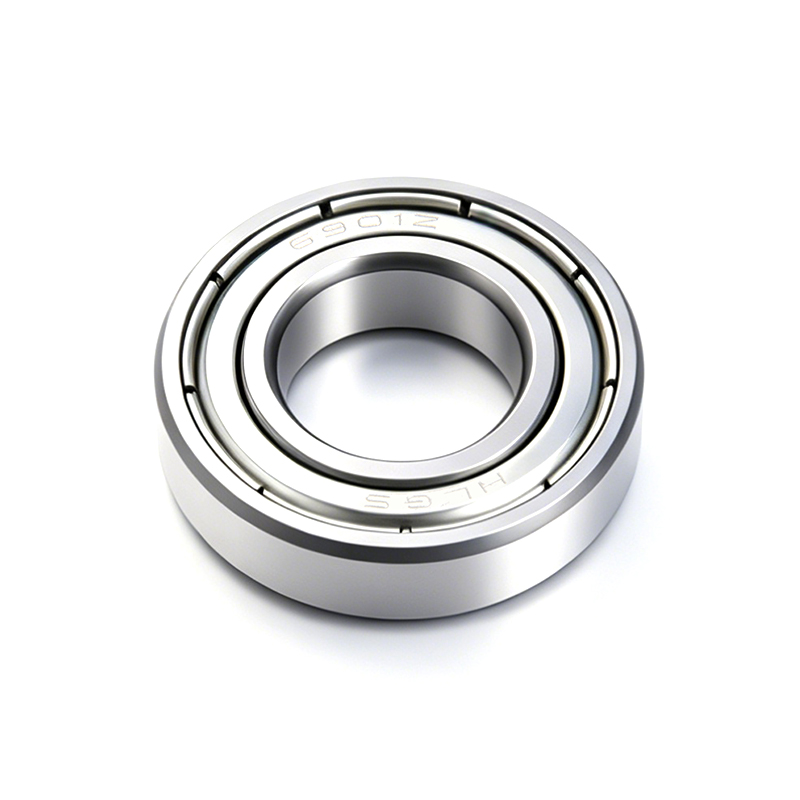
6901ZZ Compact Ball Bearing for Fans and Electronic DevicesA 12×24×6mm slim bearing designed for restricted spaces, offering low noise and stable performance under light to medium loads. Its double shields prevent dust ingress, making it suitable for fans, small motors, and precision equipment.View Product →
Our 6901ZZ compact ball bearing is designed for fans, motors, and electronic devices where space is limited and smooth operation at speed is critical.
Pumps and industrial machinery generally use heavier bearings such as 6205ZZ or oversized deep groove ball bearings. Here, the radial load is significant, but the axial component may also rise from impeller thrust or coupling misalignment. In these situations, engineers often add a separate thrust bearing or choose a larger bearing to keep the equivalent load well below the rated load.
Speed also affects the axial load capacity. At high speed, the centrifugal force on the balls changes the contact angle and the oil film pressure. A 6901ZZ running at 10,000 rpm will not accept the same axial load as the same bearing running at 1,000 rpm, even though the radial load may be lower.
| Load type | Direction | Typical capacity | Failure mode when overloaded |
|---|---|---|---|
| Radial | Perpendicular to the shaft | Dominated by raceway depth and ball complement | Fatigue spalling and roughness |
| Axial | Parallel to the shaft | Often 10–30% of the static radial rating | Edge loading, noise, and early flaking |
| Combined | Both directions at once | Must be converted to an equivalent load | Corners of raceway show wear patterns |
Use this table as a quick sanity check during the initial bearing selection phase.
Flanged bearings and snap-ring bearings do not change the load capacity of a deep groove ball bearing; they change the ease of mounting. A flange can locate the bearing in a housing without a separate seating ring. A snap ring can hold the bearing in place on a shaft or in a bore. These features are especially useful in compact assemblies where additional components would make the design too bulky. If you need to understand the differences, we have a detailed guide on flange bearing selection that covers function, types, and of course the trade-offs.
Material choice matters for corrosion resistance. Stainless steel bearings are a practical option for food machinery, medical devices, and outdoor equipment. However, stainless steel generally has slightly lower load capacity than standard chrome steel. If the application also has a high axial load, this lower reserve should be taken into account.
Start with the radial load, then verify the axial load. Do not assume that because a bearing is “heavy duty” or “industrial grade” it can absorb large axial forces without help. Always request the exact dimensions and load data from the bearing manufacturer, especially when the axial load is more than 20% of the radial load. For OEM and ODM projects, provide the operating loads, speed, and temperature. A direct manufacturer can then tailor the internal clearance, seal type, and material to match the real application. This approach reduces the risk of early failures and keeps total cost of ownership low.
If your axial load is consistently higher than 30% of the radial load, consider using an angular contact bearing or a paired arrangement. But if the space is too tight, a custom deep groove ball bearing with modified ball size and raceway curvature can sometimes extend the axial capacity within the same envelope. This is where an OEM manufacturer with non-standard bearing experience can help.
A motor that has run for years rarely announces a bearing failure early. The first sign is a low hu...
The Direct Answer: A Deep Groove Ball Bearing Supports Both Radial and Axial Loads Using a Simple, ...
Quick Answer: Open vs. Sealed vs. Shielded at a Glance The core difference lies in how each type ba...
What Do Flanged Bearings Do A flanged bearing supports a rotating shaft and locks it in a fixed axi...