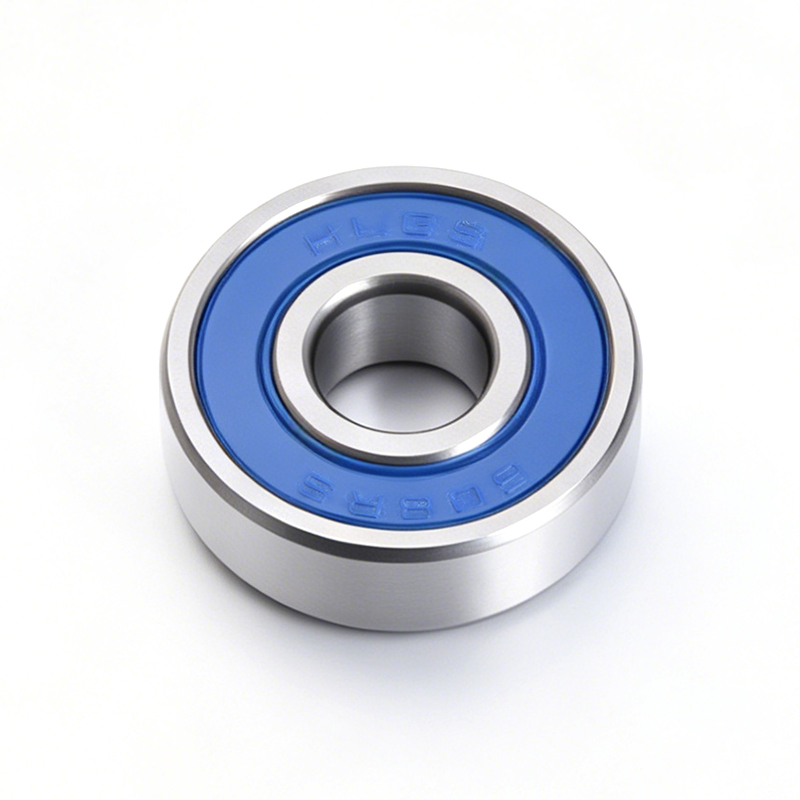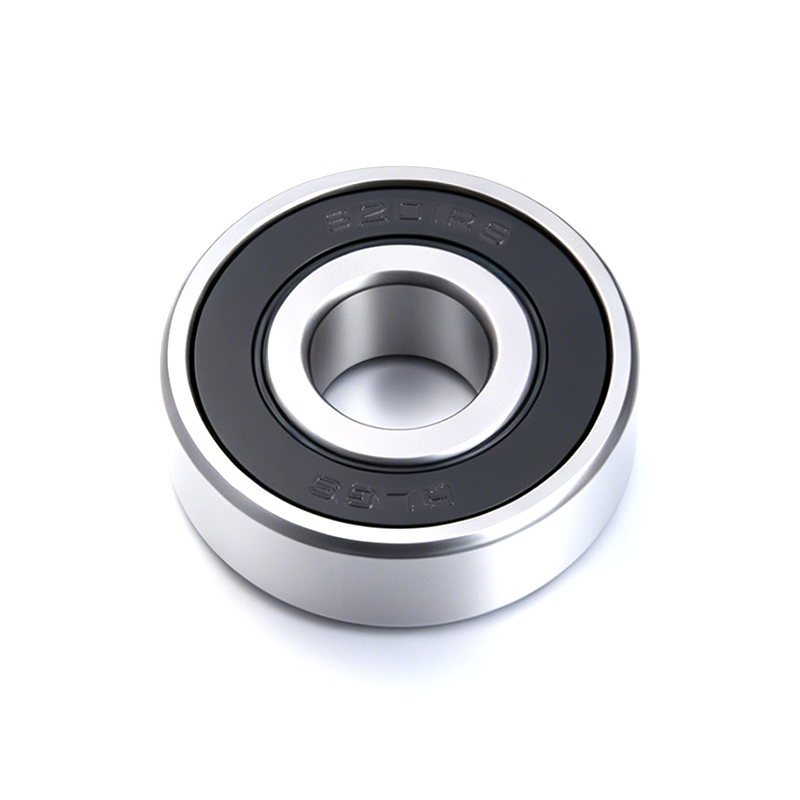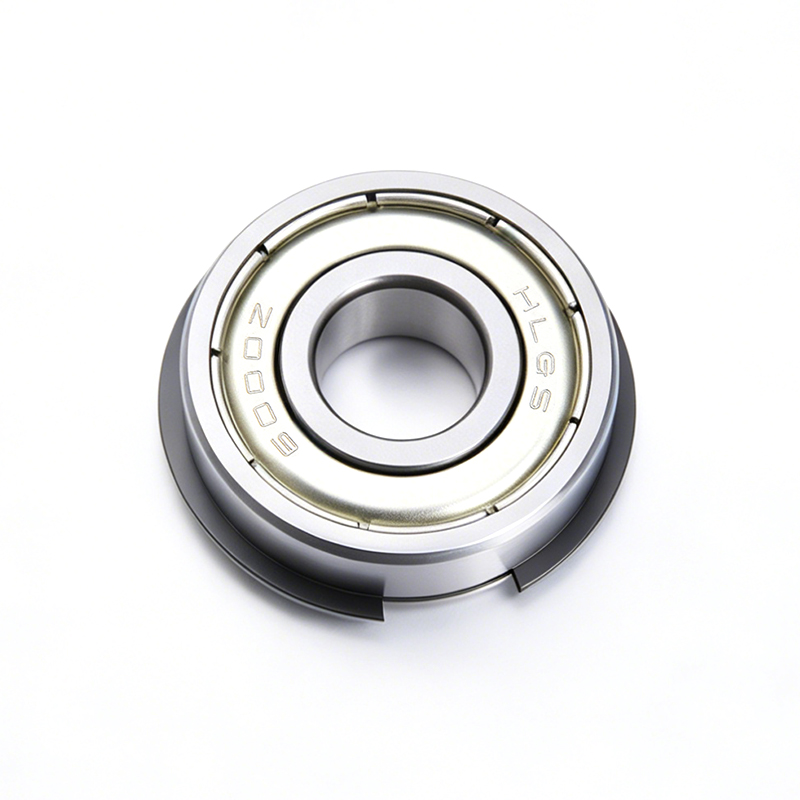
Choosing between an angular contact ball bearing and a deep groove ball bearing often comes down to one fundamental question: where is the load coming from? In our work with motor and machinery manufacturers, the decision rarely starts with theory. It starts with a test stand, a failed prototype, or a new design that needs to hit a specific load target. The short answer is that a deep groove ball bearing is the most practical default for mixed radial and light axial loads, while an angular contact ball bearing becomes the right answer only when a consistently high axial load in one direction dominates the application.
The difference begins with the raceway geometry. A deep groove ball bearing has a raceway radius that is about 51 to 53 percent of the ball diameter. This deep, continuous groove creates a large contact area between the ball and the raceway, allowing the bearing to support radial loads efficiently and also carry a modest amount of axial load in either direction. The contact angle remains near zero under pure radial load, but can increase when axial load is applied.
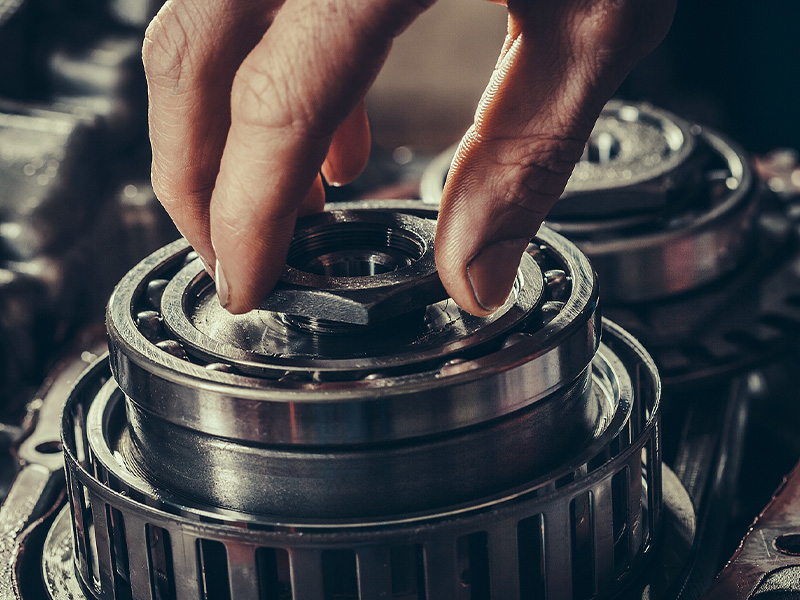
An angular contact ball bearing, on the other hand, is designed with a permanent contact angle that is machined into the bearing. Typical contact angles are 15, 25, 30, or 40 degrees. This angled raceway means that one side of the bearing is designed to support axial load in one direction only. The larger the contact angle, the greater the axial load capacity, but the lower the radial load capacity. Because of this directional behavior, angular contact bearings are normally used in pairs or sets to handle axial loads from both directions.
The following table summarizes the key operational differences that affect bearing selection in real applications.
| Parameter | Deep Groove Ball Bearing | Angular Contact Ball Bearing |
|---|---|---|
| Contact angle | 0 to a few degrees in practice | 15 to 40 degrees standard |
| Radial load capacity | Excellent | Moderate to good |
| Axial load capacity | Moderate, in both directions | High, in one direction |
| Bi-directional axial load | Supported without extra components | Requires pairing or sets |
| Speed capability | High, suitable for most motor applications | Very high, used in precision spindles |
| Installation complexity | Simple, usually one bearing per location | Complex, often needs preload and back-to-back or face-to-face |
| Cost and availability | Lower cost, widely available | Higher cost, more specialized |
| Typical applications | Motors, pumps, fans, power tools, household appliances | CNC spindles, machine tool axes, precision pumps |
Looking at the table, the practical takeaway is not that one bearing is universally better. The right bearing depends on how the shaft is loaded and how much space is available for an assembly. If a motor needs to handle only a small axial load from a coupling or a slight misalignment, a deep groove ball bearing gives you a simple, cost-effective solution that does not require careful preload adjustment. The bearing carries the load in both directions because the raceway is deep and symmetrical.
In contrast, when an application has a large axial force in one direction, such as a precision spindle with a dedicated thrust load, an angular contact bearing is the correct engineering choice. The continuous contact between the balls and the angled raceway keeps the balls in a predictable position, which improves rigidity and reduces vibration under high-speed operation. However, the installer must manage the preload and usually needs two bearings to balance the forces. This adds mounting complexity, shaft tolerances, and cost. In many high-volume production lines, that tradeoff simply is not justified unless the axial load is truly high.
From a manufacturing perspective, we see why deep groove ball bearings dominate the market for general machinery. They are less sensitive to mounting misalignment, do not require special housing arrangements, and can be sealed or shielded easily. These factors make them ideal for food machinery, household appliances, automotive electromechanical components, power tools, and mechanical transmission devices. In our own bearing production, the most requested product categories are miniature deep groove ball bearings and small-size deep groove ball bearings, because they deliver smooth operation in compact spaces.
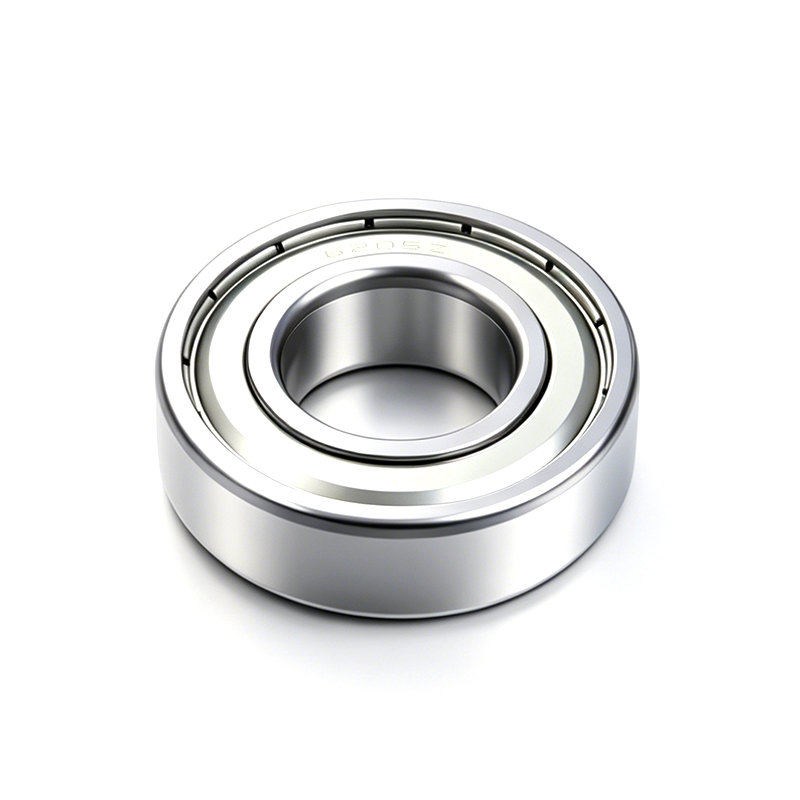
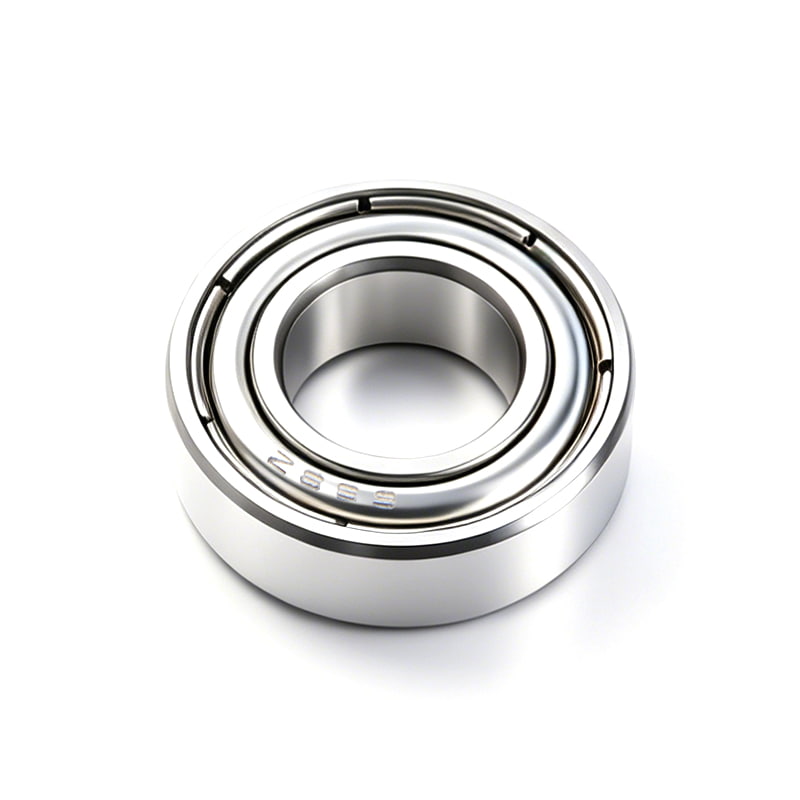
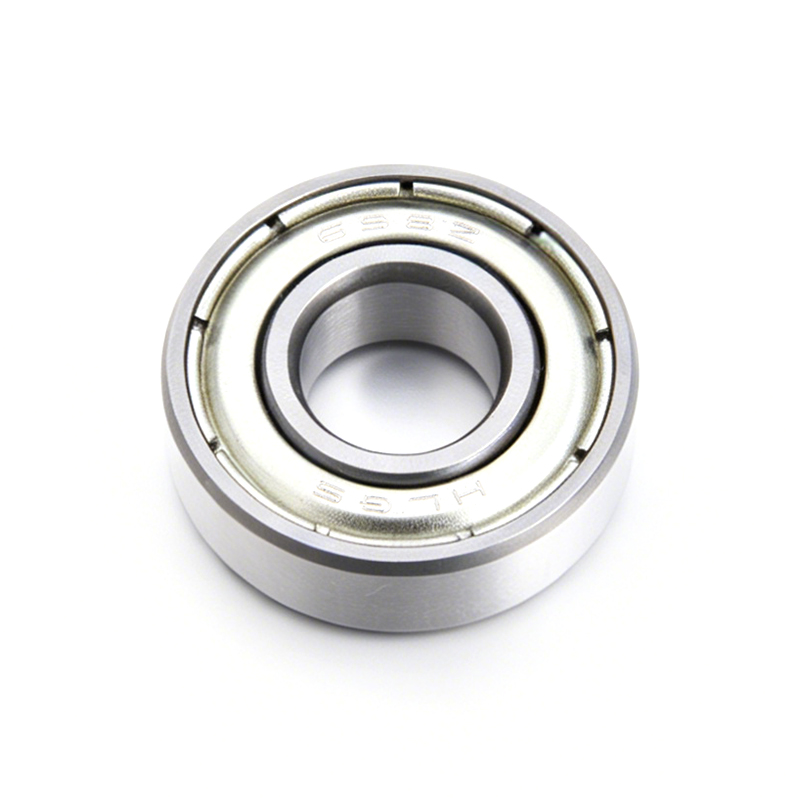
6205ZZ Deep Groove Ball Bearing for Motors and PumpsThis sealed 25x52x15mm bearing offers reliable radial load handling and dust protection, making it a solid choice for electric motors and pump applications where axial loads are not primary.View Product →
For example, a 6205ZZ deep groove ball bearing is a common industrial-grade choice for electric motors and pumps. It combines reliable radial load handling with a sealed design that protects against dust and contaminants, which is exactly what we recommend when the application does not involve a dedicated high axial load. This type of bearing is widely used in the motor and pump sector and offers a favorable balance of performance and total ownership cost.
When you are planning a new product line or reviewing an existing bearing specification, we suggest working through three practical filters before finalizing a type. First, determine the highest axial load relative to the radial load. If the axial load exceeds roughly 20 to 25 percent of the radial load, an angular contact bearing may be worth considering. If it stays below that threshold, a deep groove ball bearing is usually the safest, most economical option.
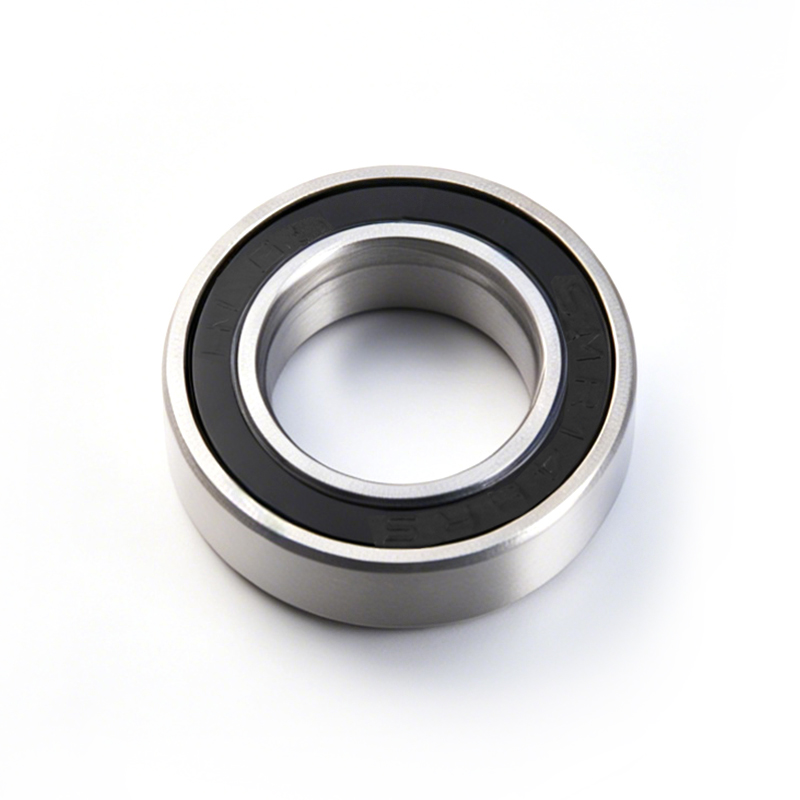
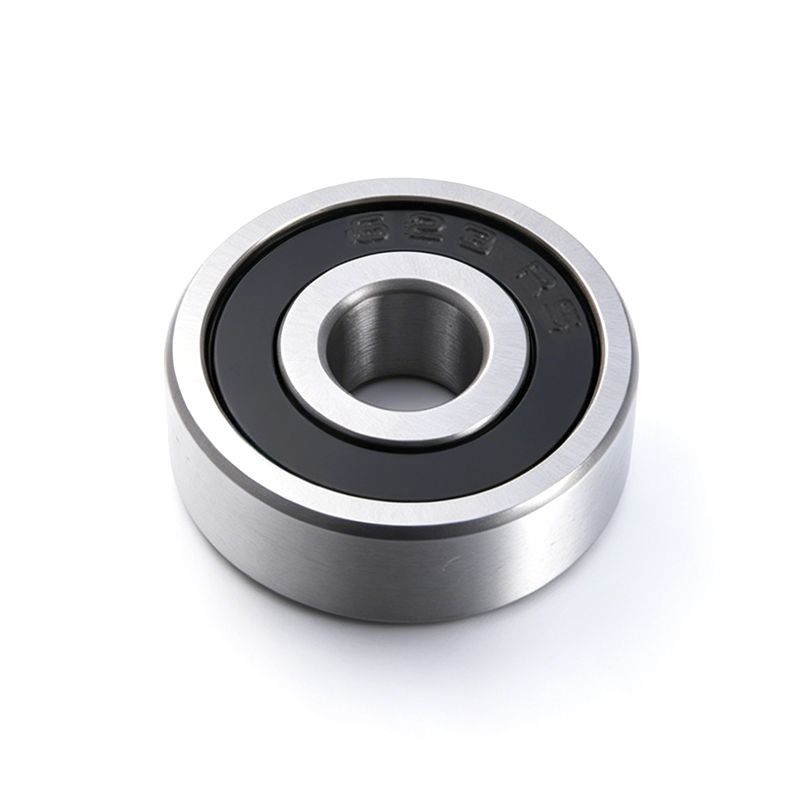
Second, consider the available mounting space. In tight housings, a flange bearing or a snap-ring bearing can simplify fixture design and reduce machining cost. Third, consider the operating environment. For food processing or medical equipment where corrosion resistance matters, stainless steel deep groove ball bearings are available, such as the SMR1482RS, which is commonly used in small motors and robotics.
SMR148-2RS Stainless Steel Miniature Bearing for Precision EquipmentWith its 8x14x4mm size and corrosion-resistant material, this shielded bearing suits compact devices like micro motors and robots, delivering smooth rotation in tight spaces.View Product →
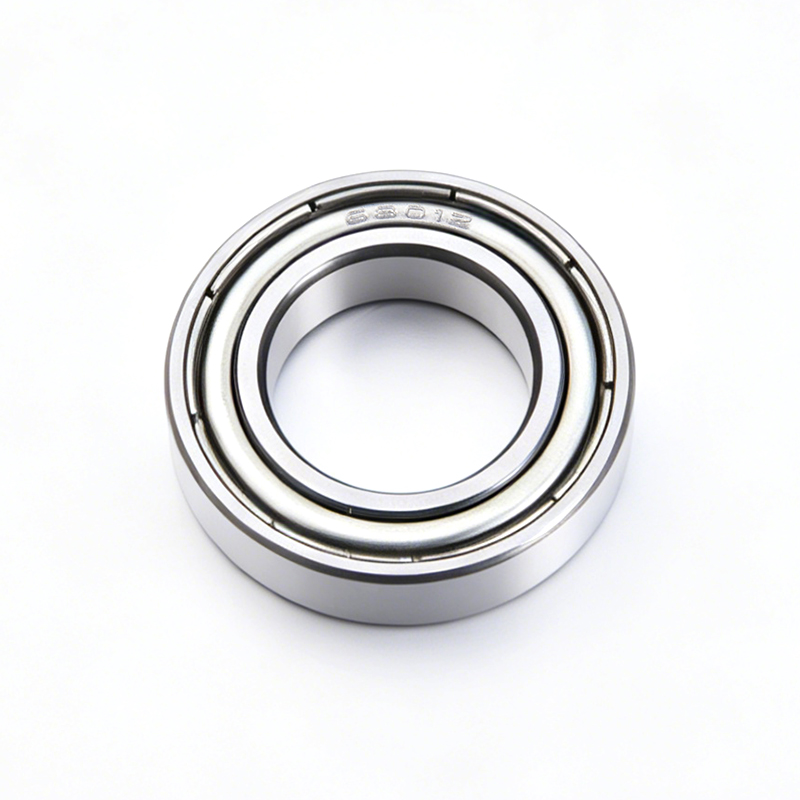
For ultra-slim applications in small motors and precision equipment, we also produce thin-profile bearings like the 6801ZZ. These are engineered to reduce weight and space without sacrificing smooth rotation. A deeper understanding of these miniature bearing designs can help you choose the right product more efficiently.
6801ZZ Slim Ball Bearing for Compact Motors and InstrumentsThe 12x21x5mm thin-section design reduces weight and space while maintaining low friction and stability, ideal for small motors and precision instruments requiring reliable performance.View Product →
If you need to understand how miniature bearings support precision engineering and high-speed machinery, our industry note on this topic explains the key factors that affect bearing life in such systems.
How miniature bearings power precision engineering and high-speed machinery
To summarize, keep the decision process focused on load direction. If your shaft experiences radial load with a light and reversible axial component, a deep groove ball bearing is the default, cost-effective choice. If your design demands a high single-direction axial load at high speed or very high rigidity, consider an angular contact ball bearing, and plan for the necessary preload and paired installation.
At HLGS, we specialize in manufacturing deep groove ball bearings across miniature, small-size, flanged, snap-ring, and stainless steel configurations, with OEM and ODM support. Our team has 20 years of experience serving motor, appliance, and equipment builders. When you share your load data and application constraints, we can help you select a stock design or create a non-standard bearing that fits your production line without unnecessary overengineering.
If you are selecting a deep groove ball bearing for a motor, pump, or gearbox, the first question i...
Imagine a small electric motor in a kitchen appliance that starts making a grinding noise after a f...
Picture a maintenance engineer holding a replacement bearing stamped 6204-2RS C3. The part looks id...
A spindle starts to leave a faint chatter mark at 8,000 rpm. The deep groove ball bearing meets its...