Industry News
Home / News / Industry News / Are Deep Groove Ball Bearings Good for Handle Moments? A Practical Guide

Are Deep Groove Ball Bearings Good for Handle Moments? A Practical Guide

Picture a small electric motor bolted to the housing of a pump. The belt is tensioned, the shaft is slightly out of line, and every pulse of the motor sends a twisting force into the bearing. That twisting force is called a moment load, and it decides whether a deep groove ball bearing is the right component or the cause of a premature failure.

The short answer is that deep groove ball bearings can handle small to moderate moment loads, but they are not designed for heavy or continuous tilting forces. For most low-power motors, fans, food machinery, and small transmission units, they are an excellent, cost-effective choice. For a mixer that runs 24/7 with a long cantilevered shaft or a gearbox that sees constant oscillation, a deep groove ball bearing may be only part of the solution.

What a Moment Load Actually Is

A moment load is really an umbrella term. It is often called a tilting moment or an overturning moment, and it is a force that tries to bend the shaft around the bearing. It behaves differently from the two load types that bearing catalogs usually emphasize.

  • Radial load presses straight down on the rolling elements, perpendicular to the shaft axis.
  • Axial load pushes along the shaft axis, either toward or away from the bearing face.
  • Moment load tries to tilt the inner ring relative to the outer ring, because the force acts at an offset distance from the bearing center.

Deep groove ball bearings use deep raceway grooves, which give them the ability to take radial loads and limited axial loads from both directions. The balls sit in a relatively wide contact patch, so a small tilt can be distributed across several balls. But the contact is still essentially a point contact, so a large moment concentrates stress on a few rolling elements and cuts service life faster than an equal radial load would.

Can Deep Groove Ball Bearings Handle Moments?

Yes, but with a clear limit. If the moment is small and intermittent, the bearing works well and often goes unnoticed. If the moment is high or permanent, the balls and raceways deform, friction rises, and the bearing runs hot. The practical rule is that a single-row deep groove ball bearing can handle small moment loads that are incidental to the application, not the main design load.

A double-row deep groove ball bearing is a different story. The extra row of balls makes the bearing more robust, and it can support tilting moment loads in addition to radial and axial loads. The trade-off is width and cost. In a compact fan or a small power tool, a double-row bearing may not fit, and the added stiffness may not be worth the shape change.

Table 1. Load capability summary for deep groove ball bearings in moment-heavy applications.
Load Type Can It Handle It? Practical Notes
Radial loads Yes, very well Primary load direction, supports high-speed operation
Axial loads, both directions Yes, moderate Single-row handles small to medium axial force
Small, intermittent moment Yes Common in fans, small motors, and light equipment
Heavy or continuous moment No Choose a double-row or angular contact design

Where Moment Loads Show Up in Real Machines

Belt-driven fans and pumps are the classic case. When a belt is tensioned, the pulley creates a radial force on the shaft, and if the shaft is long or the pulley is cantilevered, that force also creates a moment at the bearing. A similar situation happens in a small drill spindle, where the chuck is far from the bearing and the drilling pressure bends the shaft.

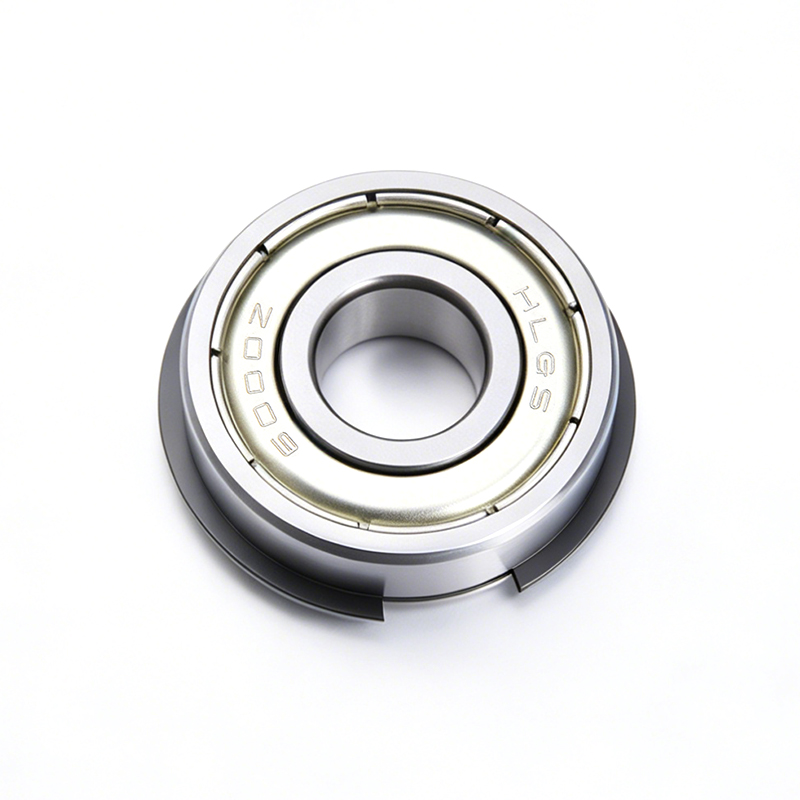
In home appliance and food machinery assemblies, moment loads often come from unbalanced rotating parts, misaligned mounting faces, or thermal expansion. These loads are usually small, which is why miniature and small-size deep groove ball bearings work well in such products. When the moment is more constant, a snap ring bearing can help by locking the bearing axially on the shaft or in the housing, so the tilted load does not push the bearing out of position.

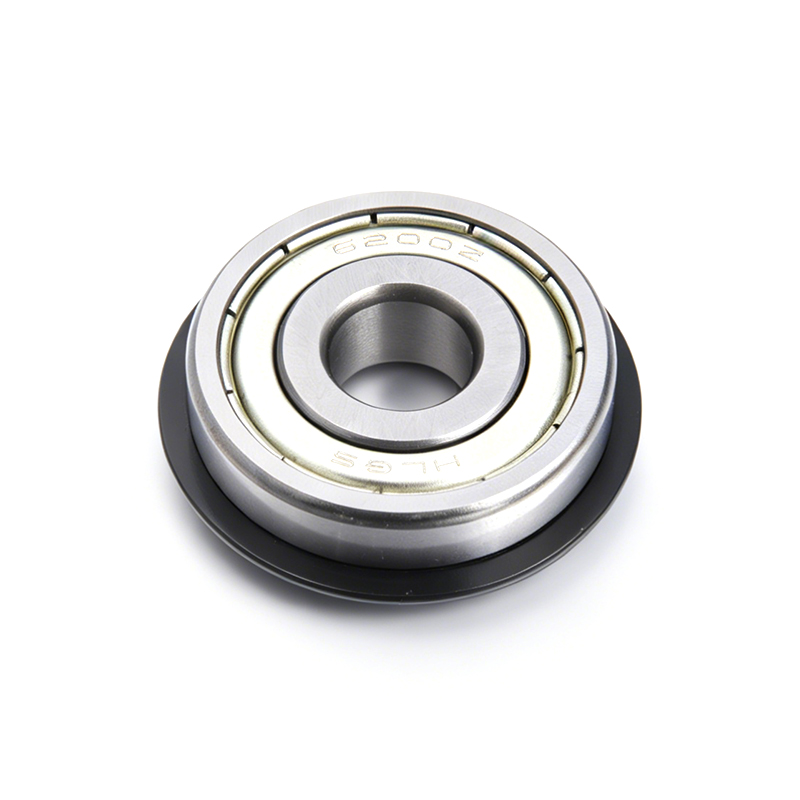
6200ZZNR Deep Groove Ball Bearing with Snap Ring for Small Motors6200ZZNR Deep Groove Ball Bearing with Snap Ring for Small MotorsThis 10×30×9 mm bearing features double shields and a snap ring for axial positioning. It suits small motors and tools where moment loads require stable alignment, as discussed in the preceding section on bearing selection.View Product →

Rotary clippers, electric hair clippers, and small blenders also produce oscillating forces. The moment changes direction every cycle, and the bearing needs enough internal clearance to let the balls move without jamming. A miniature bearing with a well-designed cage keeps the ball spacing stable under vibration, which is what the bearing needs when the moment flips back and forth thousands of times per minute.

Factors That Determine Moment Capacity

The bearing geometry determines most of the moment capacity, but operating conditions matter just as much. Here are the details worth checking before you finalize the design.

  • Number of balls: more balls spread the load over more contact points, which improves resistance to tilting.
  • Raceway depth: deeper grooves allow some angular misalignment without excessive edge stress.
  • Internal clearance: a tighter clearance boosts moment stiffness but raises friction, so the useful speed drops.
  • Preload: an applied preload makes the bearing stiffer and firmer against shaft bending, but too much preload causes heat generation.
  • Material: chrome steel is the standard choice for load capacity, while stainless steel protects two-piece corrosion in food or chemical environments.
  • Seals and shields: contact seals add drag and heat, but they keep the raceway clean; shielded versions protect against dust without the added friction.
  • Cage type: a strong cage kept the ball spacing stable, and that prevents the moment from concentrating on a single pocket.

For some assemblies, a flanged bearing adds a locating shoulder that resists axial shift. The flange can be a useful countermeasure when the moment tries to slide the bearing out of its bore, and it often simplifies the housing design.

Choosing the Right Bearing for Your Application

Start by estimating the moment magnitude. The formula is simple: moment equals force multiplied by the distance from the bearing center to the point of the force. Compare that value with the dynamic load rating of the bearing, and remember that the rating assumes radial load, not a tilted load. If the moment is more than a fraction of the rated load, ask for a heavier section or a double-row design.

Then check the speed. High speed plus a high moment is the worst combination, because friction creates heat that the bearing cannot get rid of in a cramped housing. In that case, a larger bearing with more balls or a lighter cage is often a better answer than simply adding preload.

The next step is the fit and clearance. A shaft that is too loose allows the inner ring to spin, and that converts the moment into a false brinelling dent. A housing that is too tight squeezes the outer ring and takes away the radial clearance the bearing needs to tilt slightly. After the fit, choose the lubrication. Grease with a high viscosity base oil protects the rolling contact at low speed, while an oil bath works better for continuous high-speed operation.

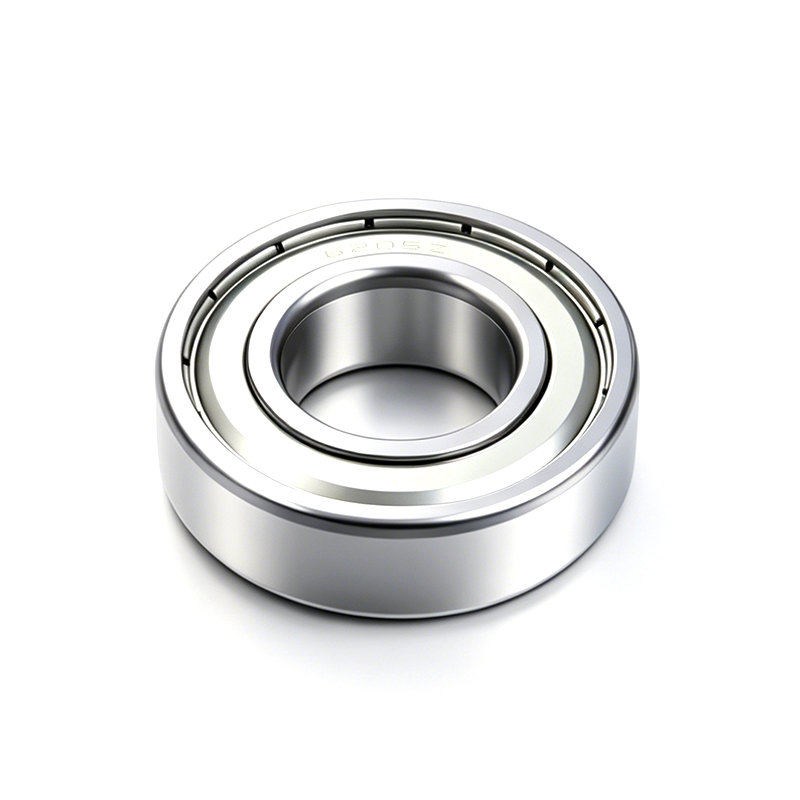
6205ZZ Ball Bearing for Medium Radial Loads in Motors and Pumps6205ZZ Ball Bearing for Medium Radial Loads in Motors and PumpsWith a 25×52×15 mm size and GCr15 steel, this shielded bearing handles moderate radial loads. It pairs well with the guidance on fit, clearance, and lubrication mentioned earlier, ensuring reliable performance in machinery.View Product →

For single-row applications with moderate moment, a small-size bearing with a deep groove and a steel cage is a dependable default. It gives good radial capacity, works over a wide speed range, and stays cost-effective in volume production.

Working Directly with a Bearing Manufacturer

Catalog values are a useful starting point, but they are based on a test rig, not on your specific housing, shaft, load cycle, and temperature. This is where a direct manufacturer can help. When you work with a bearing factory on a new product, you can adjust ball count, cage material, internal clearance, grease type, and even raceway geometry to suit the moment in your real assembly.

At our facility in Ningbo, we manufacture miniature and small-size deep groove ball bearings for applications where a small moment is present but not dominant. We routinely review drawings, test samples, and verify dynamic runout and noise levels before production. The manufacturing process follows ISO 9001 and ISO/TS 16949 management systems, so each batch receives dimensional checks and visual inspection before packing.

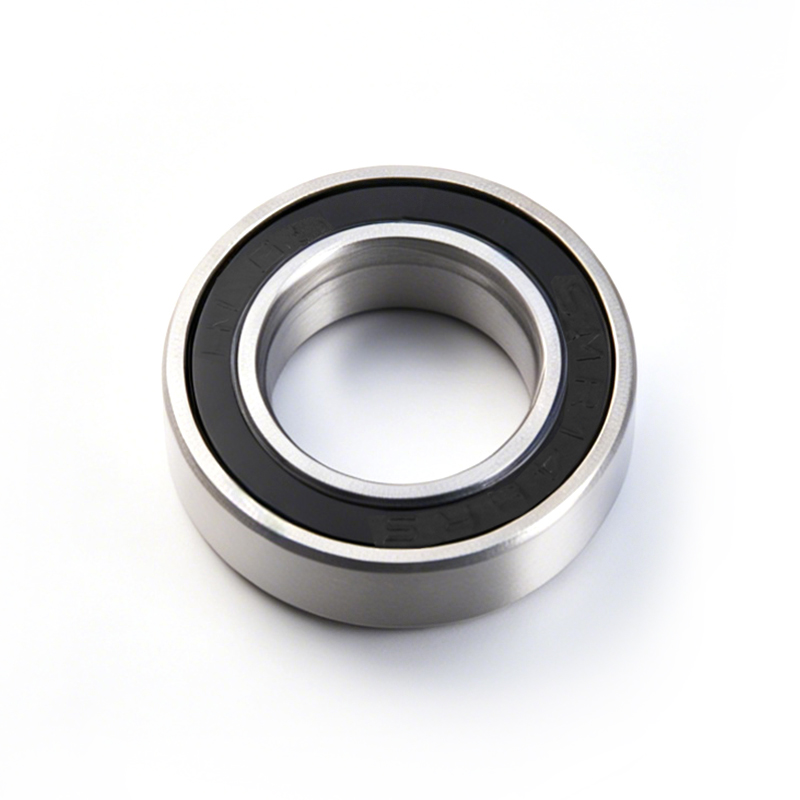
SMR148-2RS Stainless Steel Miniature Bearing for Precision DevicesSMR148-2RS Stainless Steel Miniature Bearing for Precision DevicesThis 8×14×4 mm stainless steel bearing resists corrosion and is ideal for small motors and robots. Its thin profile and shields meet the requirements for light-duty applications in harsh or compact environments.View Product →

If your design uses a stainless steel bearing for a food machine or a robot joint, the moment is usually small, but the corrosion requirement is not. A stainless steel miniature bearing with a thin profile can handle the tilting load while resisting the environment that would ruin a chrome steel bearing. For higher volume OEM orders, we also support nonstandard dimensions and special cage designs without unnecessary setup overhead.

Are deep groove ball bearings good for handle moments? Yes for small and moderate moments, no for heavy continuous ones. The bearing is not deficient because of a single load type; it is simply designed for radial dominance and occasional tilting. Check your moment magnitude, your speed, your fit and clearance, then confirm with the manufacturer before the design is frozen. The right answer for one application may be the wrong answer for another, and a short conversation with the bearing supplier can save you a field failure later.

Recent Articles