Industry News
Home / News / Industry News / What Does C3 Designator Mean for Deep Groove Ball Bearings? A Practical Guide

What Does C3 Designator Mean for Deep Groove Ball Bearings? A Practical Guide

Picture a maintenance engineer holding a replacement bearing stamped 6204-2RS C3. The part looks identical to the standard bearing on the bench, but that extra “C3” changes how much internal space is left between the raceways and the rolling elements. Get it wrong, and the motor can overheat, vibrate, or fail in a few hundred hours. This guide explains what the C3 designator means, why it matters, and when you should choose it.

What Does the C3 Designator Mean on a Deep Groove Ball Bearing?

C3 is an internal clearance code used in the bearing designation system. It does not indicate accuracy grade, material, or hardness. Internal clearance is the intentional radial gap between the rolling elements and the raceway rings before the bearing is mounted. The C3 code tells you that this gap is larger than the normal (CN) clearance for the same bearing size.

Manufacturers follow the ISO 5753 series to define radial clearance groups. Within the deep groove ball bearing range, grades commonly appear as C2, CN, C3, C4, and sometimes C5. CN is the default for most general-purpose bearings. C3 is one step above CN, so a C3 bearing starts life with slightly more internal space. The actual difference is small, often only a few microns, but under real operating conditions that extra space can be the difference between smooth running and premature failure.

Why C3 Exists: Fit, Heat, and Operating Clearance

The clearance printed on a bearing box is not the clearance that exists during operation. When a bearing is pressed onto a shaft, the inner ring expands. When the bearing is pushed into a housing, the outer ring is compressed. Both effects reduce the available internal clearance. Then heat begins to act. In many motor and gearbox applications, the inner ring runs hotter than the outer ring because the shaft carries heat from the working element. The inner ring therefore expands more, which further squeezes the rolling elements.

If you start with CN clearance and combine all these reductions, the operating clearance can fall to zero. At zero clearance, the bearing becomes heavily preloaded, friction increases, temperature rises, and lubrication breaks down. A C3 bearing provides extra margin to keep a small positive operating clearance under these conditions. That is why C3 is widely used in electric motors, pumps, small machinery, and power tools.

Larger clearance is not automatically better. A C3 bearing has slightly less rolling element contact support, so it may generate a bit more noise and offer slightly lower rigidity than a CN bearing. Precision spindles and low-noise applications sometimes need a CN or even C2 clearance instead. So the choice always comes back to operating conditions.

Do You Actually Need C3? Typical Situations

If you are selecting a replacement bearing, C3 is worth considering in these situations:

  • Motors that run continuously, especially when heat is not dissipated quickly.
  • Shafts or housings with an interference fit that measurably reduces the radial clearance.
  • Applications with a temperature difference between the inner and outer rings, such as a hot shaft with a cooler housing.
  • Higher rotational speeds, where centrifugal force and heat cause the inner ring to expand.

A C3 clearance should never be used as a bandage for poor alignment. A deep groove ball bearing can handle only a very small angular misalignment, and extra clearance does not improve that. If the machine has a bent shaft or a badly machined housing, no clearance grade will fix it.

New designs and maintenance programs often ask whether C3 is “better.” The answer depends on fit, temperature, and speed. For high-speed machine elements, internal clearance is one of the parameters that affects reliability; see how miniature bearings support precision engineering and high-speed machinery to understand why small details matter.

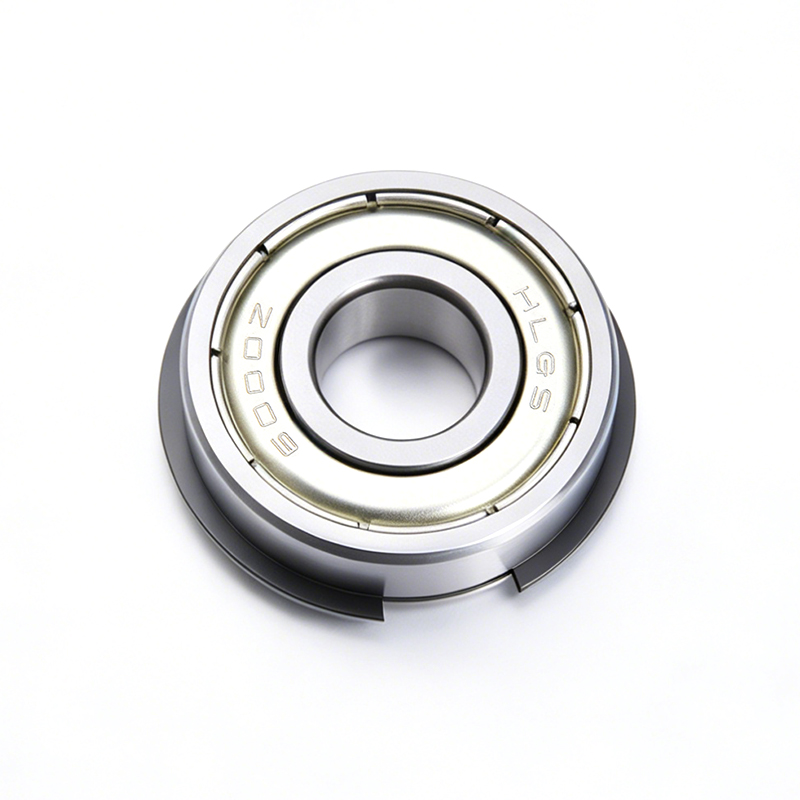
If you are designing a compact motor-driven assembly, a flanged bearing can help save space while still letting you specify the clearance you need. The F696ZZ flanged deep groove ball bearing is one example used in small motors, and it is available with C3 clearance when the operating temperature calls for it.

C2, CN, C3, or C4: A Quick Comparison

The table below summarizes the clearance groups most commonly encountered for deep groove ball bearings. Remember that the exact radial clearance values depend on the bore size and are specified in ISO 5753-1.

Radial clearance classes describe the initial clearance before mounting; they are not precision grades.
Group Clearance Level Typical Application
C2 Smaller than CN Precision spindles, low-noise devices, controlled fits
CN Normal standard clearance General-purpose machinery, stable temperatures, light to normal fits
C3 Larger than CN Motors, pumps, fans, high-speed spindles, interference fits, elevated temperatures
C4 Larger than C3 Heavy interference fits or extreme heat, limited range of applications

The choice is not a free pass to use C3 everywhere. It is a calculated decision based on how the bearing will be mounted and how hot it will run. If the application has strict noise or vibration limits, a larger clearance may work against you.

Reading the C3 Designator in a Bearing Part Number

On a typical deep groove ball bearing, the full designation combines size, seal type, and clearance. Take 608-2RS C3 as an example. 608 is the size and type code, 2RS means two rubber-contact seals, and C3 is the clearance group. If you order only “608-2RS,” you will normally receive CN clearance, because CN is the standard default for standard bearings. The C3 suffix must be stated both on the package and, if possible, on the bearing itself.

Some manufacturers print C3 on the side of the outer ring. Others mark the seal or the individual package. If the code is not visible, ask the supplier for the clearance range before accepting the parts. A bearing marked 6204 on the box but without a clearance suffix is not automatically C3 just because it came from a motor repair kit. In that case, the certificate or drawing should list the clearance group explicitly.

What to Check Before You Order a C3 Bearing

When you order a C3 deep groove ball bearing, the ordering process should include the same checks you would make for any precision component. These points matter especially for replacement motors and OEM assemblies:

  1. Confirm the full part number, including the seal and shield suffix. C3 is not a substitute for a seal type.
  2. Estimate the effective shaft and housing fits. A heavy interference fit can remove a large part of your clearance, so the operating fit may demand C3 even if the load is moderate.
  3. Consider the oil or grease type. In a hot-running motor, the right lubricant and the right clearance work together; C3 does not replace the need for proper lubrication.
  4. Ask the manufacturer for the radial clearance range they ship, especially if you are ordering from a trading company that may mix batches.

At our machining and assembly facility, we produce deep groove ball bearings in common sizes and can supply C3 clearance on request. For example, the 6201-2RS small-sized deep groove ball bearing is a compact option for motor housings where the shaft expansion is noticeable.

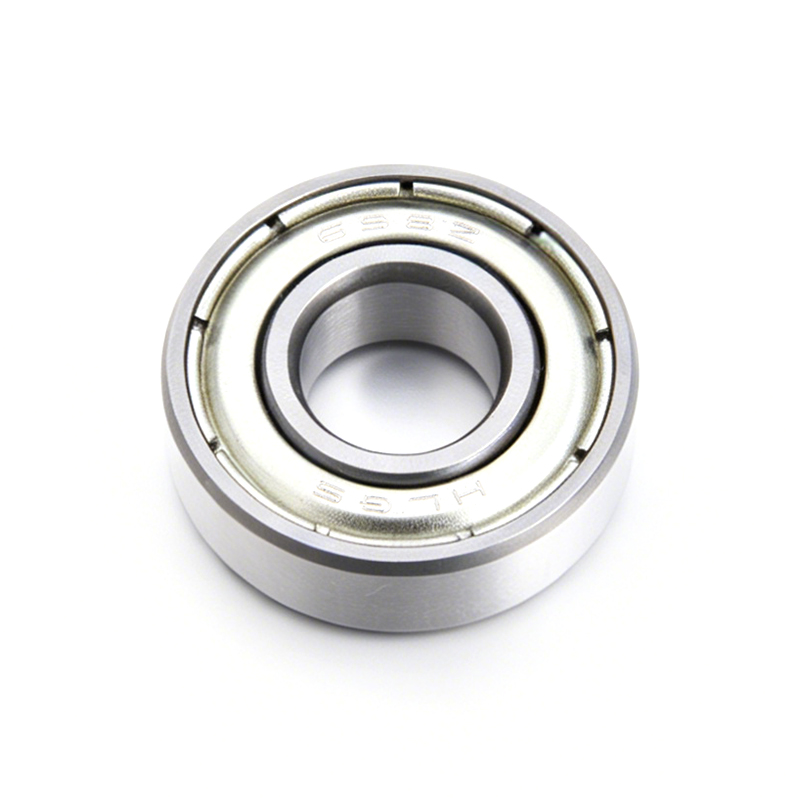
Wholesale 6201-2RS Deep Groove Ball Bearing – GCr15 Steel, Durable Suppliers, FaWholesale 6201-2RS Deep Groove Ball Bearing – GCr15 Steel, Durable Suppliers, FaNingbo Zhenhai Hualei Bearing Co.,Ltd. is China wholesale 6201-2RS Deep Groove Ball Bearing – GCr15 Steel, Durable Suppliers and Factory,...View Product →

If you need a smaller package, the 608-2RS miniature bearing can be specified with the same C3 treatment for small drivetrains.

Wholesale 608-2RS Deep Groove Ball Bearing for Ideal for Skate, Power Tool and MWholesale 608-2RS Deep Groove Ball Bearing for Ideal for Skate, Power Tool and MNingbo Zhenhai Hualei Bearing Co.,Ltd. is China wholesale 608-2RS Deep Groove Ball Bearing for Ideal for Skate, Power Tool and Mini Motor...View Product →

Before approving a new supplier, ask for a look at their deep groove ball bearing product line and confirm that they can document the clearance grade on the inspection report.

Choosing the right bearing clearance is a small decision that has a large effect on equipment life. C3 simply means a larger starting radial clearance, and it is often the right answer for motor and machinery applications where heat and tight fits shrink that clearance. But it is not a universal upgrade. Match the designator to the operating conditions, not to habit. When you need a dependable supply of deep groove ball bearings with the correct clearance, work with a manufacturer that understands how the bearing will be mounted and run.

Recent Articles