Industry News
Home / News / Industry News / Open vs. Sealed vs. Shielded Deep Groove Ball Bearings: Which One Do You Need?

Open vs. Sealed vs. Shielded Deep Groove Ball Bearings: Which One Do You Need?

Quick Answer: Open vs. Sealed vs. Shielded at a Glance

The core difference lies in how each type balances protection against friction: open bearings have no cover and require external lubrication systems, shielded bearings use a metal cover with a small clearance gap that allows relubrication while blocking large debris, and sealed bearings use a rubber or synthetic seal that makes contact with the inner ring for maximum contamination protection. Open bearings are the choice when the surrounding equipment already provides continuous lubrication and contamination control, such as in gearboxes with oil baths. Shielded bearings suit moderate-duty applications needing basic protection without sacrificing speed capability. Sealed bearings are the standard for dirty, wet, or maintenance-limited environments where contamination resistance outweighs the modest increase in rotational friction. 

Open Deep Groove Ball Bearings

Open bearings have no protective cover on either side, leaving the internal raceway, balls, and cage fully exposed to the surrounding environment.

Design and Function

Without a shield or seal, open bearings rely entirely on external systems—such as an oil bath, circulating oil, or grease fitting—to supply and maintain lubrication. This design allows for direct visual inspection of the internal components and permits continuous relubrication without any barrier restricting oil or grease flow.

Advantages

Open bearings offer the lowest friction and heat generation of the three types, since there's no seal or shield creating drag against the rotating components. They're also the least expensive option and support the widest range of lubrication methods, including high-flow oil circulation systems used in high-speed industrial machinery.

Limitations

Because there's no built-in protection, open bearings are highly vulnerable to dust, moisture, and debris contamination if not housed within a well-sealed external enclosure. They also require external grease retention features, since lubricant can migrate out of an unprotected bearing over time.

Shielded Deep Groove Ball Bearings

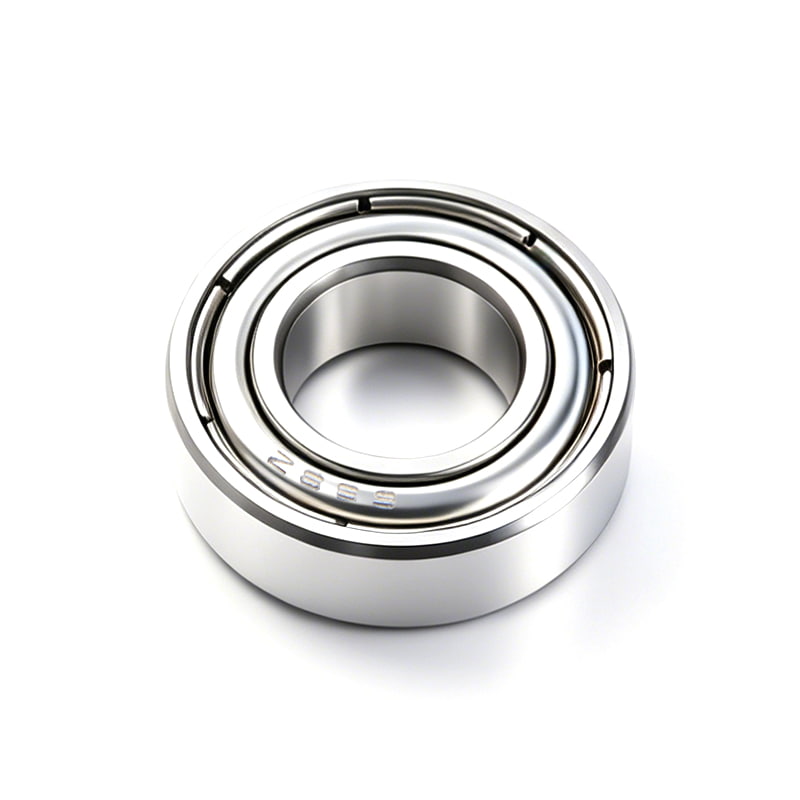
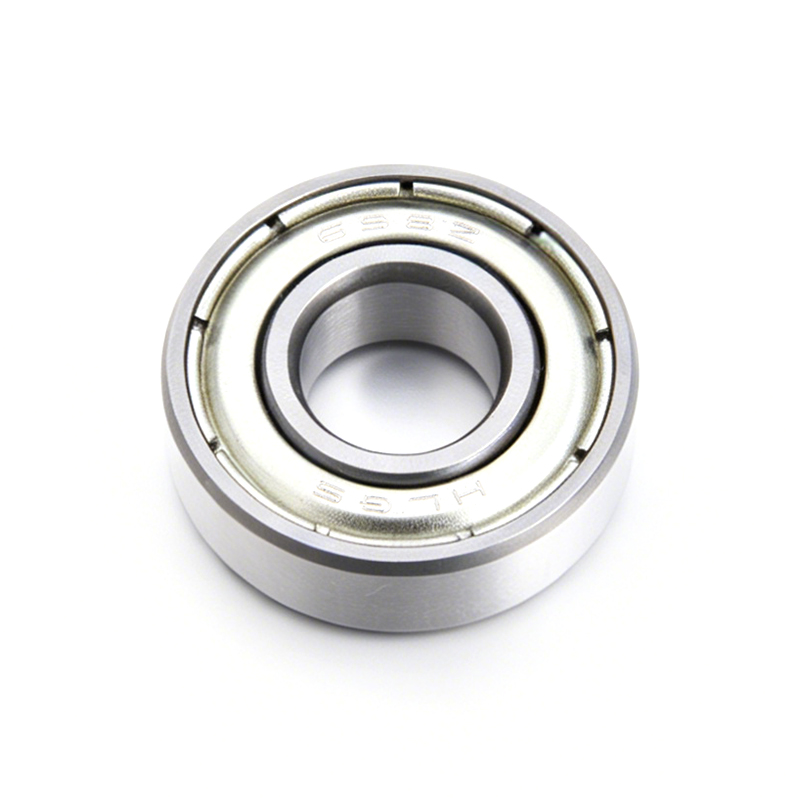
Shielded bearings occupy a middle ground, using a thin metal disc attached to the outer ring that extends close to, but does not touch, the inner ring.

Design and Function

The metal shield sits fixed to the outer ring with a small radial clearance gap—typically 0.05-0.2mm—separating it from the rotating inner ring. This non-contact design blocks larger particles and debris while still allowing grease to escape and enter through the gap, meaning shielded bearings can, to a limited extent, be relubricated in service.

Advantages

Because the shield doesn't contact the inner ring, shielded bearings generate minimal additional friction compared to open bearings, making them suitable for higher-speed applications than sealed bearings typically allow. They also provide reasonable protection against larger contaminants like metal shavings or coarse dust.

Limitations

The small clearance gap, while beneficial for low friction, also means shielded bearings offer limited protection against fine dust, moisture, or liquid ingress. They are not recommended for washdown environments or applications with direct water or chemical splash exposure.

Sealed Deep Groove Ball Bearings

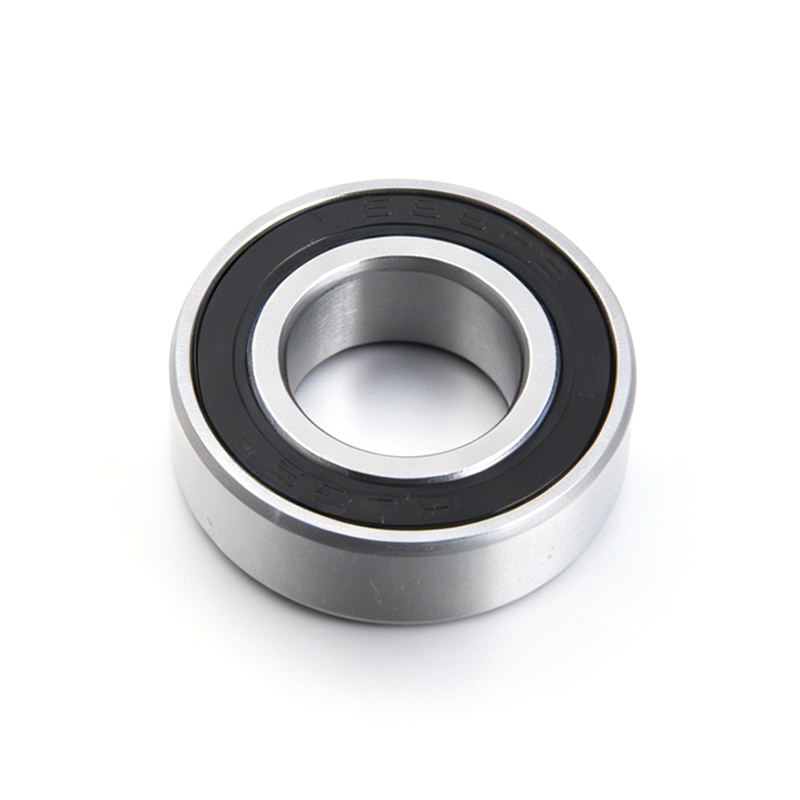
Sealed bearings provide the highest level of internal protection by using a rubber or synthetic elastomer seal that maintains physical contact with the inner ring.

Design and Function

Common seal materials include nitrile rubber (NBR) and fluoroelastomer (FKM/Viton), chosen based on temperature range and chemical exposure requirements. Because the seal lip physically contacts the inner ring surface, it creates a much more effective barrier against contamination compared to the non-contact shield design.

Advantages

Sealed bearings offer the best resistance to dust, moisture, and liquid contamination of the three types, and most are pre-lubricated for life, eliminating the need for ongoing relubrication maintenance. This makes them particularly valuable in hard-to-access locations or applications where routine maintenance is impractical.

Limitations

The physical contact between seal and inner ring generates additional friction and heat, which typically limits sealed bearings to lower maximum speeds than open or shielded equivalents. Since most sealed bearings are lubricated for life, they generally cannot be relubricated, meaning the entire bearing must be replaced once the internal grease degrades.

Side-by-Side Comparison

The following table summarizes the key performance and practical differences across all three bearing types.

Characteristic Open Shielded Sealed
Contamination Protection None (relies on housing) Moderate (large particles only) High (dust, moisture, liquids)
Friction/Heat Generation Lowest Low Moderate to higher
Maximum Speed Capability Highest High Lower
Relubrication Capability Fully accessible Limited, via clearance gap Typically none (lubricated for life)
Relative Cost Lowest Moderate Higher
Table 1: Comparison of open, shielded, and sealed deep groove ball bearing characteristics

How Environment Should Drive Your Selection

Rather than defaulting to a single "best" type, the correct choice depends heavily on the specific operating conditions the bearing will face.

Clean, Controlled Environments

In gearboxes, machine tool spindles, and other applications with existing oil circulation or a well-sealed housing, open bearings are often the most cost-effective and efficient choice, since the surrounding system already handles contamination control and lubrication.

Moderate-Duty Industrial Settings

For general-purpose motors, fans, and conveyor systems operating in reasonably clean indoor environments, shielded bearings provide a practical balance of protection and low friction without the speed limitations of full seals.

Harsh, Dirty, or Wet Conditions

Applications like agricultural equipment, outdoor machinery, food processing lines with washdown requirements, or pumps handling wet environments call for sealed bearings, where contamination resistance is far more important than minimizing friction.

Speed and Temperature Considerations

Beyond contamination protection, rotational speed and heat generation are equally important factors that can rule out certain bearing types regardless of environmental conditions.

High-speed applications, such as spindle motors or high-RPM fans, generally favor open or shielded bearings because seal contact friction in sealed bearings generates heat that increases with rotational speed, potentially leading to premature grease degradation or thermal damage at sustained high RPM. If an application requires both high speed and contamination protection, engineers often need to evaluate specialized low-friction seal designs or supplement shielded bearings with external sealing solutions in the housing itself.

Maintenance Access and Lifecycle Cost

Long-term cost considerations often favor different bearing types than initial purchase price alone would suggest.

Accessibility for Maintenance

For bearings in easily accessible locations with regular maintenance schedules, open or shielded designs allow ongoing relubrication that can extend service life significantly beyond a comparable sealed bearing's fixed lubricant lifespan. In hard-to-reach or embedded locations, sealed bearings' lubricated-for-life design eliminates the need for maintenance access altogether.

Replacement vs. Relubrication Economics

While sealed bearings cost more upfront, their maintenance-free design can reduce labor costs in applications where relubrication would otherwise require significant equipment downtime or disassembly, often making sealed bearings more economical over the full service life despite the higher initial price.

Quick Selection Guide

Use the following guidance to match bearing type to your specific application requirements:

  1. Choose open bearings when the housing provides continuous lubrication and contamination control, and maximum speed or minimal friction is a priority.
  2. Choose shielded bearings for general industrial equipment in moderately clean environments needing basic debris protection without sacrificing speed capability.
  3. Choose sealed bearings for dusty, wet, or washdown environments, or for hard-to-access locations where maintenance-free operation is essential.
  4. Choose sealed bearings when routine relubrication isn't practical, even in relatively clean environments, to reduce ongoing maintenance requirements.
  5. Avoid sealed bearings in high-speed, high-temperature applications where seal friction could accelerate lubricant breakdown.

There is no universally "better" option among the three types—each represents a different trade-off between friction, protection, and maintenance requirements. The right choice depends on matching these trade-offs to your specific operating environment, speed requirements, and maintenance capabilities rather than defaulting to whichever type seems most robust on paper.

Recent Articles