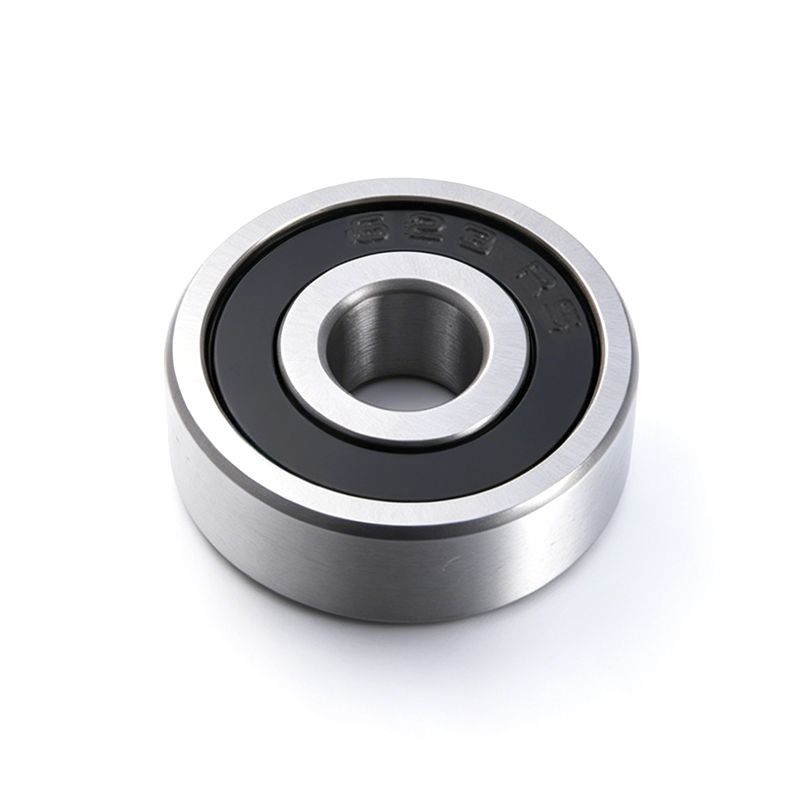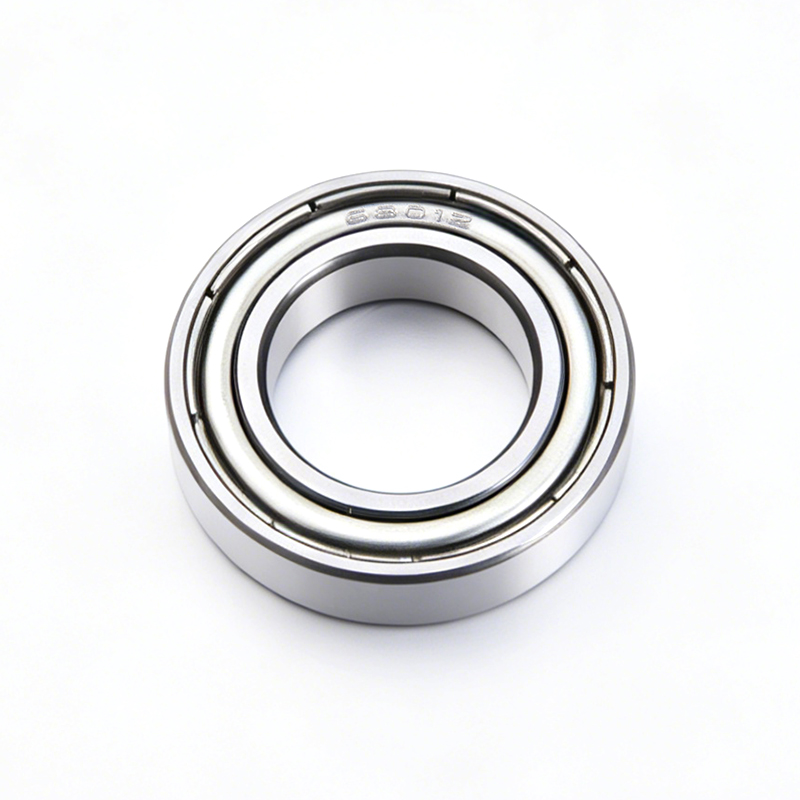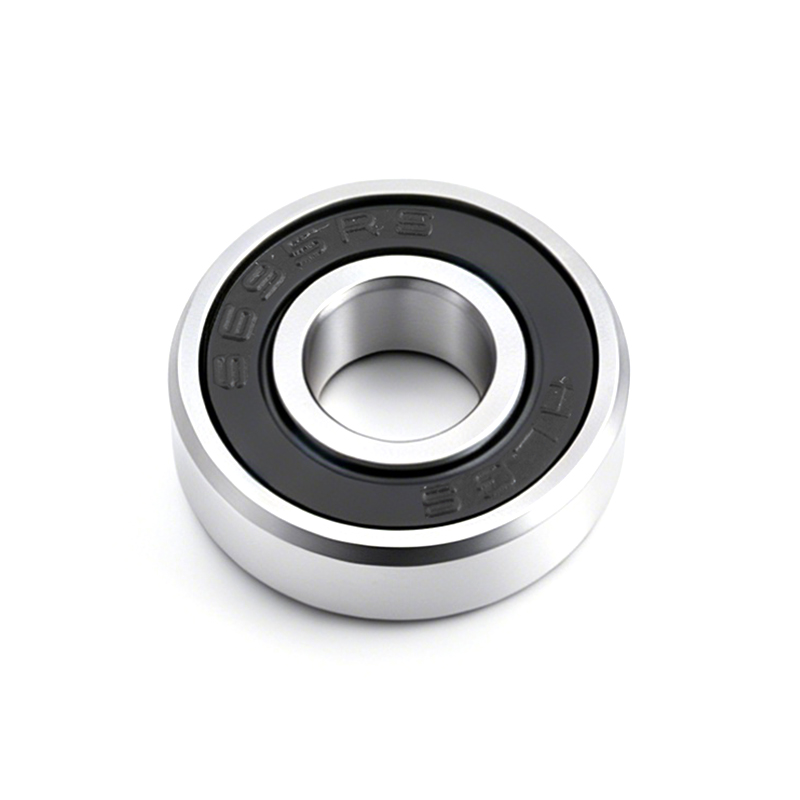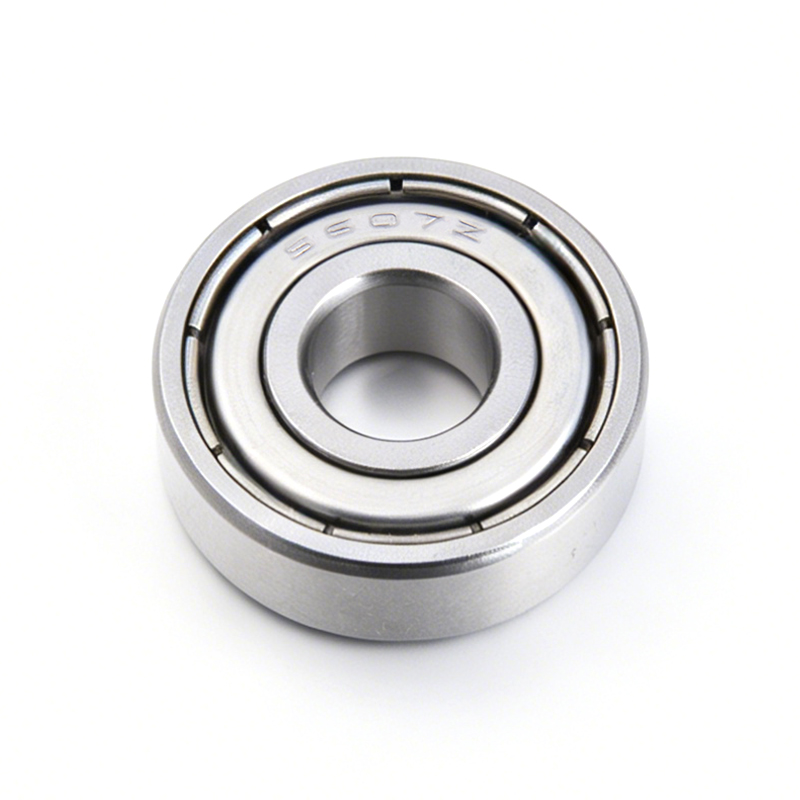
Stainless steel bearings are the correct choice whenever a rotating assembly must resist moisture, washdown chemicals, or marine salt exposure without sacrificing rolling accuracy. The decision that matters most is grade selection: martensitic grades such as 440C deliver hardness close to standard chrome steel, while austenitic grades such as 304 and 316 trade some load capacity for substantially higher corrosion resistance. Choosing the wrong grade for the environment is the single most common cause of premature stainless bearing failure in the field.
Understanding the metallurgy behind stainless bearing performance
Standard bearing steel, most commonly grade 52100 chrome steel, achieves excellent hardness and fatigue resistance but has almost no inherent corrosion resistance. A thin film of moisture left on an unprotected chrome steel raceway can produce visible surface rust within hours, and once rust forms on a raceway, the bearing is effectively scrap because rolling contact fatigue initiates at corrosion pits far faster than at a clean surface.
Stainless bearing steel solves this problem by adding chromium, typically in the range of sixteen to eighteen percent by weight for the most common grades, which forms a thin passive chromium oxide layer on the surface. This layer self-repairs when scratched, as long as oxygen is present, which is what gives stainless steel its characteristic corrosion resistance. The tradeoff is metallurgical. Adding chromium and reducing carbon content, which is necessary to keep the alloy corrosion resistant, generally reduces the maximum achievable hardness compared with standard chrome steel, and hardness is directly tied to load capacity and fatigue life in rolling contact.
This is why stainless steel bearings are not a universal upgrade over chrome steel bearings. They solve a specific problem, environmental corrosion, at a specific cost, which is typically some combination of reduced load capacity, reduced maximum operating temperature, or higher unit price. Specifying stainless steel where the environment does not require it adds cost without adding value, while specifying standard chrome steel in a corrosive environment guarantees early failure.
It is also worth understanding that corrosion resistance is not a single property but a spectrum that depends on the specific corrosive agent involved. A stainless grade that resists atmospheric moisture well may still be vulnerable to chloride ions found in seawater or industrial cleaning agents, which attack the passive layer through a mechanism called pitting corrosion. This is why grade selection cannot be reduced to a simple question of whether a bearing is stainless or not. The specific alloy composition determines which corrosive environments it can withstand and for how long, and manufacturers publish corrosion resistance data against standardized test environments precisely because performance varies so much by exposure type.
Temperature also interacts with corrosion resistance in ways that are easy to overlook during initial specification. Elevated temperature accelerates most corrosion mechanisms, so a stainless bearing that performs adequately at room temperature in a mildly corrosive fluid may degrade far faster if the same fluid is heated, as often happens in sterilization cycles, chemical processing lines, or engine bay applications. Engineers specifying stainless bearings for any application involving both heat and moisture or chemical exposure should treat the combined condition as the design case, not the room temperature baseline.
Every part of the bearing must resist the same environment, not just the rings
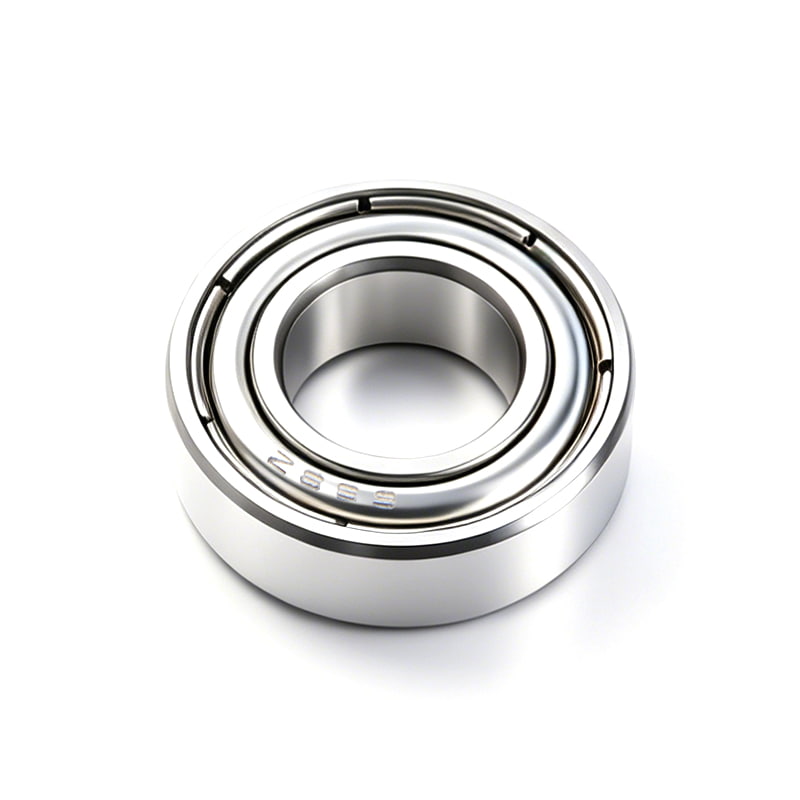
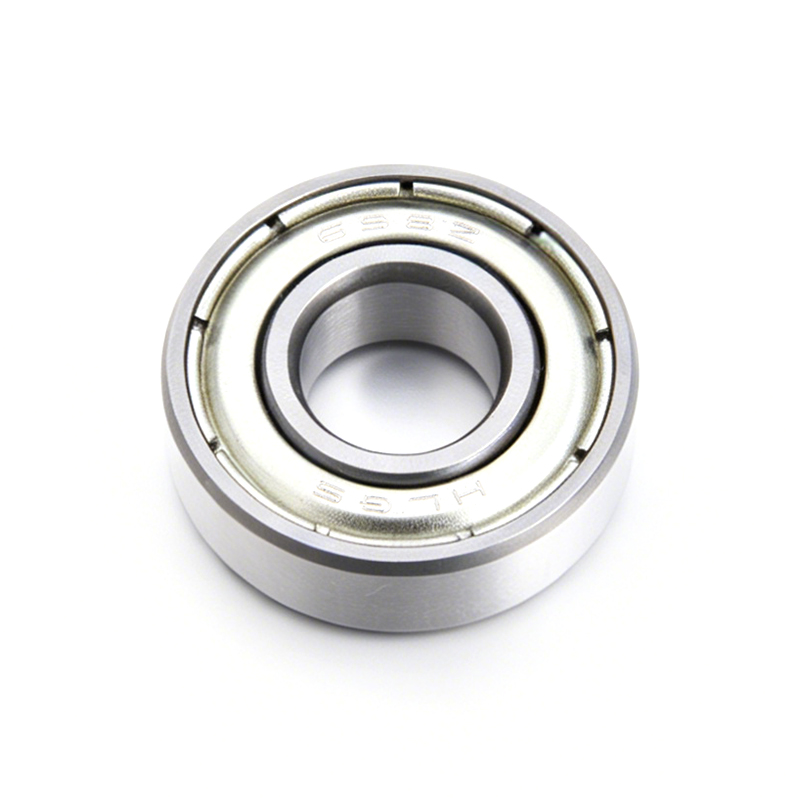
Inner and outer rings machined from stainless bar stock provide the corrosion resistant raceway surface that a chrome steel ring cannot offer in wet or chemical environments.
Rolling elements are typically made from the same or a compatible stainless grade, since mixing a standard steel ball with a stainless ring can create galvanic corrosion risk at the contact zone.
Cages are commonly made from stainless steel, PTFE, or engineering polymer, since a standard steel or brass cage would corrode long before the rings and balls show any degradation.
Rubber seal compounds are selected for chemical compatibility with the specific washdown fluid, solvent, or marine environment, since a standard nitrile seal can swell or degrade in some chemicals.
Food grade or chemically inert lubricants are used where regulatory compliance is required, and water resistant grease formulations are used where washdown exposure is frequent, while synthetic lubricants rated for wide temperature swings are chosen for outdoor and marine deployments.
Surrounding hardware, including set screws, snap rings, and housing bolts, should match the bearing corrosion class, since a standard steel fastener can rust and contaminate the assembly.
Selecting between martensitic and austenitic families based on load and environment
| Grade | Family | Typical Hardness | Best Suited For |
| 440C | Martensitic | 58 to 60 HRC | Applications needing near chrome steel load capacity with moderate corrosion resistance |
| 420 | Martensitic | 50 to 55 HRC | General purpose stainless bearings where extreme hardness is not required |
| 304 | Austenitic | Cannot be hardened by heat treatment | Light load bearings needing maximum corrosion resistance and non-magnetic behavior |
| 316 | Austenitic | Cannot be hardened by heat treatment | Marine and chemical processing environments with aggressive chloride exposure |
| 440A | Martensitic | 54 to 58 HRC | Applications wanting a balance between 440C hardness and improved corrosion resistance |
Grade availability differs slightly from standard steel bearing product lines
Stainless steel bearings are graded using the same ABEC and ISO 492 tolerance systems applied to standard steel bearings, but not every stainless grade is available at every precision level from every manufacturer. Austenitic grades such as 304 and 316 are more commonly stocked at lower to mid tolerance grades because their primary application, corrosion resistance in food, marine, and chemical processing equipment, rarely demands instrument grade accuracy. Martensitic 440C stainless is the grade most often available up to higher precision classes, since its hardness supports the tighter dimensional control required at those grades.
| ABEC Grade | ISO Equivalent | Typical Stainless Application |
| ABEC 1 | Class 0 | Food processing conveyors and general washdown machinery |
| ABEC 3 | Class 6 | Pharmaceutical processing equipment and marine deck hardware |
| ABEC 5 | Class 5 | Medical carts, laboratory automation, and chemical dosing pumps |
| ABEC 7 | Class 4 | Surgical instruments and precision laboratory analyzers requiring low noise |
Extra process controls needed to protect corrosion resistance during production
Manufacturing a stainless steel bearing follows the same general sequence as standard steel bearing production, but several steps require additional controls to avoid compromising corrosion resistance before the bearing ever reaches service.
Industries where corrosion resistance is not optional
In food and beverage processing, stainless steel bearings are used throughout conveyors, mixers, and packaging equipment, where frequent washdown with water and sanitizing chemicals would rust a standard bearing within days. Regulatory frameworks in this industry often require food contact surfaces and nearby components to resist corrosion and avoid contaminating the product line with rust particles, making stainless the default rather than an option.
In marine and offshore equipment, chloride exposure from saltwater and salt air is one of the most aggressive corrosion environments a bearing can face, which is why 316 stainless, with its added molybdenum content, is frequently specified over 304 for winches, deck hardware, and propulsion system components. In medical and surgical devices, stainless bearings support instruments that must withstand repeated autoclave sterilization cycles involving high heat and steam, an environment that would quickly degrade a non-stainless bearing. In chemical processing and wastewater treatment, bearings are exposed to a wide range of aggressive fluids, and grade selection must account for the specific chemical resistance profile required, since not all stainless grades perform equally against every chemical.
A practical framework for specifying the right stainless bearing grade
A useful discipline for engineering teams is to document the corrosive exposure profile of an application before requesting bearing quotes, rather than sending a generic request for a stainless bearing and leaving grade selection to the supplier. Supplying details on chemical contact, temperature range, sterilization frequency, and required service life allows a bearing manufacturer to recommend a grade and seal combination that has actually been validated for that exposure, rather than defaulting to whichever stainless grade happens to be in stock. This small step at the specification stage prevents a large share of the premature corrosion failures reported across food, marine, and medical equipment applications.
| Selection Factor | Question To Answer | Why It Matters |
| Chemical exposure | What fluids or chemicals will contact the bearing | Determines whether 304, 316, or a specialty alloy is required for adequate resistance |
| Load and speed | Can an austenitic grade carry the required load or is martensitic hardness needed | Austenitic grades trade hardness for corrosion resistance, limiting load capacity |
| Sterilization method | Will the assembly undergo autoclave, gamma, or chemical sterilization | Affects seal material, lubricant stability, and long term corrosion performance |
| Magnetic sensitivity | Does the application require a non-magnetic bearing | Austenitic grades are non-magnetic while martensitic grades are magnetic |
| Regulatory compliance | Does the industry require food grade or medical grade certification | Determines acceptable lubricant, seal material, and documentation requirements |
Demand drivers and sourcing patterns across corrosion resistant applications
Demand for stainless steel bearings has grown alongside stricter hygiene regulations in food and pharmaceutical manufacturing, expanding offshore wind and marine infrastructure, and the continued rise of minimally invasive and reusable medical instruments that must withstand repeated sterilization cycles. Industry data covering the corrosion resistant bearing segment has generally shown growth outpacing the broader standard steel bearing market, reflecting the fact that regulatory and reliability requirements in these end markets are becoming stricter rather than more relaxed over time.
A related trend is increased specification of hybrid designs that pair stainless rings with ceramic rolling elements, particularly in food processing and pharmaceutical equipment where both corrosion resistance and contamination avoidance matter simultaneously. Ceramic balls do not corrode at all, and pairing them with stainless rings can extend service life further in the most demanding washdown environments, though at a higher cost than an all stainless design.
Sourcing patterns also show a preference for established stainless bearing manufacturers with documented passivation processes and traceability records, especially among medical device and food equipment buyers who must be able to demonstrate regulatory compliance during audits. Buyers in less regulated industrial applications have more flexibility to source from a wider supplier base focused primarily on cost competitiveness at standard tolerance grades.
Why the corrosion resistance premium is usually justified in the right environment
Stainless steel bearings typically cost two to five times more than an equivalent standard chrome steel bearing, driven by more expensive raw material, more difficult machining, and additional passivation processing. In applications without meaningful corrosion exposure, this premium delivers no return and standard chrome steel remains the correct economic choice.
In corrosive environments, the calculation reverses sharply. A standard bearing that fails from rust within weeks or months generates repeated replacement cost, unplanned downtime, and in regulated industries such as food and pharmaceutical manufacturing, potential contamination events that carry cost far beyond the part itself. A stainless bearing that runs for years without corrosion related failure, even at several times the unit price, produces a lower total cost of ownership once replacement frequency, labor, and downtime are included in the comparison.
Buyers should also weigh grade selection against total cost rather than defaulting to the highest corrosion resistance available. Specifying 316 stainless in an environment where 304 would perform adequately adds cost without proportional benefit, while under-specifying 304 in a chloride heavy marine environment where 316 is required simply moves the failure further down the timeline rather than preventing it.
Short answers to the questions design and procurement teams ask most often
| Question | Short Answer |
| Is 316 stainless always better than 304 | Not always. 316 offers superior chloride resistance due to added molybdenum, but 304 is adequate for many general moisture exposures at a lower cost. |
| Can stainless bearings match the load capacity of chrome steel bearings | 440C martensitic stainless comes close, but austenitic grades such as 304 and 316 carry meaningfully lower dynamic load ratings at equivalent size. |
| Do stainless bearings need special lubricant | Not always, but food grade, medical grade, or chemically inert lubricants are required in regulated industries and should be confirmed against the specific application. |
| Are stainless bearings magnetic | Martensitic grades such as 440C are magnetic, while austenitic grades such as 304 and 316 are largely non-magnetic, which matters in sensitive electronic or instrumentation environments. |
| Why does a stainless bearing sometimes still corrode | Contamination from carbon steel particles during handling, chloride pitting beyond the grade rating, or incompatible cleaning chemicals are the most common causes of unexpected corrosion. |
Practices that preserve corrosion resistance over the life of the bearing
A properly specified and well maintained stainless steel bearing can reasonably be expected to match or exceed the service life of a standard chrome steel bearing operating in a clean, dry environment, even though the two are rarely compared directly since they are typically deployed in very different conditions. The more relevant comparison for most buyers is between a stainless bearing and a chrome steel bearing placed in the same corrosive environment, and in that comparison the stainless option consistently delivers a longer and more predictable service life, which is ultimately the entire reason the material exists as a distinct product category within precision bearing manufacturing.
Stainless steel bearings solve a specific engineering problem, environmental corrosion, and should be specified based on that problem rather than treated as a universal premium upgrade over standard steel.
The overarching principle is that stainless steel bearings perform best when specified deliberately against a defined environment, not selected by habit or by the assumption that stainless is always the safer choice. A precision manufacturing team that matches grade, component material, and lubricant to the actual chemical and thermal exposure of the application will get long, reliable service from a stainless bearing that is smaller than a coin but responsible for the reliability of an entire corrosion exposed assembly. Documented grade selection, verified passivation, and compatible seal and lubricant choices together form the difference between a stainless bearing that performs as expected for years and one that fails quietly within a single operating season.
The Direct Answer: Match Precision Class to Rotational Accuracy Needs, Not to the Highest Available...
Fundamental Definitions and Classifications of Miniature Transmission Systems In modern precision me...
The Direct Answer: A Deep Groove Ball Bearing Supports Both Radial and Axial Loads Using a Simple, ...
Direct Answer Small-sized bearings, typically ranging from about 1 millimeter to 30 millimeters in...