Industry News
Home / News / Industry News / Ball Bearings Size Guide: How to Read, Measure & Choose the Right Bearing

Ball Bearings Size Guide: How to Read, Measure & Choose the Right Bearing

If you have ever held two ball bearings that look almost identical, only to find that one fits and the other does not, you already know why ball bearings size matters. A few tenths of a millimeter can decide whether a motor runs smoothly or a replacement part sits useless on the workbench.

At HLGS, we make deep groove ball bearings for motors, fans, power tools, appliances, precision devices and custom equipment. This guide explains how bearing sizes are named, how to measure them correctly, and how to choose the right size without guessing.

What “Ball Bearings Size” Really Means

When people talk about ball bearing size, they usually mean the three main dimensions: bore, outside diameter and width. But a complete size check can involve more than those three numbers.

  • Bore, or inner diameter: the hole through the middle, where the shaft fits.
  • Outside diameter: the outer edge of the bearing, which fits into the housing.
  • Width: the thickness from one side face to the other.
  • Flange diameter: for flanged bearings, the raised outer lip adds a fourth important dimension.
  • Snap ring groove: for NR bearings, the ring and groove position affect mounting.
  • Ball diameter: important when replacing loose balls, not just complete bearings.

Two bearings can share the same bore but differ in outside diameter, width, shield type or internal clearance. That is why a size code is a starting point, not a final answer.

How to Read a Bearing Size Code

Metric bearing numbers often follow a simple rule. For standard metric bearings with bore numbers from 04 upward, multiply the last two digits by 5 to get the bore in millimeters. For example, a 6205 bearing has a 25 mm bore because 05 x 5 = 25.

There are also special cases. Bore numbers 00, 01, 02 and 03 mean 10 mm, 12 mm, 15 mm and 17 mm. Miniature bearings can be different: codes such as 608, 688 and 698 often use the final digits as the bore in millimeters, so they have an 8 mm bore.

Quick code examples

Common bearing code examples and how their numbers map to size. Always confirm with a caliper, because suffixes and special designs can change the outside profile.
Bearing code Bore (ID) Outside diameter Width What the code suggests
608-2RS 8 mm 22 mm 7 mm Miniature, rubber sealed
688ZZ 8 mm 16 mm 5 mm Extra-small, shielded
698ZZ 8 mm 19 mm 6 mm Small tools and compact drives
6201-2RS 12 mm 32 mm 10 mm Standard metric, 01 = 12 mm
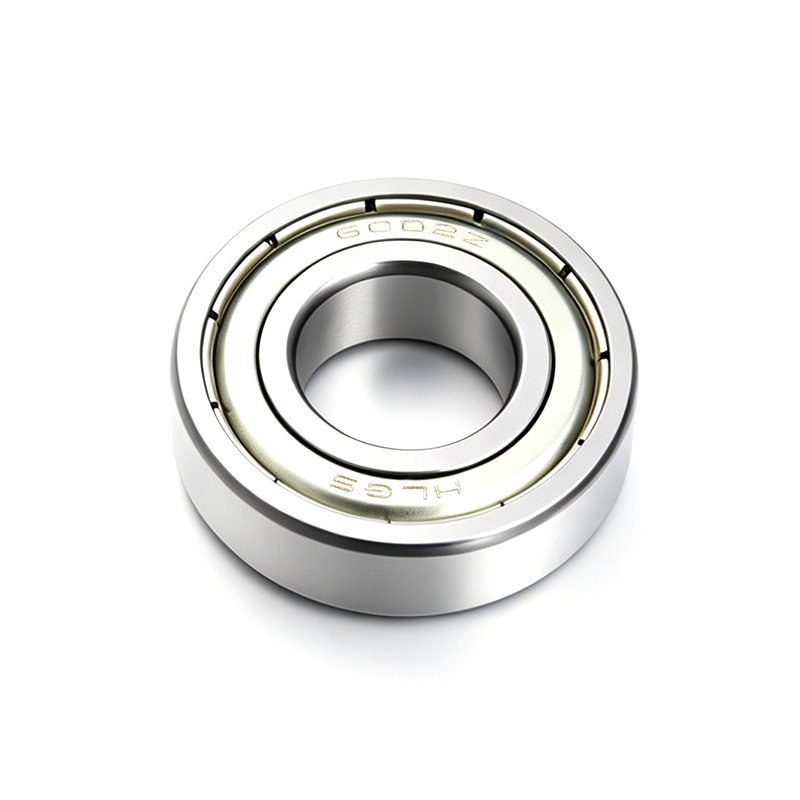
6205ZZ 25 mm 52 mm 15 mm Industrial, 05 x 5 = 25 mm
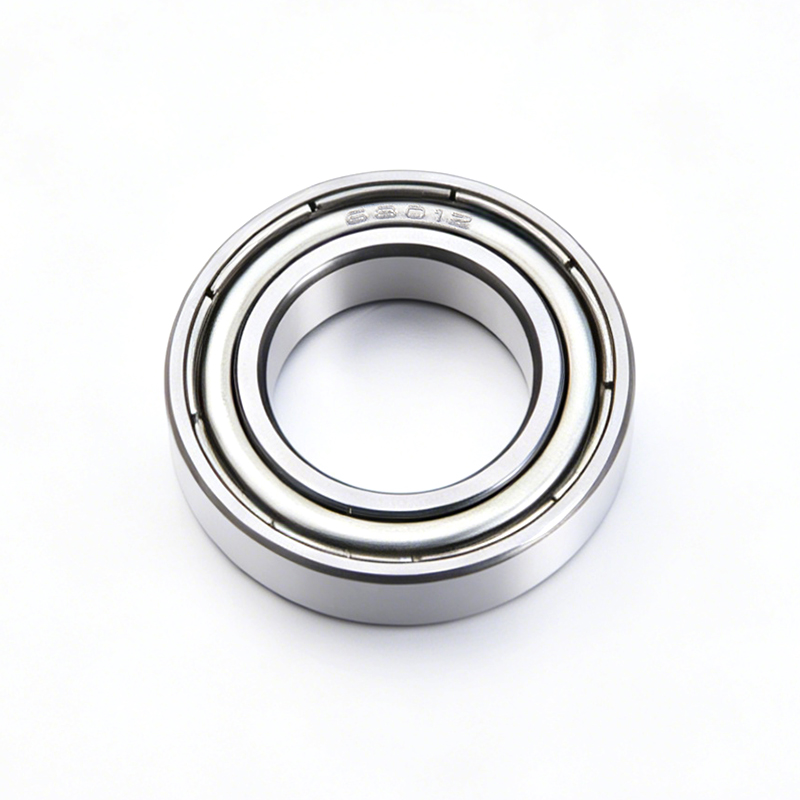
6801ZZ 12 mm 21 mm 5 mm Ultra-slim 68 series
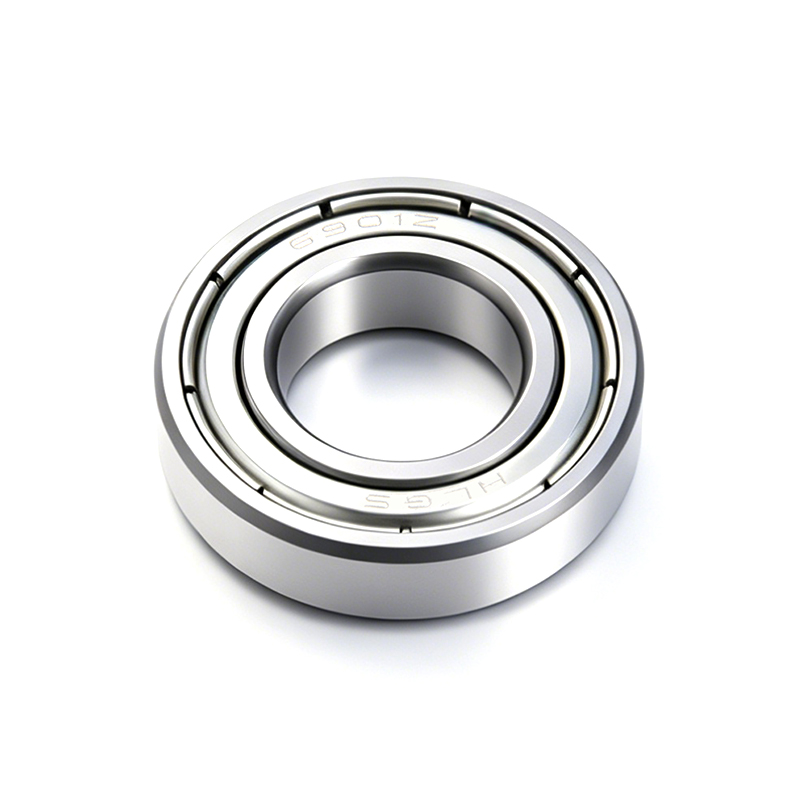
6901ZZ 12 mm 24 mm 6 mm Compact 69 series

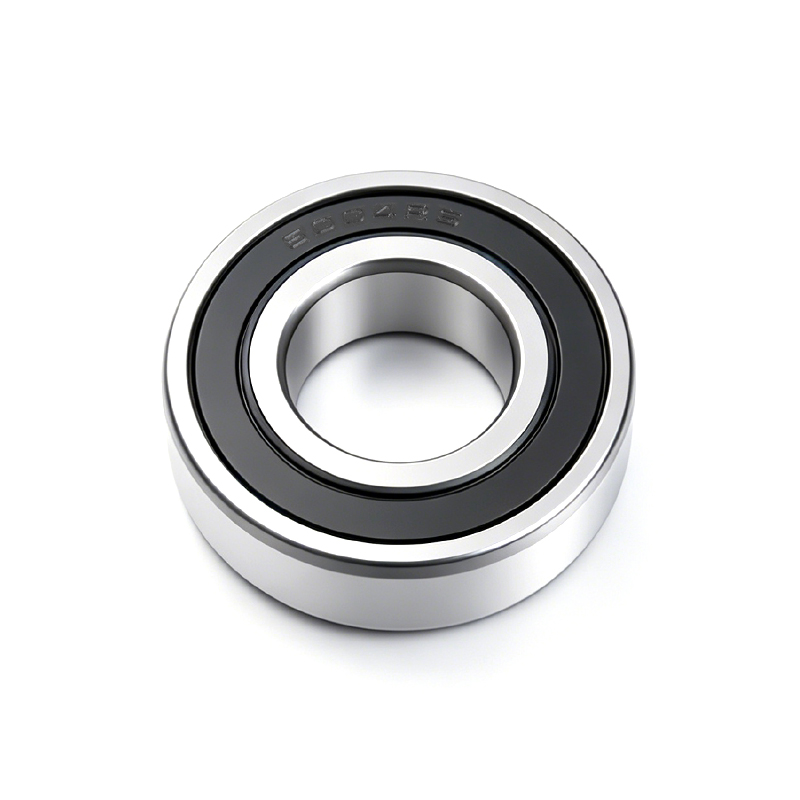
Suffixes also carry meaning: ZZ usually means metal shields, 2RS means rubber seals, NR means a snap ring, F means a flange, and an S prefix often points to stainless steel construction.

Measuring a Bearing Before You Replace It

If the old bearing has no readable code, or if the code seems unusual, measure it. Use a digital caliper and work patiently.

  1. Clean the bearing and remove loose dirt, grease or rust.
  2. Measure the bore across the inner ring.
  3. Measure the outside diameter across the outer ring.
  4. Measure the width from face to face.
  5. Check for a flange, snap ring, shield or seal that adds size.
  6. Compare the old bearing with the new one before installation.

Odd sizes do exist. A bearing with a 28 mm outside diameter and 9 mm width may be a special design, an imperial replacement or a custom part. In those cases, a standard catalog number may not be enough.

Metric, Inch and Loose Ball Sizes

Most industrial ball bearings use metric dimensions, but bicycles, older machinery and some imported equipment still use inch sizes. This matters because 1/4 inch equals 6.35 mm, not 6 mm, and 3/16 inch equals 4.7625 mm. A near match is not a safe match.

For loose ball bearings, size includes ball diameter, ball count and ball grade. A hub, headset or old gearbox may use loose balls rather than a caged bearing. Measure one ball carefully, count how many fit, and check whether the original used a cage or a full complement of balls.

The HLGS Size Families We Make

As a direct manufacturer, we group deep groove ball bearings by size and structure so that customers can match the right bearing to the right application.

Miniature bearings

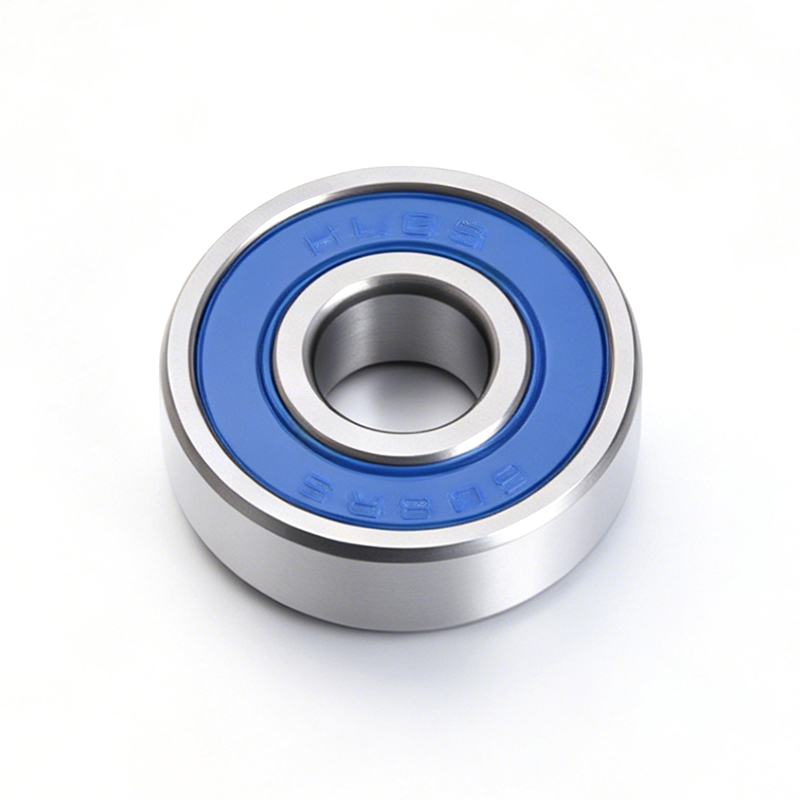
Our miniature range includes 608-2RS, 688ZZ, 698ZZ and 623-2RS. These small bearings are common in compact tools, small motors, fans, toys and sports equipment. They are also widely used in miniature bearings in precision engineering, where smooth rotation and low friction are essential.

608-2RS Miniature Deep Groove Ball Bearing for Compact Applications608-2RS Miniature Deep Groove Ball Bearing for Compact ApplicationsWidely used 8×22×7 mm miniature bearing with low friction and GCr15 steel, suitable for compact tools, small motors, fans, and precision engineering.View Product →

Small-sized bearings

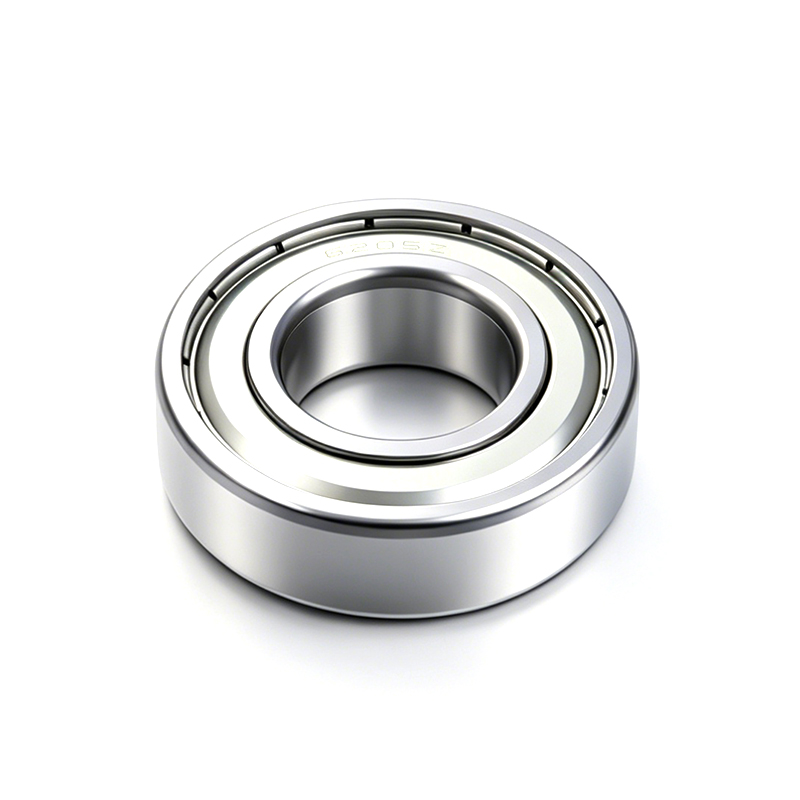
When a project needs more load capacity than a miniature bearing can offer, small-sized bearings such as 6201-2RS, 6205ZZ, 6801ZZ and 6901ZZ become practical choices. The 6205ZZ is an industrial-grade option for motors, pumps and machinery, while 6801ZZ and 6901ZZ serve slim, compact designs.

6205ZZ Industrial-Grade Deep Groove Ball Bearing for Motors and Pumps6205ZZ Industrial-Grade Deep Groove Ball Bearing for Motors and PumpsIndustrial-grade 25×52×15 mm bearing for projects needing more load capacity than miniature types, with GCr15 steel and double shields.View Product →

Flanged, snap ring and stainless steel bearings

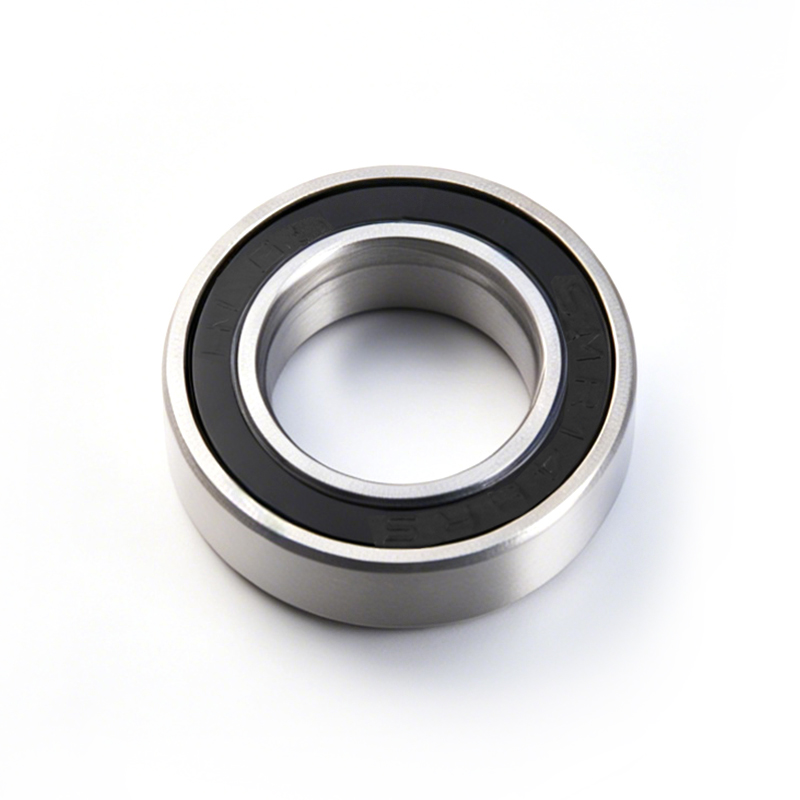
Flanged bearings such as F6000ZZ, F608ZZ, F688ZZ and F696ZZ add a locating lip, which can simplify housing design. Snap ring bearings such as 6000ZZNR, 6200ZZNR, 6204ZZNR and 6901ZZNR help with axial location. Stainless steel bearings such as S607ZZ, S688-2RS, S695-2RS and SMR148-2RS are useful where moisture, hygiene or mild corrosion resistance is a concern.

SMR148-2RS Stainless Steel Miniature Deep Groove Ball BearingSMR148-2RS Stainless Steel Miniature Deep Groove Ball BearingCorrosion-resistant 8×14×4 mm stainless steel miniature bearing for small motors, robots, precision instruments, and compact medical devices.View Product →

We also produce nonstandard bearings for customers who need a size, flange, groove or material that is not covered by a standard catalog number.

How to Choose the Right Bearing Size

Choosing a ball bearing size is not only about fitting the shaft. It is also about load, speed, space and environment.

  • Start with the bore: the shaft diameter is the first fixed point.
  • Check the housing: the outside diameter must match the housing bore and tolerances.
  • Confirm width: axial space and retaining features may limit thickness.
  • Review speed and load: larger bearings generally carry more load, while slim bearings save space.
  • Consider sealing: ZZ shields suit many dry applications, while 2RS seals offer better protection from dust and moisture.
  • Allow for clearance: internal clearance affects heat, noise and fit.

If you are designing a new product, involve the bearing supplier early. A small change in housing size or shaft tolerance can open the door to a more available, more economical bearing size.

Why Size Affects Performance

Bearing size influences load capacity, stiffness, friction and speed limits. A larger outside diameter usually allows more balls and a deeper raceway, which can increase load capacity. A thinner bearing saves axial space but may accept less load. Flanged and snap ring designs solve mounting problems, but they also change the outer envelope.

688ZZ: 16 mm OD
608-2RS: 22 mm OD
6205ZZ: 52 mm OD

This is why a size chart is useful, but a full drawing is better. The best bearing is the one that fits the application, not simply the one with the closest-looking number.

FAQ: Ball Bearings Size

How do I know what size ball bearing I need?

Measure the bore, outside diameter and width with a caliper. Then check for flanges, snap rings, shields or seals that may add dimensions. If you have the old bearing code, verify it against the measured size.

What do the last two digits of a bearing number mean?

For many standard metric bearings from 04 upward, multiply the last two digits by 5 to get the bore in millimeters. For miniature bearings such as 608 and 688, the number often refers directly to the bore in millimeters.

Can I replace a sealed bearing with a shielded bearing?

Only if the bore, outside diameter, width, clearance and load requirements match. A shield and a seal protect differently, so the environment matters. A sealed bearing may resist dust and moisture better, while a shielded bearing may run with less friction.

Are inch and metric bearings interchangeable?

Usually not. A 1/4 inch bore is 6.35 mm, which is not the same as a 6 mm bore. Even small differences can cause a loose fit, excessive vibration or premature failure.

Do flanged bearings have the same size as plain bearings?

The bore and main outside diameter may match, but the flange adds an extra diameter and thickness. Always check the flange dimensions separately when designing a housing.

Can HLGS make a custom ball bearing size?

Yes. As a direct manufacturer, we support OEM and ODM projects and can review nonstandard sizes, flanges, snap rings, stainless steel options and application-specific requirements. Send us the drawing, sample or measured dimensions, and we can help identify a practical production path.

Recent Articles