Every bearing replacement starts with the same question: will it fit? The shaft inside the bore, the housing around the outer ring, and the axial space between shoulders all depend on three numbers — the bore diameter (d), the outer diameter (D), and the width (B). A ball bearing dimension chart exists to make that answer predictable, and once you know how to read one, you can check a part number, compare a supplier's drawing, or pull a spare from stock in under a minute. The practical rule is simple: match all three envelope dimensions first, then confirm the tolerance class and radial clearance. This article explains how to do exactly that for the deep groove ball bearings used in motors, pumps, small machinery, and precision equipment.
A dimension chart is a table that lists bearing numbers in one column and their envelope dimensions alongside. The three entries that matter are:
Most charts are metric, and so are the bearings used in electric motors, food machinery, home appliances, power tools, and automotive auxiliary systems. The chart gives nominal dimensions, not the finished tolerance. A machined bearing sits inside a tolerance grade, usually P0 for general industry, so the chart answers the fit question while the tolerance grade and radial clearance answer the running-quality question. Treat the chart as the first filter, not the final specification.
Every bearing number is a compressed version of the chart. The first digit, 6, identifies a single-row deep groove ball bearing. The next digits combine the dimension series and the bore code, and the last two digits are the key to the bore. Codes 00 to 03 have fixed bores:
| Bore code | Bore diameter (mm) |
|---|---|
| 00 | 10 |
| 01 | 12 |
| 02 | 15 |
| 03 | 17 |
| 04 | 20 |
| 05 | 25 |
| 06 | 30 |
| 08 | 40 |
| 10 | 50 |
So 6204 means a deep groove ball bearing in the light 62 series with a bore code of 04, which gives a 20 mm bore. A 6205 carries a 25 mm bore, and a 6208 carries 40 mm. The same rule holds across the 60, 62, and 63 series, which is why experienced buyers can check a part number against a chart without measuring anything.
One exception matters: miniature bearings do not follow this rule. Numbers such as 608, 688, and 698 belong to the miniature family, where the last digit is the bore in millimetres — 608 has an 8 mm bore. Their outside diameters do not follow the 60, 62, 63 progression either, so always confirm miniature sizes directly on the dimension chart.
Three series cover most rolling-element bearing applications in everyday machines. The 6000 series is the thin-section series. The 6200 series is the classic light series and the first choice for electric motors and general machinery. The 6300 series adds a heavier cross section for higher load capacity at the same bore. The 6800 and 6900 series are reserved for compact assemblies where radial space is short.
| Bearing number | Bore (mm) | Outside diameter (mm) | Width (mm) |
|---|---|---|---|
| 6000 | 10 | 26 | 8 |
| 6001 | 12 | 28 | 8 |
| 6200 | 10 | 30 | 9 |
| 6201 | 12 | 32 | 10 |
| 6204 | 20 | 47 | 14 |
| 6205 | 25 | 52 | 15 |
| 6300 | 10 | 35 | 11 |
| 6305 | 25 | 62 | 17 |
| 6801 | 12 | 21 | 5 |
| 6901 | 12 | 24 | 6 |
| 608 | 8 | 22 | 7 |
| 688 | 8 | 16 | 5 |
Take the 6205 as a typical industrial example. With a 25 mm bore, a 52 mm outside diameter, and a 15 mm width, it fits the standard motor shaft that dominates small to medium induction motors and pumps. Because the envelope is standardised, the same 6205 can be supplied by several manufacturers, which is why the part number on a work order is usually enough to reorder without re-measuring the old bearing.
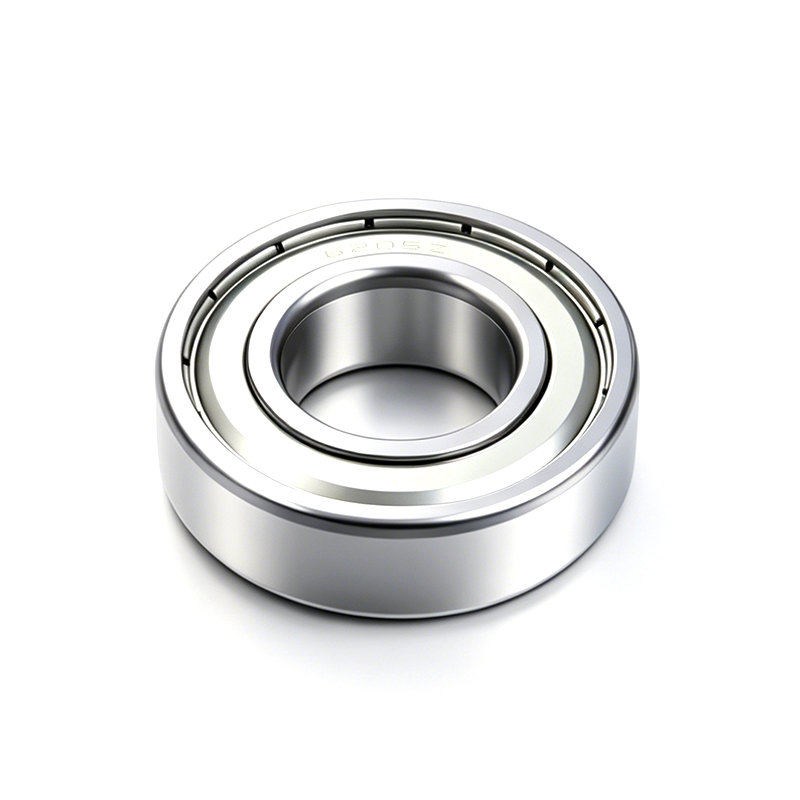
6205ZZ Deep Groove Ball Bearing for Motors and PumpsA standard 25x52x15 mm bearing with double metal shields, built for medium radial loads in electric motors, fans, pumps, and general machinery. Its standardized envelope simplifies reordering without remeasuring.View Product →
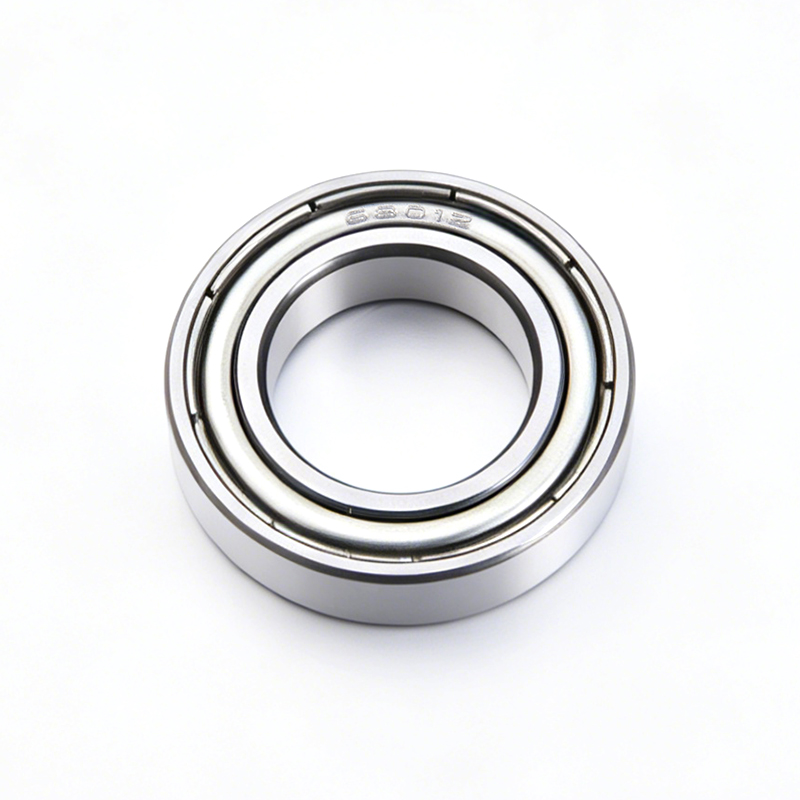
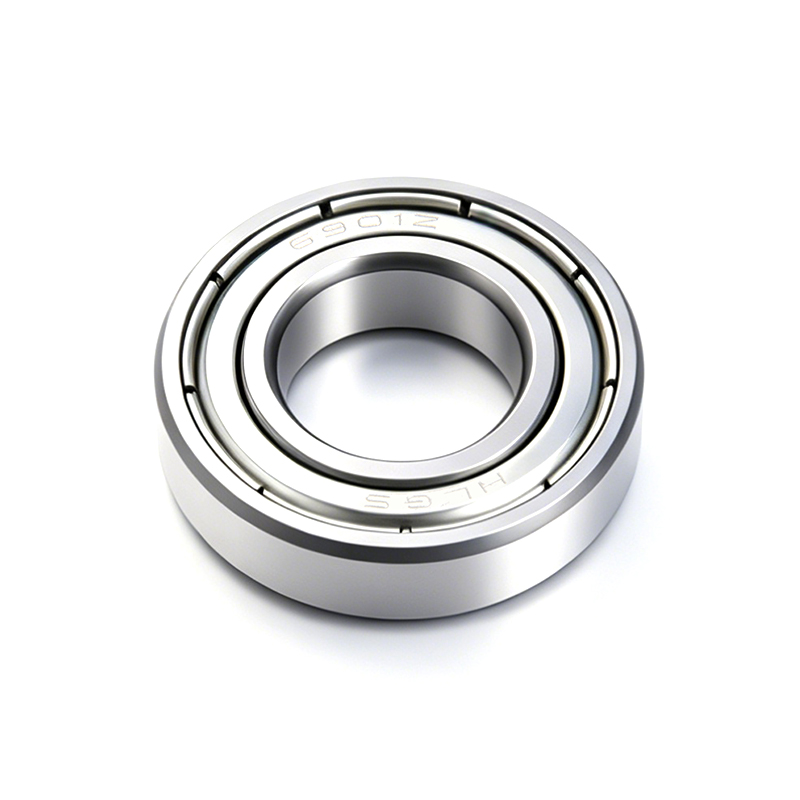
The 6800 and 6900 series are popular when radial space is limited. The 6901 keeps a 12 mm bore, but its outside diameter is only 24 mm and its width 6 mm, compared with 28 mm and 8 mm for a 6001. The trade-off is a lower load rating, so use these thin-section types only where the load is modest and packaging density matters more than capacity.
When the shield is worn or the part number is unreadable, the dimension chart works in reverse: you measure the worn bearing and look the number up. A digital caliper is the only real tool you need, though penetrating oil helps if the bearing comes out with a sticky film of old grease.
Two measuring mistakes cause most misidentifications: measuring a dirty bearing, which adds a few tenths of a millimetre to the readings, and measuring in inches when the chart is metric. Clean the surfaces first and write down the units before comparing with the chart.
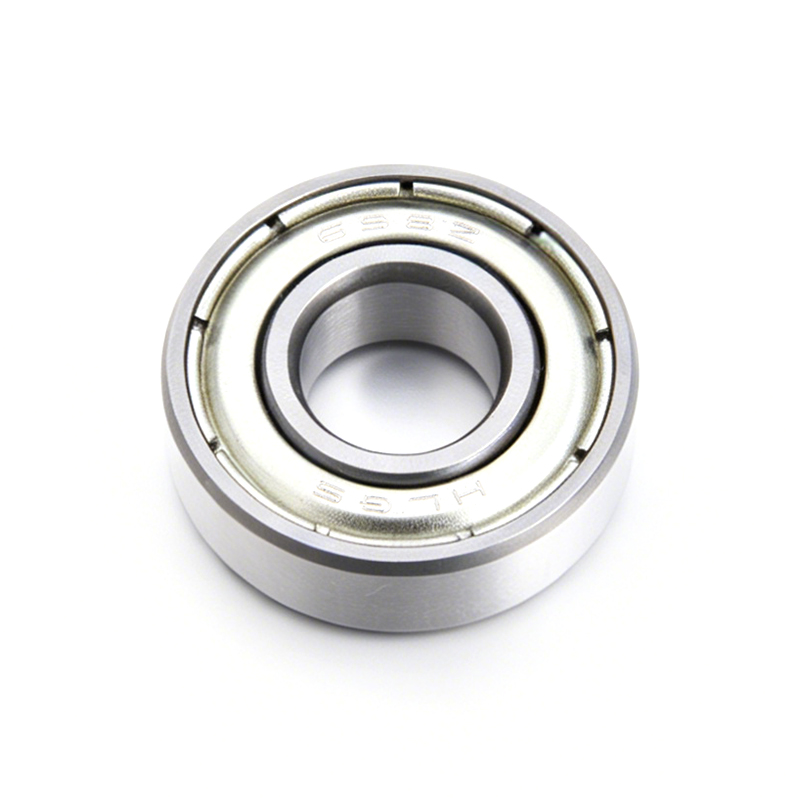
A 6205 and a 6205-2RS share the same bore, outside diameter, and width. The difference is not dimensional but protective: the 2RS suffix means a contact seal on both sides, retaining grease and keeping out contamination, while Z or ZZ specifies a non-contact metal shield. Both configurations are common on small-motor bearings, with 2RS the preferred choice where washdown, dust, or frequent start-stop cycles are present.
Radial clearance is the second factor that does not show up on the dimension chart. A C3 clearance bearing has greater internal clearance than the normal C0 class, which helps in applications with thermal expansion of the shaft, such as a motor running continuously at elevated temperature. The envelope stays the same, but the internal geometry does not. When you order from a chart, include the full suffix; otherwise you may receive the right fit with the wrong running behaviour.
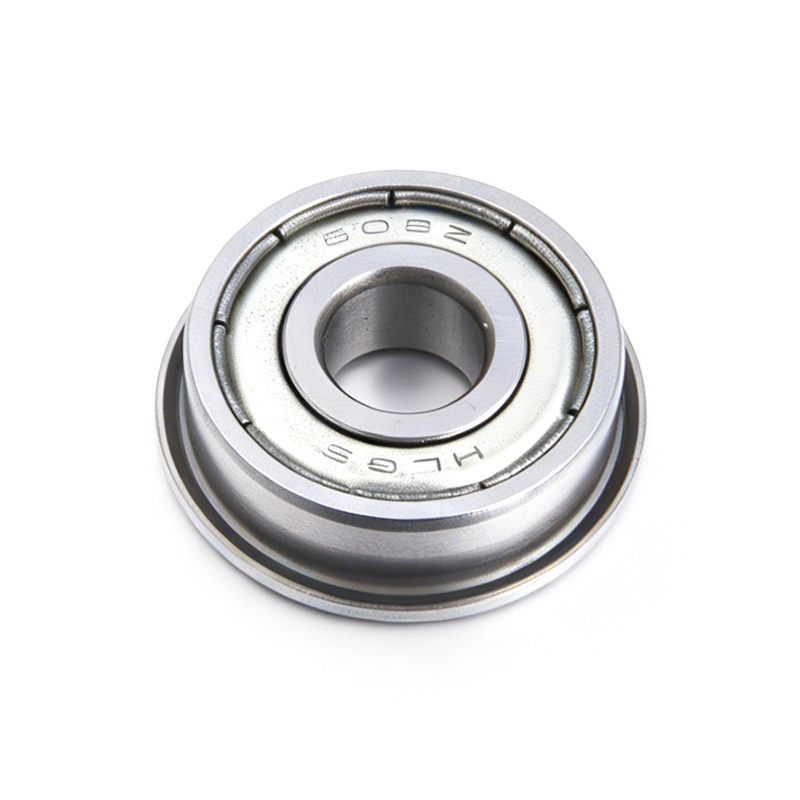
Some assemblies cannot spare the extra machining for a snap ring groove or a stepped housing. A flanged bearing solves this by adding a flange on the outer ring that locates axially in a simple through-bore housing. The bore and the inner ring remain identical to the standard bearing, but the flange diameter and length appear as additional values in the chart. We cover the selection points in our guide to flanged bearing types and selection.
F608ZZ Flanged Mini Bearing for Compact AssembliesAn 8x22x7 mm flanged bearing that provides axial location in through-bore housings without extra machining. Suitable for skateboards, power tools, small motors, and fans needing reliable assembly.View Product →
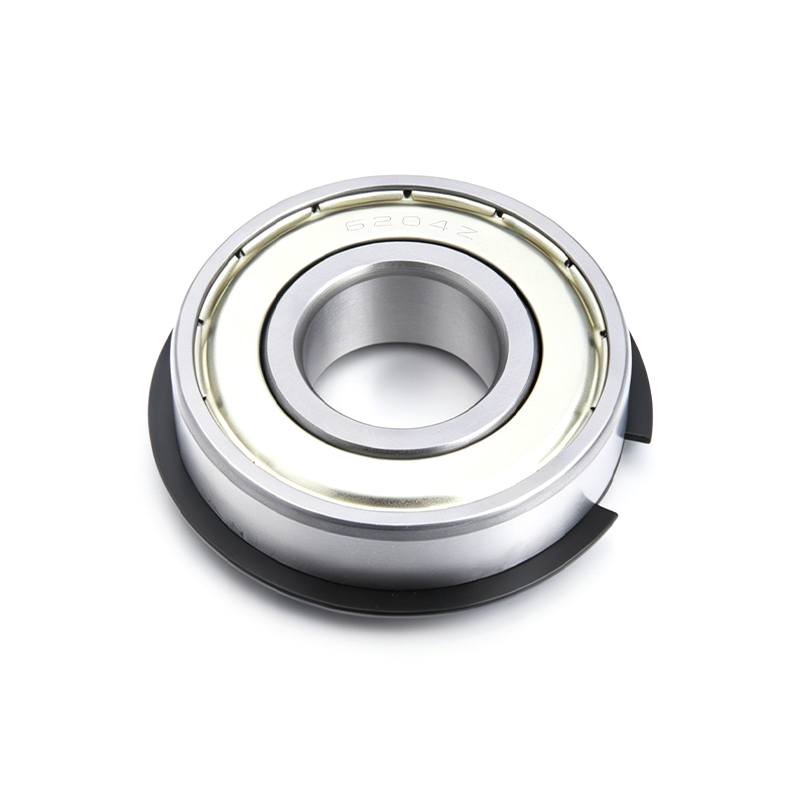
Snap-ring bearings work the other way: a wire ring sits in a groove on the outer ring, allowing you to lock the bearing in a through-bore housing without a shoulder. The NR suffix on a standard number, as in 6000ZZNR or 6204ZZNR, is the simplest way to recognise the configuration.
Material changes do not alter the envelope either. A stainless steel deep groove ball bearing has the same bore, outside diameter, and width as its chrome steel equivalent, which is convenient when the housing is already machined. Food machinery, pharmaceutical lines, and washdown areas typically call for stainless because of corrosion resistance and cleanability.
At the smallest sizes, miniature bearings sit in their own section of the dimension chart, because the bore-code rules described above no longer apply. Our article on how miniature bearings support precision and high-speed machinery explains why these small envelopes need different selection criteria.
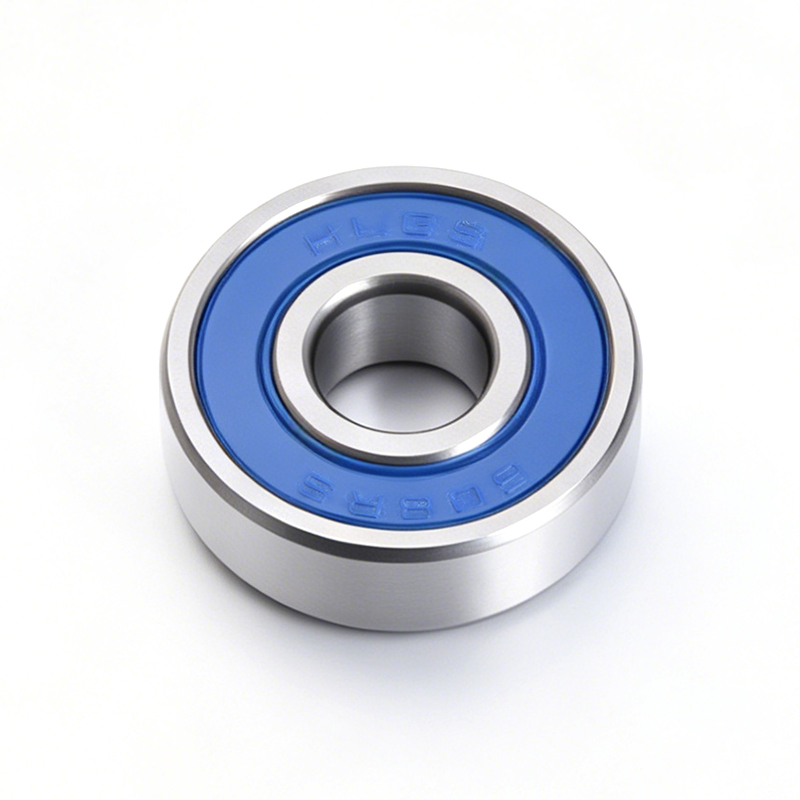
608-2RS Miniature Deep Groove Ball BearingA popular 8x22x7 mm shielded bearing with low friction and robust construction, ideal for skateboards, inline skates, mini motors, power tools, and space-constrained electromechanical devices.View Product →For a standard 6205 with a normal tolerance grade, the chart is all you need to reorder. OEM projects are different. Shafts may carry special tolerances, housings may require a narrower width, or the design may call for a non-standard bore on an otherwise standard envelope. Those cases fall outside the dimension chart, and the practical move is to talk to a manufacturer that controls its own production.
That is where a direct deep groove ball bearing manufacturer with OEM and ODM experience adds value: we can review the envelope, confirm whether the requested dimension is achievable, and suggest the closest standard alternative when it is not. Checking the chart first saves time, but the chart is a tool, not the last word.
If you have ever held two ball bearings that look almost identical, then watched one drop smoothly ...
The Direct Answer: A Deep Groove Ball Bearing Supports Both Radial and Axial Loads Using a Simple, ...
Picture a small electric motor bolted to the housing of a pump. The belt is tensioned, the shaft is...
Imagine a small electric motor in a kitchen appliance that starts making a grinding noise after a f...