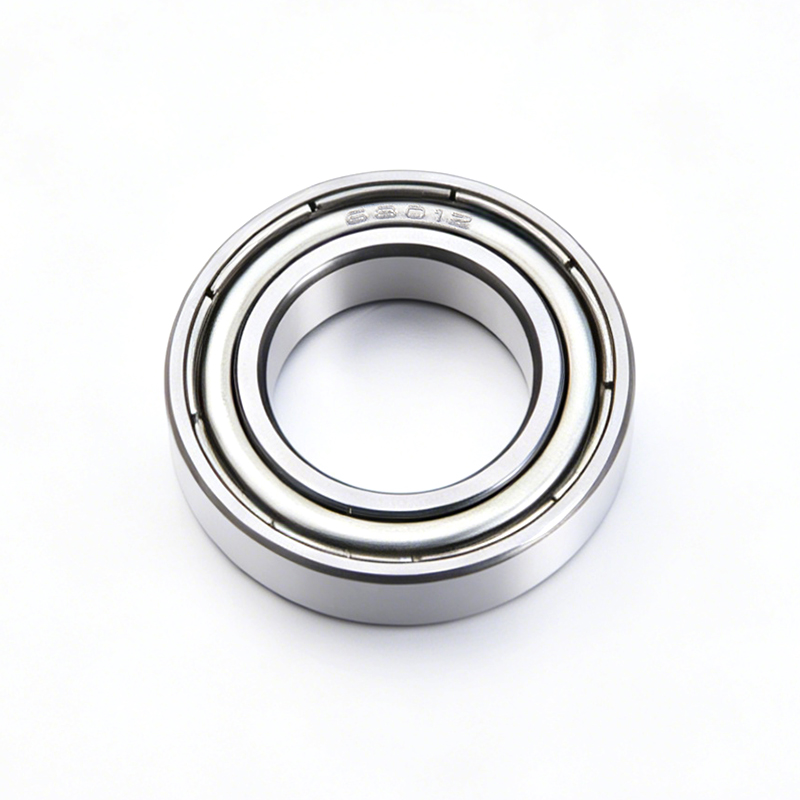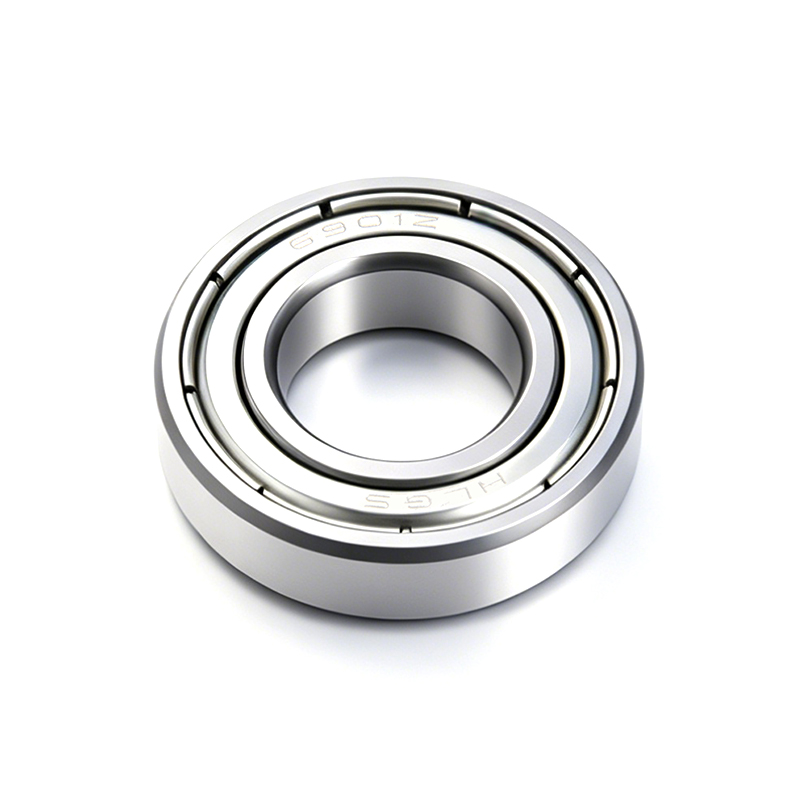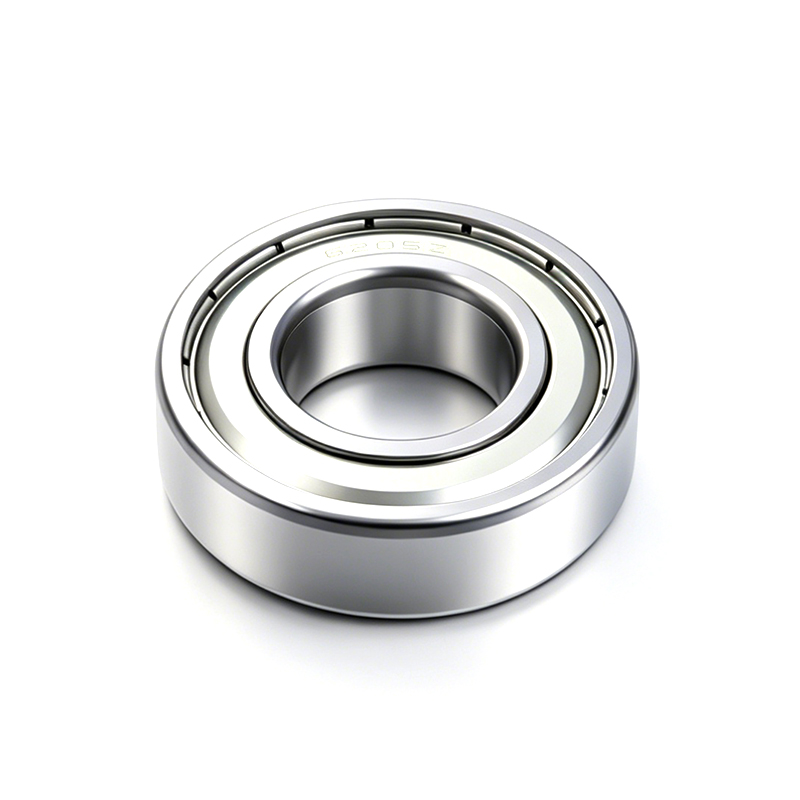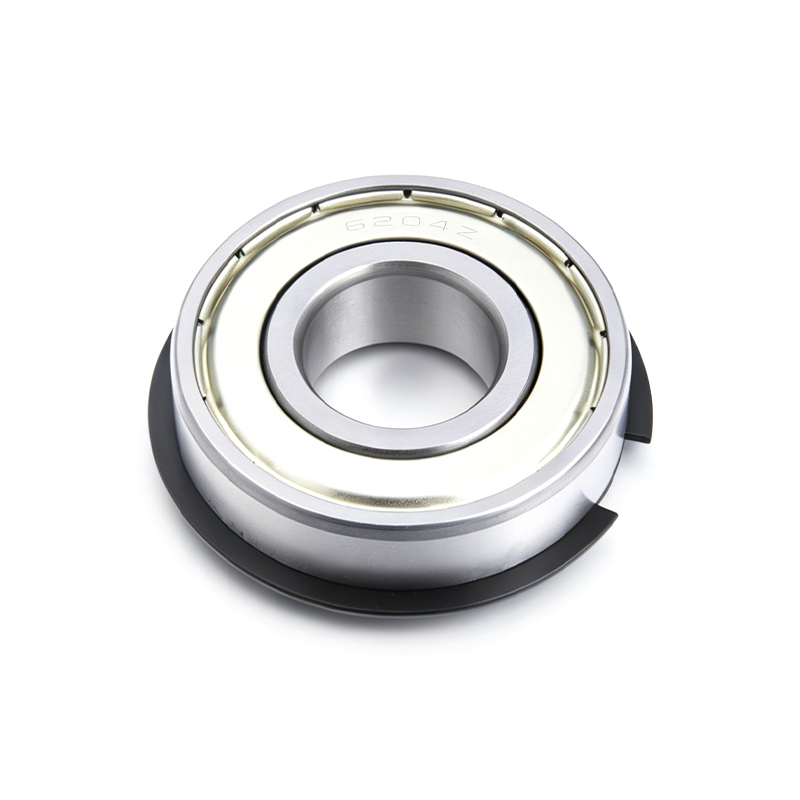
Over the years working as a bearing manufacturer, I have seen many engineers and procurement professionals struggle not because they lack technical knowledge, but because they get lost in the alphabet soup of standards. Ball bearing standards are the backbone of reliable machine design. They define dimensions, tolerances, material quality, and performance limits. If you understand the most common standards, you can select bearings with confidence — and that translates directly to fewer field failures and longer equipment life. Let us walk through the essential ball bearing standards every buyer and designer should know.
Standards exist so that a bearing from one manufacturer can be interchanged with another of the same designation. For a deep groove ball bearing like 6205ZZ, the inner diameter, outer diameter, width, and running accuracy are fixed by international norms. Without these standards, every machine would require custom parts. At our factory, we strictly follow the governing standards for every bearing we produce — from the tiny
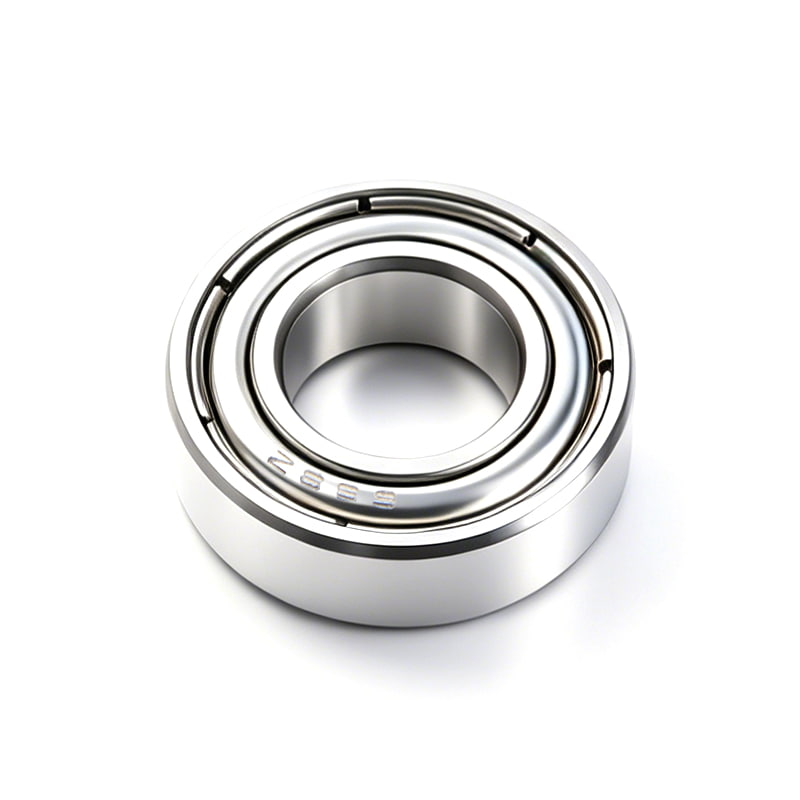
688ZZ Deep Groove Ball Bearing Features a Compact Design Ideal for Light-Duty Applications688ZZ is a miniature single-row deep-groove ball bearing with double metal shields for dust protection. It has a standard dimension of 8×16×5mm and is made of high-gra...View Product → to the industrial-grade 6205ZZ. This ensures that when you order a standard size, it fits and performs exactly as expected.
Three systems dominate the bearing world: ISO (International Organization for Standardization), DIN (German Institute for Standardization), and ANSI/ABMA (American). Most modern national standards are harmonized with ISO. For instance, JIS B 1514 in Japan and DIN 620 in Germany have the same specification level as ISO 492 for radial bearings. The ABEC scale (Annular Bearing Engineers Committee) is widely used in North America. ABEC 1 corresponds roughly to ISO Class 6 normal tolerance, while ABEC 3 is Class 5, ABEC 5 is Class 4, and so on.
ISO 15 (and its European equivalent DIN 125, though commonly referred to as DIN 125 for metric series) defines boundary dimensions for radial bearings. Every standard deep groove ball bearing follows a dimension series: 6000, 6200, 6300, 6800, 6900, etc. For example, a 6201 bearing has a bore of 12 mm, outer diameter of 32 mm, and width of 10 mm. A 608 bearing has a bore of 8 mm, outer diameter of 22 mm, and width of 7 mm. These numbers are not arbitrary — they follow the ISO dimension plan.
| Designation | d (mm) | D (mm) | B (mm) |
|---|---|---|---|
| 608 | 8 | 22 | 7 |
| 6201 | 12 | 32 | 10 |
| 6205 | 25 | 52 | 15 |
| 6801 | 12 | 21 | 5 |
| 6901 | 12 | 24 | 6 |
Knowing these dimensions helps you quickly identify the right bearing. A common mistake is assuming a 6201 and 6801 both fit a 12 mm shaft — they do, but their outer diameters differ significantly. That is why we always urge customers to check the housing space first.
Dimensional tolerance controls how precisely the bearing is made. ISO 492 classifies radial bearing tolerances into classes: Normal (P0), P6, P5, P4, P2. The ABEC system uses grades 1, 3, 5, 7, 9 — higher numbers mean tighter tolerances. For most general-purpose applications like fans, pumps, and small motors, ABEC 1 or ISO Normal tolerance is sufficient. Precision instruments or high-speed spindles may require ABEC 5 (ISO P5) or higher.
At our factory, all standard deep groove ball bearings are manufactured to at least ISO Normal (ABEC 1) tolerance. For customers who need closer running accuracy, we can supply products with tighter tolerances upon request. Our
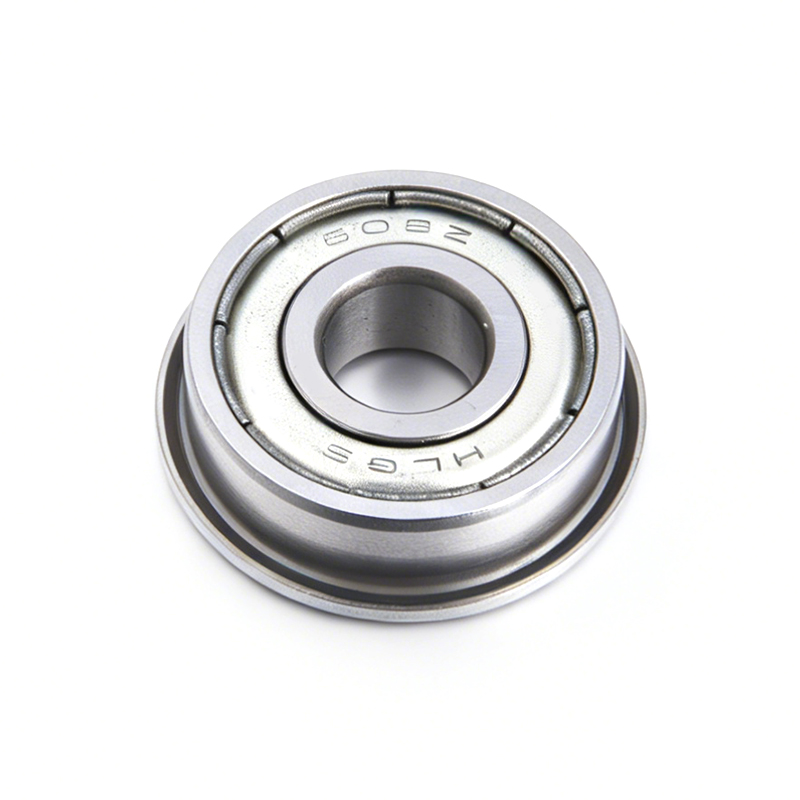
F608ZZ Flanged Mini Bearing Delivers Smooth Operation and Long Service LifeThe F608ZZ flanged bearing measures 8×22×7mm, with a unique flange structure that enables firm axial location and more reliable assembly. Built from top-grade bearing ...View Product →, for example, is built to standard tolerances and delivers smooth operation in small motors.
Radial internal clearance (C0, C2, C3, C4) defines the amount of play between the balls and raceways when the bearing is not mounted. Standard clearance (C0, sometimes called CN) works for most applications where the fit is not extremely tight. C3 offers greater clearance for applications involving interference fits on the shaft or housing, or where temperature differences cause expansion. For precision equipment requiring minimal play, C2 (reduced clearance) may be specified. ISO 5753 standardizes these clearance groups.
Selecting the wrong clearance is one of the top causes of premature bearing failure. If you use C0 in a pump where the shaft is tight and operates hot, the internal clearance may disappear, causing the bearing to seize. That is why many pump manufacturers specify C3. Always verify clearance requirements when designing or ordering.
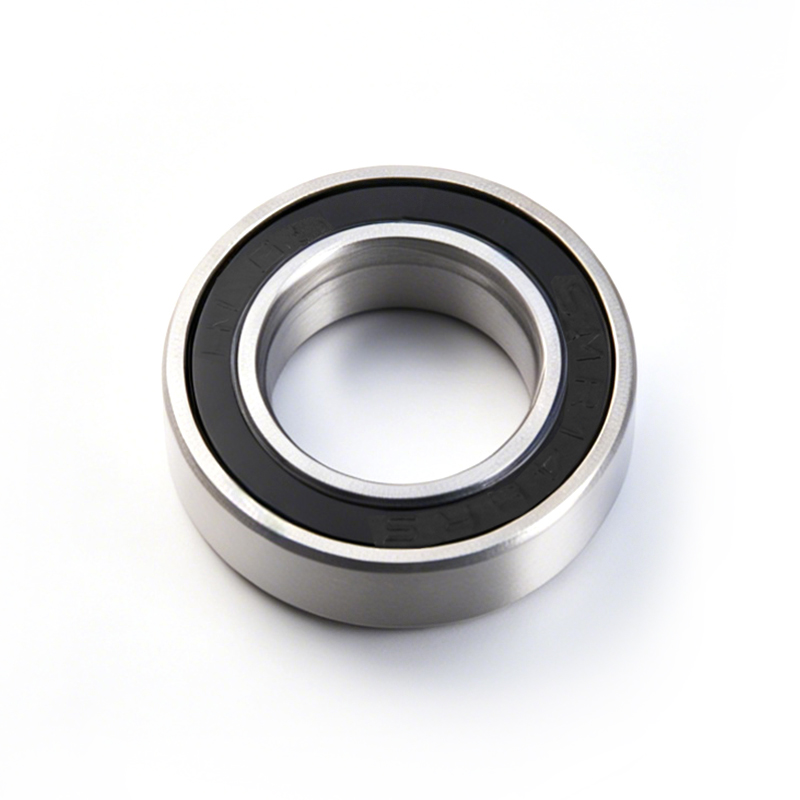
The most common bearing steel is AISI 52100 (chromium steel) and its European equivalent 100Cr6 (1.3505). Standards like ISO 683-17 define the chemical composition, hardness, and microstructure. For corrosion-resistant applications, AISI 440C stainless steel (or equivalent) is used. Many miniature and food-grade bearings call for stainless steel. We offer a range of stainless steel bearings — for instance, the
SMR148-2RS Miniature Bearing Is Ideal for Small Motors, Robots and Mechanical ModelsThe SMR148-2RS stainless steel miniature bearing features a precise slim size of 8×14×4mm, specially designed for small-space precision applications. Made of corrosion...View Product → is made from martensitic stainless steel, providing both corrosion resistance and high hardness for small motors and robots.
| Material | Standard | Typical Application |
|---|---|---|
| 100Cr6 / 52100 | ISO 683-17 | General purpose, high load |
| 440C stainless | ASTM A276 | Corrosion resistance, medical, food |
| SAE 52100 (USA) | ASTM A295 | Automotive, industrial |
When you specify a bearing, the standards you choose determine cost, availability, and performance. A standard tolerance, clearance, and material means you can source the same bearing from multiple suppliers. At HLGS, we have been manufacturing to international standards for over two decades. Every batch is tested to ensure dimensions, running accuracy, and noise levels meet the required class. If you are working on a new design or replacing a worn bearing, knowing the relevant standards helps you communicate exactly what you need.
We also offer insights into how miniature bearings power precision engineering — a topic closely tied to understanding tolerance and clearance standards. And for flanged designs, our flanged bearing selection guide provides additional depth.
Standards may seem dry, but they are the language of interchangeability and reliability. Whether you are specifying a 608-2RS for a skateboard or a 6205ZZ for a pump, the underlying standards make it possible to get consistent performance from one production batch to the next. As a direct manufacturer, we take care to comply with the applicable ISO, DIN, and ABEC standards for every bearing we ship. If you have questions about which standard applies to your application, our engineering team is always ready to help.
A spindle starts to leave a faint chatter mark at 8,000 rpm. The deep groove ball bearing meets its...
If you have ever held two ball bearings that look almost identical, then watched one drop smoothly ...
Every bearing replacement starts with the same question: will it fit? The shaft inside the bore, th...
The Direct Answer: Match Precision Class to Rotational Accuracy Needs, Not to the Highest Available...