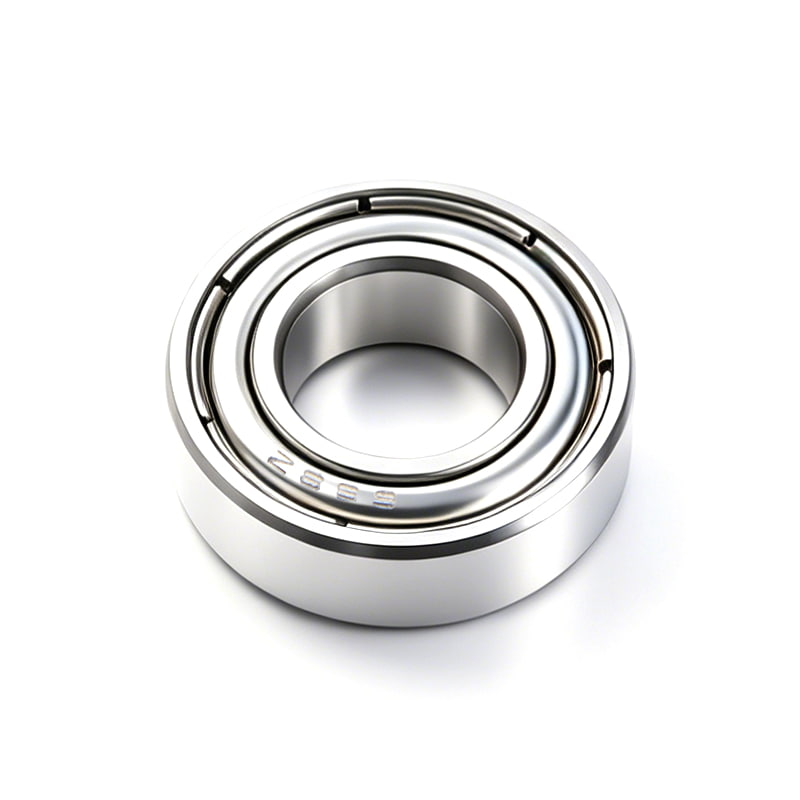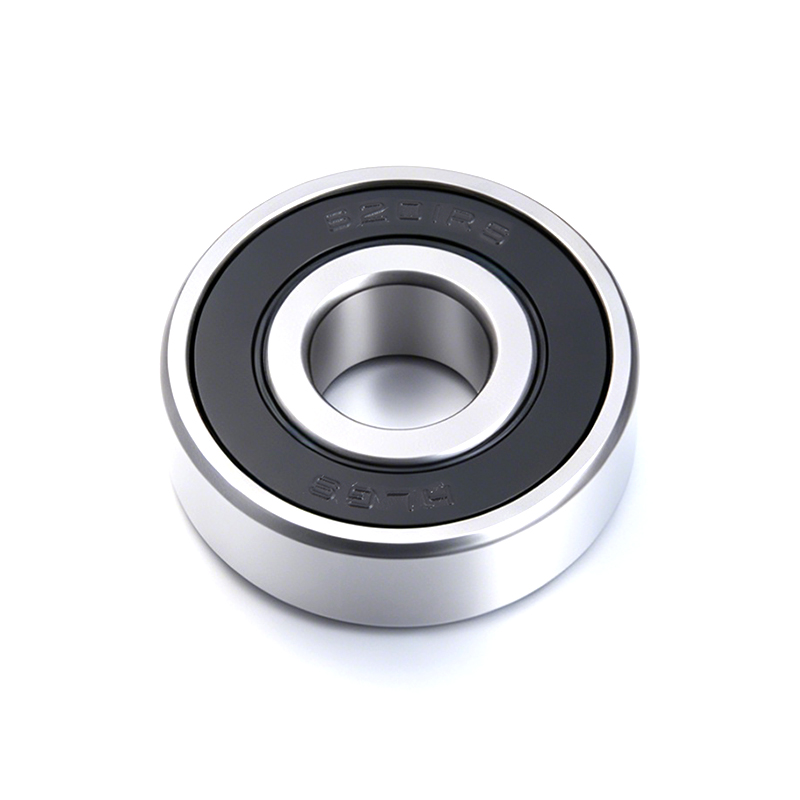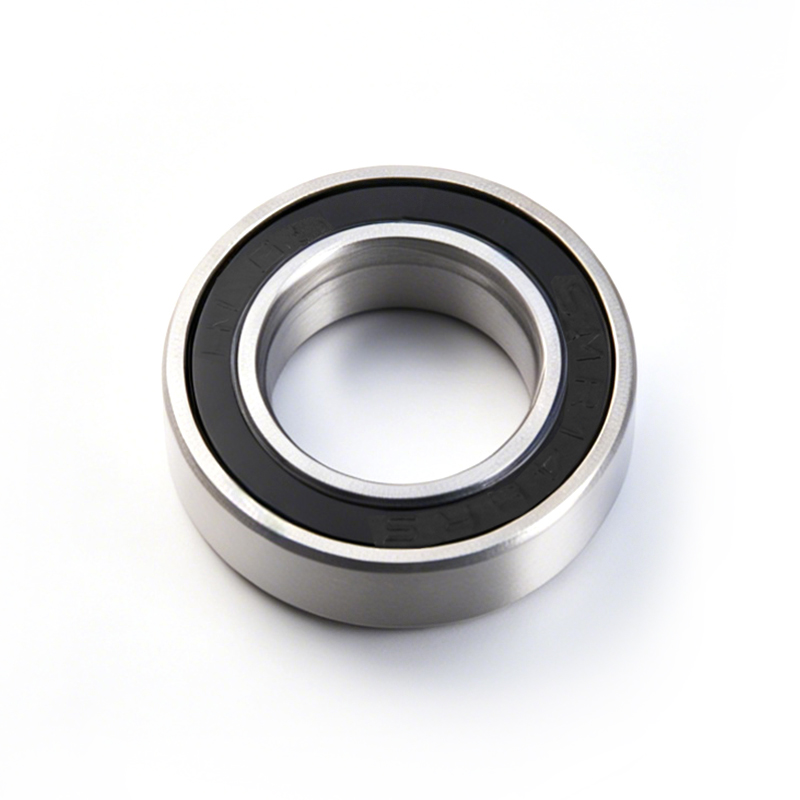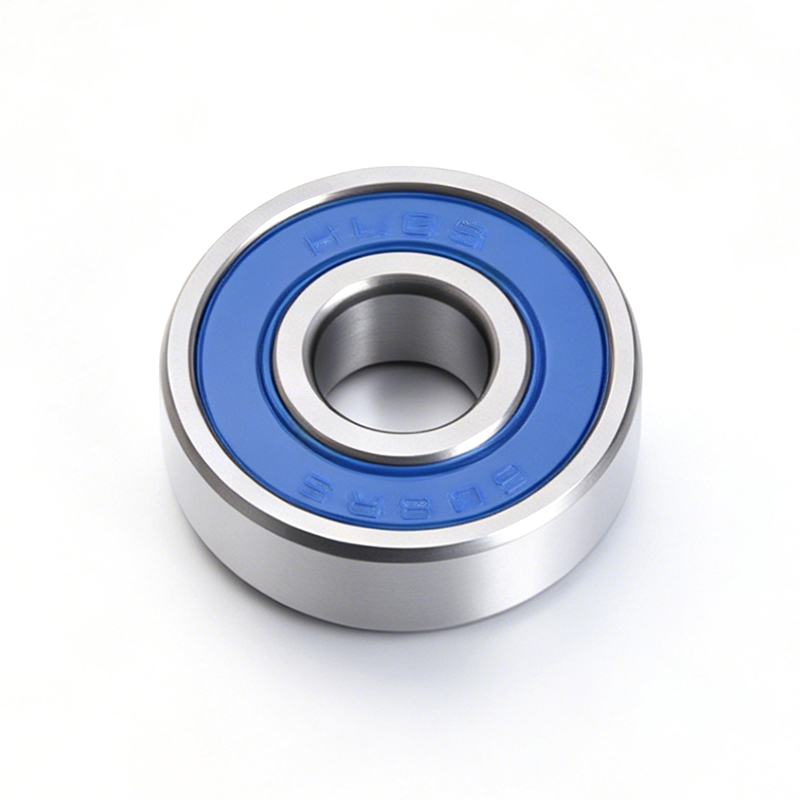
If you have ever tipped a box of loose bearings onto a workbench and then spent twenty minutes with a caliper trying to work out which one is which, you already know why bearing by size is one of the most common questions in machine shops, repair benches and purchasing offices. Sorting a bearing by size comes down to something refreshingly simple: whatever name is printed on the box, the only things that decide whether a bearing drops into your housing and slides onto your shaft are three numbers, the bore, the outside diameter and the width.
We have been manufacturing miniature and small-sized deep groove ball bearings since 2001, and in that time we have had engineers turn up with a forty-year-old drawing that carries no part number, and buyers who send us a worn bearing with nothing left but its silhouette and ask whether we can make it again. Both of them need exactly the same thing: to recognise, measure and match a bearing by its size. What follows is the method we use ourselves when a sample lands on the inspection bench, written out step by step so you can use it the next time an unmarked bearing needs identifying.
Before comparing catalogues from different suppliers, it helps to settle on the vocabulary. Every rolling bearing, no matter how it is built, is defined by the same three dimensions, and they always appear in the same order.
The diameter of the central hole. This is the dimension your shaft has to pass through, and in most applications it is the first number you check because the shaft is usually already fixed.
The largest cylindrical diameter of the bearing, measured across the outer ring. This is the number that has to match the housing or bore seat you are pressing the bearing into.
The total axial thickness of the assembled bearing, measured from one face to the other. Seals and shields sit inside this figure rather than adding to it on most designs.
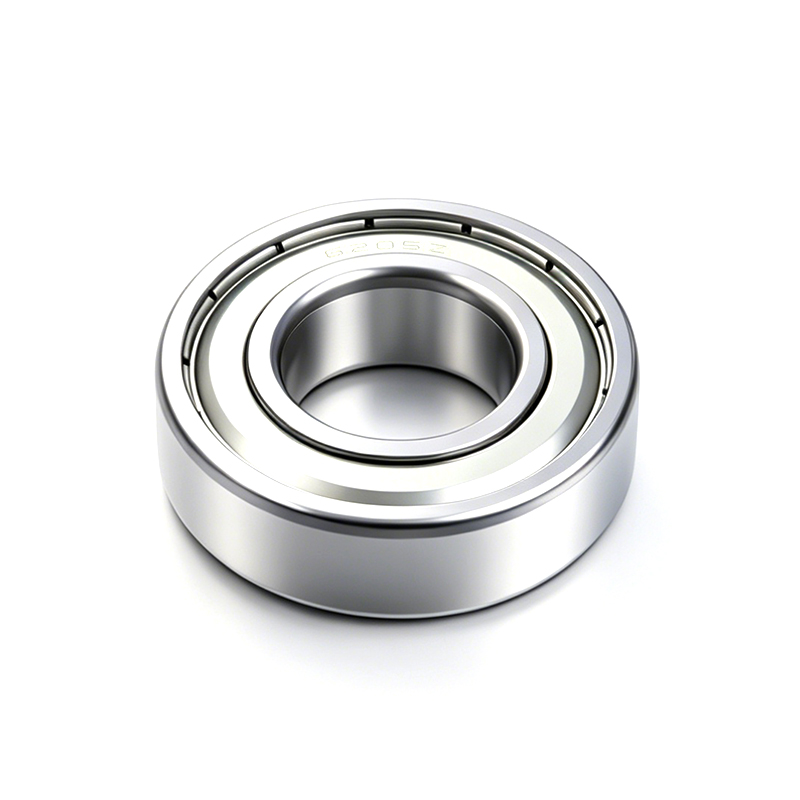
Written out in shorthand, a bearing size looks like bore x outside diameter x width. A 608-2RS seals at 8 x 22 x 7 mm. A 6205ZZ measures 25 x 52 x 15 mm. Once you are used to reading sizes in that order, a long model list stops looking like a string of mysterious codes and starts reading like a set of drawing callouts.
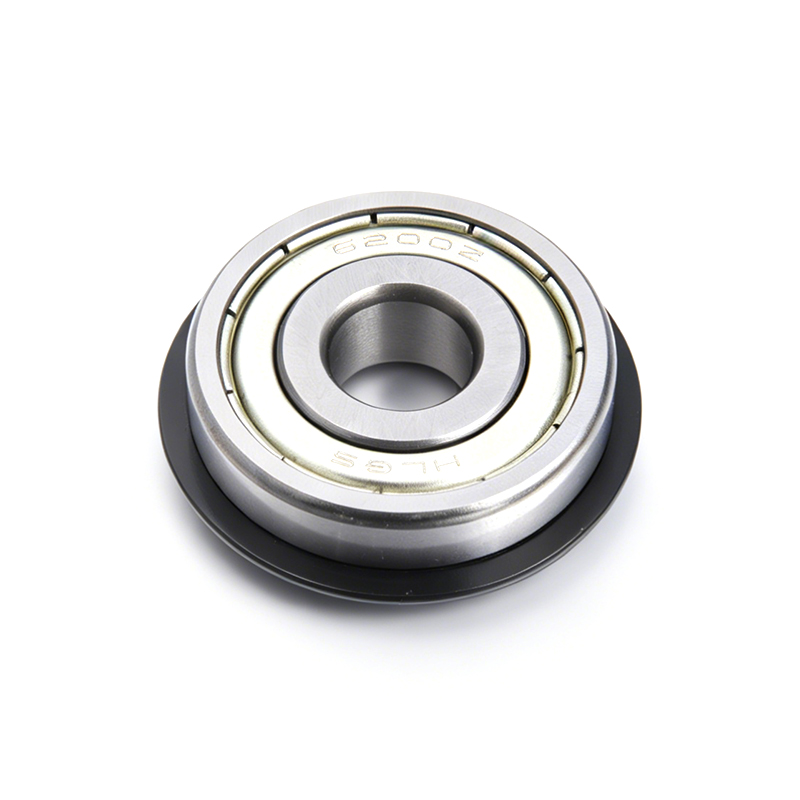
Some bearing types carry a fourth critical dimension. Flanged bearings add a flange diameter and a flange thickness, because the flange sits in a counterbore and must be matched separately from the main housing bore. Snap ring bearings add a ring diameter and groove position, since the retaining ring locates the bearing axially inside the housing. If you are measuring a bearing that has either feature, measure those extra dimensions too. Choosing a bearing by size alone without them will produce a part that fits the hole but will not seat correctly.
Most deep groove ball bearings follow a numbering system that quietly encodes the bore diameter right inside the model code. Once you know the rule, you can often work out the bore of an unfamiliar bearing in your head, before you ever reach for a caliper.
In a standard designation such as 6205, the first digit indicates the bearing type, the second digit indicates the dimensional series, and the final two digits carry the bore information. Those last two digits are read like this:
| Final two digits | Bore diameter | Worked example |
|---|---|---|
| 00 | 10 mm | 6200 |
| 01 | 12 mm | 6201 |
| 02 | 15 mm | 6202 |
| 03 | 17 mm | 6203 |
| 04 and above | digits multiplied by 5 mm | 6205 = 05 x 5 = 25 mm |
So the 05 in 6205 tells you the bore is 25 mm, the 08 in 6208 tells you 40 mm, and the 12 in 6212 tells you 60 mm. That single rule covers the great majority of the metric deep groove ball bearings you will meet in motors, pumps, conveyors and domestic appliances.
Miniature bearings are the exception worth remembering. In the metric miniature series, the digit that follows the 6 is simply the bore in millimetres. A 608 has an 8 mm bore, a 688 also has an 8 mm bore, and a 693 has a 3 mm bore. There is no multiplication involved. This is why a 608 and a 6200 can both exist in the same drawer yet obey completely different naming logic. If you work mainly with small bearings, it is worth writing both rules on the wall above the bench.
You can read more about how these small components behave in real machinery in our article on how miniature bearings power precision engineering and high-speed machinery.
Here is where most sizing mistakes happen. Two bearings can share an identical bore and still be completely different parts, because the dimensional series dictates how much outer ring and width they carry.
Take a 10 mm shaft. A 6000, a 6200 and a 6300 will all slide onto it, yet their outside diameters increase in clear steps as the series grows heavier. The 600 series is the lightest and thinnest, the 620 series is the general-purpose middle ground, and the 630 series carries the most material and the highest load capacity of the three.
| Model | Bore (mm) | Outside diameter (mm) | Width (mm) | Typical role |
|---|---|---|---|---|
| 608 | 8 | 22 | 7 | Miniature, compact assemblies |
| 6000 | 10 | 26 | 8 | Light, space-saving |
| 6200 | 10 | 30 | 9 | General purpose |
| 6300 | 10 | 35 | 11 | Heavier load, more rigid |
| 6201 | 12 | 32 | 10 | Common small motor size |
| 6205 | 25 | 52 | 15 | Industrial motors and pumps |
The chart below shows the same effect visually, using the three 10 mm bore bearings. The bore is identical in every case, but the outer ring grows steadily.
The practical lesson is straightforward. When you specify a bearing by size, the bore alone is never enough. Always confirm the outside diameter and the width as well, because the housing seat and the available axial space are governed by the series, not by the shaft.
When the model number is worn away or the bearing came out of equipment with no documentation, measurement is the only reliable route. A digital caliper with 0.01 mm resolution is enough for the vast majority of work, provided you use it carefully.
One caution that saves a lot of wasted time: do not try to identify a bearing from the bore alone. A 12 mm bore could be a 6201, a 6001, a 6301, or any of a dozen flanged and thin-section variants. The full three-dimension set is what narrows the field down to a single part.
In everyday conversation the boundary between miniature and small-sized bearings is loose, but in production and purchasing it matters, because the two families are usually tooled and stocked separately.
As a working rule, miniature bearings generally cover bores from around 1 mm up to about 10 mm with a correspondingly compact outer ring. They are the bearings you find in small fans, hand tools, RC models, skate hardware and precision instruments. Small-sized bearings pick up from roughly 10 mm bore and run up to about 30 mm, covering small motors, pumps, gearboxes and domestic appliances.
Compact envelopes such as 608, 688, 698 and 623. Often shielded or sealed, frequently used where space is the limiting factor rather than load.
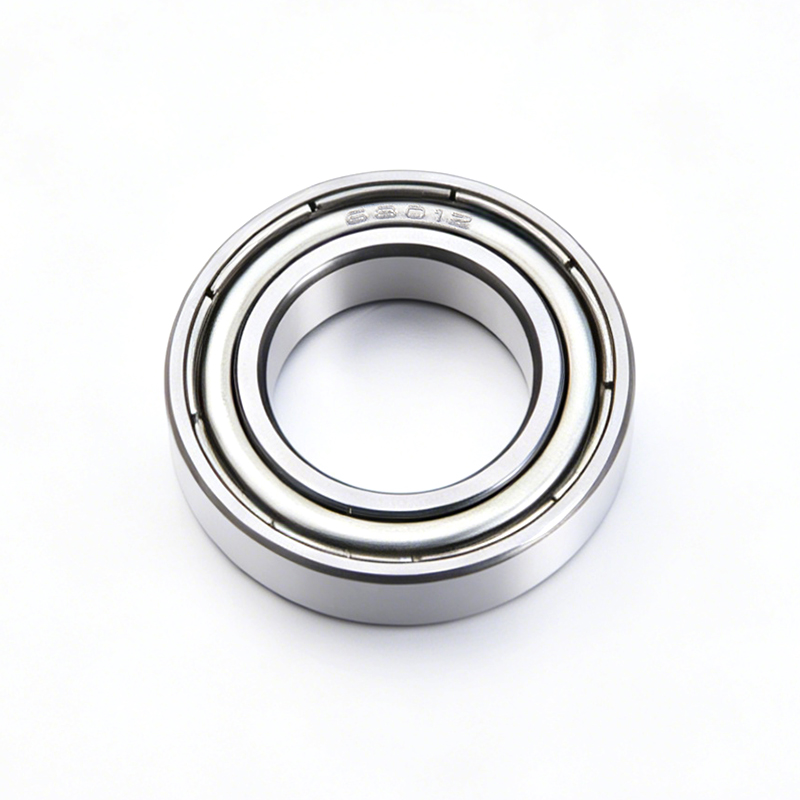
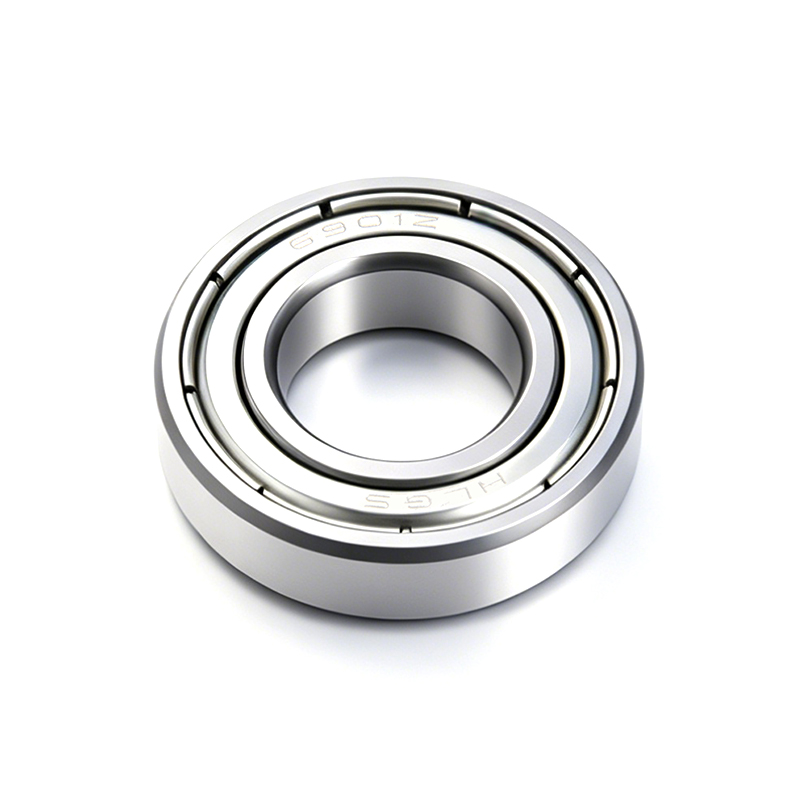
Models such as 6000, 6201, 6205, 6801 and 6901. These carry more load, run at moderate speeds and are the workhorses of small motor and pump assemblies.
If your project sits at the small end of the scale, our miniature bearing range covers the common envelopes and the sealing options that go with them.
Miniature Deep Groove Ball Bearings for Compact DesignsBrowse miniature deep groove ball bearings with common series, ZZ or 2RS sealing, and compact sizes for precision motors, fans, and similar small high-speed equipment.View Product →
Once the bore moves past 10 mm, the small-sized family takes over, and the choice becomes more about load and speed than about fitting into a tight corner.
Small-Sized Deep Groove Ball Bearings for General MachineryFor bores above 10 mm, this range covers common 60, 62, 63, 68, and 69 series with ZZ or 2RS options for light-to-medium rotating equipment.View Product →Envelope dimensions are only part of the picture. Several design features change how a bearing is sized and how it must be specified.
A flange is a lip on the outer ring that lets the bearing be located axially against a shoulder without a separate housing step. It saves machining and saves space, but it means your size list has two extra entries: flange outside diameter and flange thickness. A F688ZZ will not interchange with a plain 688ZZ even though the bore, outer diameter and width match.
Snap ring versions such as 6000ZZNR or 6204ZZNR carry a retaining ring seated in a groove on the outer ring. The ring adds a slightly larger effective diameter, so a housing cut for a plain bearing will not accept one. If your assembly uses axial location from a groove, you need the ring dimension as well as the three main ones.
Material choice does not normally change the envelope dimensions, which is why a stainless bearing can usually be substituted for a chrome steel one in the same housing. What changes is corrosion resistance, load rating and, in some cases, the achievable speed. Stainless bearings are a common choice for humid, washdown or lightly corrosive environments where standard chrome steel would eventually rust.
Stainless Steel Deep Groove Ball Bearings for Corrosive EnvironmentsWhen standard chrome steel would rust, these stainless deep groove ball bearings offer ZZ or 2RS sealing for humid, washdown, and lightly corrosive applications.View Product →
Flange geometry in particular trips people up more often than any other feature, and we covered the details in our guide to flanged bearing function, types and selection.
Most of the world works in metric bearing sizes, and the numbering rules described above apply. Inch-series bearings still appear in older equipment, imported machinery and certain aerospace and automotive applications, and they are sized in inches or in sixteenths of an inch rather than millimetres.
The trap is that a metric bearing will sometimes look close enough to an inch bearing to be tempting. An inch bore of 0.375 inches is 9.525 mm, which is not the same as a 10 mm metric bore, even though the difference is less than half a millimetre. Pressing the wrong one into a housing produces either a loose fit that spins or an interference that damages the seat. When you are measuring an unknown bearing, always check whether the reading lands cleanly on a whole millimetre or on a fractional inch. That single check usually settles which system you are dealing with.
Matching a bearing by size gets you a part that fits. It does not automatically get you a part that lasts. Four other factors deserve a look before you commit to a specification.
In practice this means the size is the entry ticket, and the suffix, tolerance and clearance are what actually determine service life.
If you are sourcing bearings rather than identifying them for your own use, the quality of the information you send has a direct effect on how quickly you get a usable quotation and how likely the first samples are to fit.
A photograph of the original part alongside a caliper reading removes most ambiguity. When the drawings are missing, a physical sample is even better, because we can measure runout, clearance and hardness as well as the basic envelope.
We are a direct manufacturer rather than a trading house, which means the sizing conversation goes straight to the people who set the grinding wheels. If you would like to see how our factory in Ningbo handles OEM and custom bearing enquiries, the door is open.
Yes, in ordinary use the two terms mean the same thing. Bore is the standard trade term for the inner ring diameter that the shaft passes through, and it is quoted as a nominal figure in millimetres or inches.
No, not in the same housing. Both have a 10 mm bore, but the 6000 has a 26 mm outside diameter and the 6200 has a 30 mm one. The shaft would fit and the housing would not. Substituting between series always requires checking the outside diameter and width.
Look at the final two digits. 00 means 10 mm, 01 means 12 mm, 02 means 15 mm and 03 means 17 mm. From 04 upwards, multiply the two digits by five. So 6208 has a bore of 40 mm and 6212 has a bore of 60 mm.
Not quite. In the metric miniature series the digit after the 6 is the bore in millimetres directly. A 608 has an 8 mm bore and a 693 has a 3 mm bore, with no multiplication involved.
Usually not. Shielded and sealed versions of the same model normally share the same bore, outside diameter and width. What changes is friction, maximum speed and protection against contamination.
Aim for 0.01 mm resolution and take readings at several positions around the circumference. If a dimension lands close to a whole millimetre or a clean fractional inch, you are almost certainly reading a nominal size rather than a worn one.
Yes. Non-standard sizes are a regular part of our work, and they are usually driven by an existing housing that cannot be modified. Send the dimensions, the quantity and the application, and we will confirm feasibility.
If you have ever held two ball bearings that look almost identical, only to find that one fits and ...
The Direct Answer: Match Precision Class to Rotational Accuracy Needs, Not to the Highest Available...
Most people arrive at ball bearing dimensions from one of two directions: a machine is open on the ...
The Direct Answer: A Deep Groove Ball Bearing Supports Both Radial and Axial Loads Using a Simple, ...