Industry News
Home / News / Industry News / Small-Sized Bearings: An Analysis of Key Components in Precision Manufacturing

Small-Sized Bearings: An Analysis of Key Components in Precision Manufacturing

Direct Answer

Small-sized bearings, typically ranging from about 1 millimeter to 30 millimeters in outer diameter, are the components that allow precision manufacturing to hold tight rotational tolerances inside compact spaces. Their performance depends on four factors above all others: raceway geometry accuracy, ball or roller grade, cage material, and lubrication retention. Get these four right and a small bearing will outperform its size, running for tens of thousands of hours inside medical devices, robotics joints, optical instruments, and micro motors.

1 to 30 mm Typical outer diameter range classified as small-sized
ABEC 7 to 9 Common precision grades used in instrument-class bearings
±0.5 to 2 micron Typical raceway roundness tolerance at high precision grades
30,000+ hours Achievable service life in properly specified applications

What Qualifies As A Small-Sized Bearing

Defining the size class before discussing engineering choices

In manufacturing terminology, a small-sized bearing generally refers to rolling element bearings with an outer diameter under 30 millimeters, and in many catalogs the classification narrows further to bearings with a bore under 10 millimeters. Below that threshold, engineers often use the term miniature bearing, and below roughly 3 millimeters in outer diameter, the term instrument bearing or micro bearing applies.

The distinction matters because the physics of rolling contact changes at small scale. Surface finish defects that would be irrelevant on a 100 millimeter bearing become proportionally significant on a 5 millimeter bearing. A scratch of 0.3 micron depth is a rounding error on a large industrial bearing, but on a miniature bearing raceway it can measurably shorten fatigue life. This is why small-sized bearing production sits closer to precision instrument manufacturing than to heavy industrial machining.

Another way to understand the size class is through the ratio between wall thickness and load. A large industrial bearing has generous ring wall thickness relative to the loads it carries, which gives the steel room to absorb minor manufacturing variation without measurable effect on running accuracy. A small bearing has comparatively thin rings, so any variation in heat treatment, grinding pressure, or raw material cleanliness shows up directly in the finished part. Engineers who move from designing with large bearings to designing with small bearings often need to rethink assumptions about acceptable variance, because tolerances that were previously treated as background noise become primary design variables.

Small-sized bearings are also unusual in that their catalog price is a poor predictor of engineering value. A miniature bearing costing a few dollars can be the single component that determines whether an entire surgical instrument passes calibration, while a much larger and more expensive bearing elsewhere in the same device may carry a far less demanding tolerance requirement. This is why procurement teams in precision manufacturing are advised to specify small bearings by performance requirement first, and by unit cost second.

Core Components And Their Engineering Roles

Each part contributes a distinct function to overall bearing performance

1

Inner And Outer Rings

Provide the raceway surfaces the rolling elements travel on. Ring roundness and raceway groove geometry directly set the achievable running accuracy of the finished bearing.

2

Rolling Elements

Balls or short cylindrical rollers that carry the load between rings. Sphericity and diameter matching across a full set of balls determine vibration and noise behavior.

3

Cage Or Retainer

Keeps rolling elements evenly spaced and prevents contact between them. Cage material choice affects maximum speed, temperature tolerance, and acoustic noise.

4

Seals Or Shields

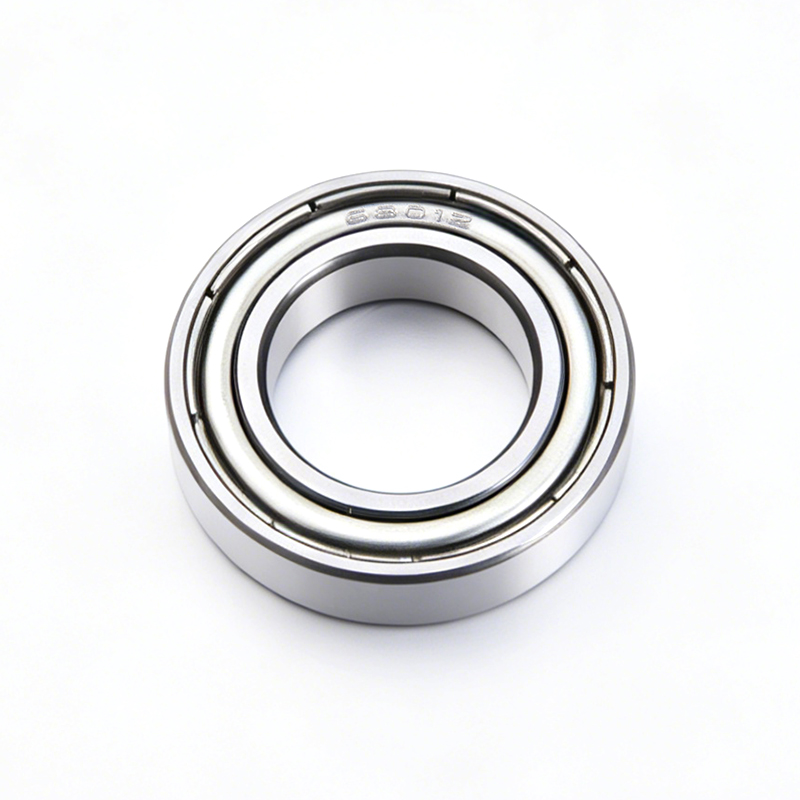
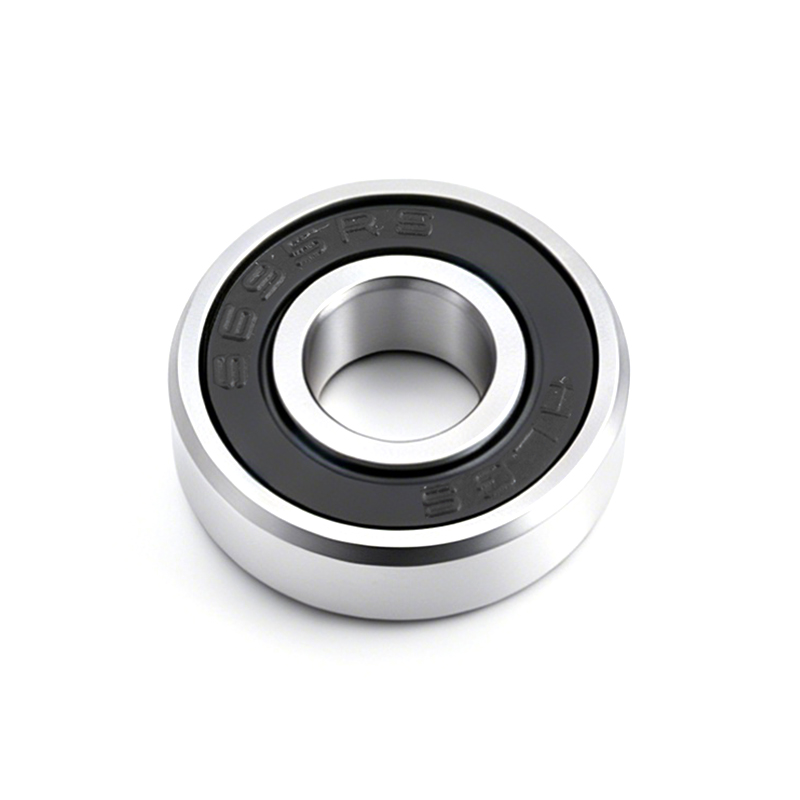
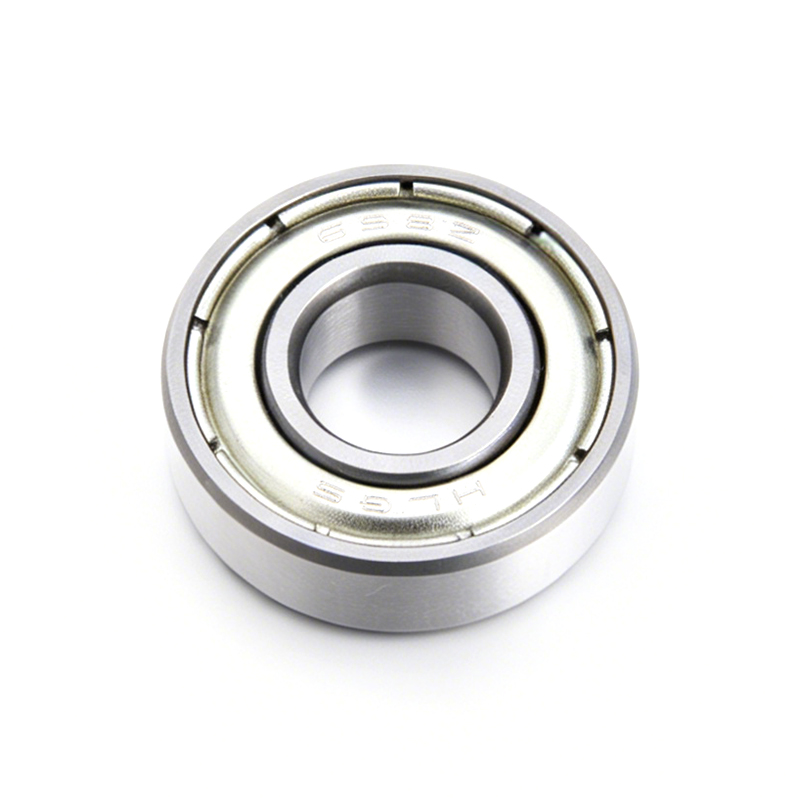
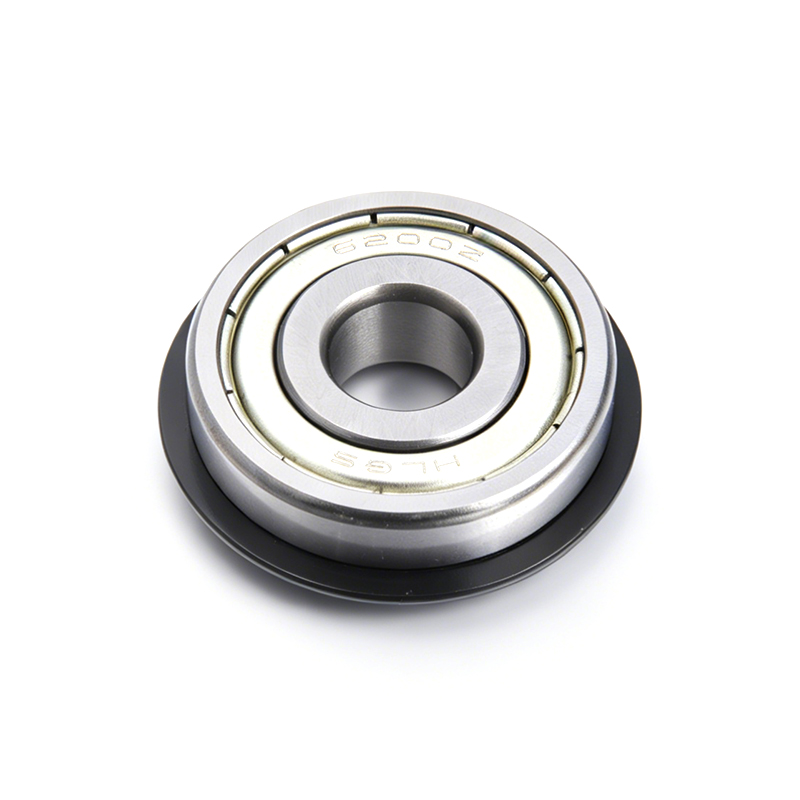
Protect the internal raceway from contamination and retain lubricant. Contact seals add friction but improve sealing; non-contact shields reduce friction but allow more ingress.

5

Lubricant

Grease or oil film that separates rolling surfaces and reduces wear. In small bearings the lubricant volume is tiny, so its retention and stability become critical design factors.

6

Snap Ring Or Flange

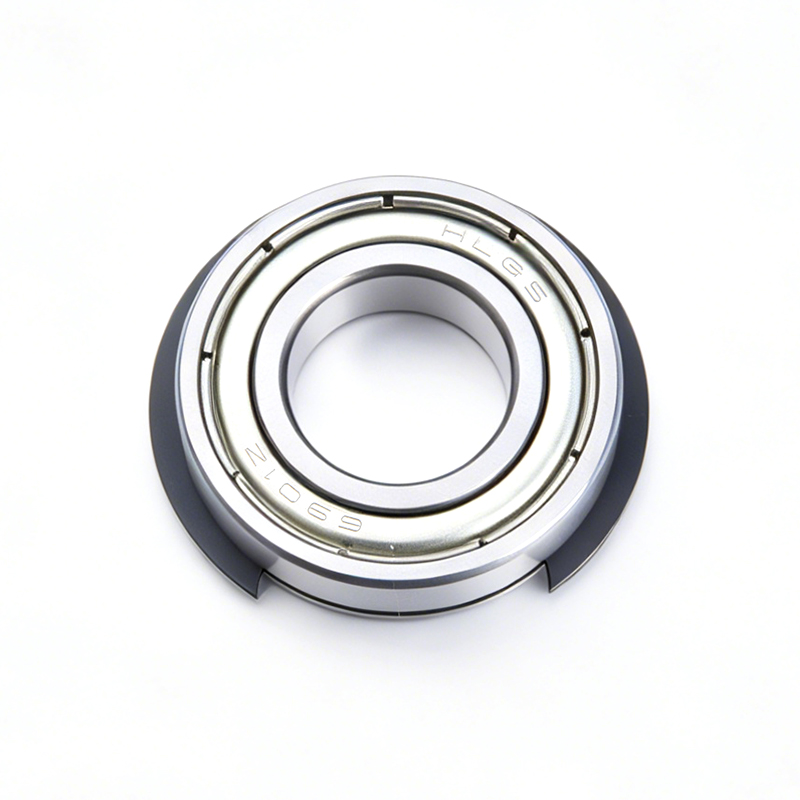
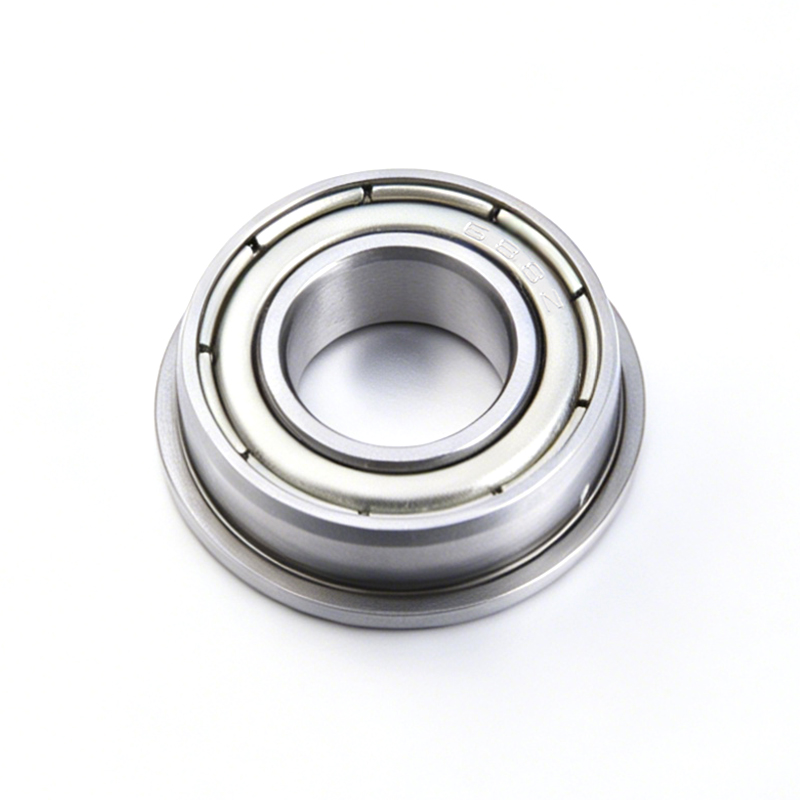
Used on flanged variants to simplify housing alignment, an important feature when the surrounding assembly itself has very tight positional tolerances.

Materials Used In Small-Sized Bearing Manufacturing

Material choice trades off load capacity, corrosion resistance, and cost

Material Typical Use Key Property
Chrome steel, grade 52100 General purpose small bearings for industrial and consumer devices High hardness and good fatigue life at moderate cost
Stainless steel, grade 440C Medical instruments, food processing equipment, marine devices Corrosion resistance in humid or washdown environments
Silicon nitride ceramic High speed spindles, semiconductor handling equipment Low density, high stiffness, and non-conductive rolling elements
Polymer or plastic composites Disposable medical devices, lightweight consumer products Low cost, corrosion immunity, but reduced load capacity
Titanium alloy rings Aerospace actuators and weight critical assemblies High strength to weight ratio with good corrosion resistance

Precision Tolerance Classes And Manufacturing Standards

How international grading systems define achievable accuracy

Two grading systems dominate small-sized bearing specification: the ABEC scale used widely in North America and the ISO 492 tolerance classes used internationally. Both grade bearings by how tightly dimensional and running accuracy are controlled during manufacturing. Higher numbers indicate tighter tolerances, and the jump between grades is not linear. Moving from ABEC 5 to ABEC 7 can mean cutting raceway roundness deviation roughly in half.

Grade selection should always trace back to a specific runout budget in the surrounding assembly rather than being chosen by habit. A gearbox that only needs to transmit torque smoothly at moderate speed rarely benefits from paying for ABEC 9 tolerances, since the gear mesh itself will introduce more positional error than the bearing does. By contrast, an optical scanning head or a gyroscope has almost no tolerance budget left for the bearing to consume, so specifying anything below ABEC 7 would guarantee a failed design from the outset. Matching grade to actual requirement, rather than defaulting to the highest available class, is one of the most common cost saving decisions available to a design engineer working with small bearings.

It is also worth noting that tolerance grade covers dimensional and running accuracy, but not necessarily internal clearance, surface finish of the raceway groove, or noise performance. Two bearings built to the same ABEC grade from different manufacturers can behave differently under load because internal clearance class, ball grade, and cage design are specified separately. A complete small bearing specification therefore lists tolerance grade alongside internal clearance class, typically expressed as C2 through C5, and ball grade, typically expressed on the G scale where a lower number indicates a rounder, more precisely sized ball.

ABEC Grade ISO Equivalent Typical Application
ABEC 1 Class 0 General industrial machinery, low speed applications
ABEC 3 Class 6 Electric motors, pumps, and moderate speed rotating equipment
ABEC 5 Class 5 Robotics joints, precision gearboxes, camera mechanisms
ABEC 7 Class 4 Surgical tools, dental handpieces, optical scanning heads
ABEC 9 Class 2 Gyroscopes, high speed spindles, metrology instruments

How Small-Sized Bearings Are Manufactured

A step by step view of the process behind micron level accuracy

Producing a small-sized bearing to precision grade tolerances involves far more process control than its physical size would suggest. The sequence below reflects the general workflow used across most precision bearing manufacturers, though exact steps vary by product line and internal quality system.

  • Raw material selection. Bar stock or wire stock is chosen for chemical purity and internal cleanliness, since inclusions in the steel become fatigue initiation points once the part is under rolling contact load.
  • Turning and forming. Rings are turned close to final shape, and balls or rollers are formed from wire or blanks using precision cold heading or grinding operations.
  • Heat treatment. Rings and rolling elements are hardened, typically to a range around 58 to 65 on the Rockwell C scale, then tempered to relieve internal stress while retaining hardness.
  • Grinding. Raceway surfaces, bores, and outer diameters are ground to near final dimension. This step establishes most of the roundness and surface finish that later determines tolerance grade.
  • Lapping and honing. A final super finishing pass reduces surface roughness on the raceway to a mirror like finish, which reduces friction and extends fatigue life.
  • Ball or roller sorting. Rolling elements are measured and sorted into diameter groups within fractions of a micron, so that every element in a finished bearing matches within the required grade tolerance.
  • Assembly. Rings, rolling elements, and cage are assembled in a controlled environment, often a cleanroom for higher precision grades, to avoid introducing particulate contamination.
  • Lubrication and sealing. Grease or oil is applied in a metered quantity, and seals or shields are pressed into place if the design calls for them.
  • Final inspection. Completed bearings are checked for radial and axial runout, noise signature, torque, and dimensional conformance before release.

Common Types Of Small-Sized Bearings

Matching bearing geometry to load direction and motion requirement

  • Deep groove ball bearings handle combined radial and light axial loads and are the default choice for small motors, fans, and general rotating shafts.
  • Angular contact ball bearings are designed for higher axial loads and are commonly paired in sets inside precision spindles where preload control matters.
  • Miniature flanged bearings add an outer ring flange that locates the bearing directly in a housing bore without a shoulder, simplifying compact assemblies.
  • Thin section bearings keep a small cross section relative to bore diameter, useful where radial space is limited but a larger bore is still required.
  • Needle roller bearings use thin cylindrical rollers to maximize load capacity within a very limited radial envelope.
  • Instrument ball bearings sit at the smallest end of the size range, often under 3 millimeters in outer diameter, and are built to instrument grade tolerances by default.

Applications Across Precision Manufacturing Industries

Where compact rotational accuracy becomes a design requirement

Medical Devices Robotics And Automation Optics And Imaging Aerospace Actuators Semiconductor Equipment Consumer Electronics Micro Motors Dental And Surgical Tools

In medical devices, small-sized bearings support surgical drills, dental handpieces, and infusion pump mechanisms, where both dimensional accuracy and biocompatible materials are required at the same time. In robotics, harmonic drive gear stages and joint modules rely on angular contact bearing pairs to remove backlash while keeping the joint housing compact. In optics and imaging, small bearings drive lens focus mechanisms and scanning mirrors, where even a few microns of runout can visibly degrade image sharpness. Semiconductor handling equipment uses ceramic hybrid small bearings specifically because standard steel bearings would introduce particulate contamination into a clean room process.

Aerospace actuators use small-sized bearings inside flap and slat drive mechanisms, flight control surfaces, and camera gimbal assemblies mounted on drones and satellites, where the combined requirement for low weight, wide temperature range operation, and long unattended service life narrows material choice to high grade stainless or titanium alloy rings. Consumer electronics manufacturers use miniature bearings inside camera autofocus modules, hard disk drive spindles, and small cooling fans, applications where unit cost pressure is high but a minimum running accuracy is still required to avoid audible noise or vibration in a handheld or desktop device.

Cost Factors And Total Cost Of Ownership

Why the lowest unit price rarely produces the lowest total cost

Unit price for a small-sized bearing is driven primarily by tolerance grade, material, and production volume. Moving from a standard grade chrome steel bearing to a stainless or ceramic hybrid equivalent can raise unit price by a wide margin, and moving from a mid tolerance grade to an instrument grade bearing adds a further increase because of the additional grinding, sorting, and inspection steps required. However, unit price is only one component of total cost in a precision manufacturing context.

The larger cost driver is often downstream. A bearing specified below the required precision grade can cause an entire subassembly to fail final calibration, generating rework cost that far exceeds any savings on the bearing itself. In medical device manufacturing, a single bearing related nonconformance discovered late in production can trigger a full batch quality investigation. For this reason, precision manufacturers generally treat small bearing selection as a reliability decision first and a purchasing decision second, and many maintain approved supplier lists specifically to avoid variability between nominally equivalent parts from different sources.

Total cost of ownership also depends on service interval. A permanently sealed miniature bearing with a long life lubricant may cost more up front than an open bearing requiring periodic relubrication, but if the assembly is inaccessible after final assembly, as is common in sealed medical devices or sealed consumer electronics, the sealed bearing is the only option that avoids a costly disassembly cycle later in the product life.

Selection Criteria For Engineers

A practical checklist for specifying the right small-sized bearing

Load direction first. Confirm whether the application applies pure radial load, combined radial and axial load, or a moment load, since this decision alone eliminates most unsuitable geometries before any other factor is considered.
Selection Factor Question To Answer Why It Matters
Speed rating What is the maximum operating rpm Cage material and lubricant type both set a hard speed ceiling
Environment Is there moisture, chemical exposure, or vacuum Determines seal type and whether stainless or ceramic is required
Precision grade How much runout can the assembly tolerate Sets the ABEC or ISO class and therefore the base unit cost
Space envelope What bore, outer diameter, and width will physically fit Small changes in width can shift load capacity significantly
Expected life How many operating hours are required before service Drives lubricant selection and whether relubrication is feasible

Market Trends And Growth Data

Demand drivers reshaping small-sized bearing supply chains

Demand for small-sized bearings has tracked closely with the growth of minimally invasive medical devices, collaborative robotics, and compact consumer electronics. Industry analyses covering the miniature and small bearing segment have consistently pointed to a compound annual growth rate in the mid single digits through the current decade, with medical and robotics end markets growing faster than the segment average because both fields keep shrinking device footprints while raising performance requirements at the same time.

A second trend is the gradual shift toward ceramic hybrid construction in small bearings for semiconductor and electronics manufacturing equipment, driven by the need to eliminate metallic particulate generation and reduce electrical conductivity through the bearing. A third trend is increased use of precoated, maintenance free lubrication systems, since many small bearing applications are sealed permanently and cannot be relubricated once installed.

Regional supply patterns are also shifting. A significant share of global small-sized bearing production remains concentrated among a small number of established manufacturers in Japan, Germany, Switzerland, and the United States, particularly at the highest precision grades where process control and inspection infrastructure represent a substantial barrier to entry. At the same time, manufacturers in other regions have expanded capacity for mid tolerance grade small bearings aimed at consumer electronics and general industrial automation, where cost competitiveness matters more than instrument grade accuracy. Buyers sourcing small bearings for medical or aerospace applications typically continue to specify established precision manufacturers regardless of unit cost difference, because supplier qualification and traceability requirements in those industries limit the pool of acceptable sources.

Frequently Raised Engineering Questions

Short answers to the questions design teams ask most often

Question Short Answer
Can a small-sized bearing be relubricated after installation Open and shielded types generally can be. Fully sealed miniature bearings usually cannot without disassembly, so they are treated as life sealed components.
Does a higher ABEC or ISO grade always mean longer service life Not directly. Precision grade controls running accuracy, while fatigue life is controlled more by load, speed, lubrication, and material cleanliness.
Are ceramic hybrid small bearings a direct replacement for steel bearings In many cases yes, but housing fit, preload, and lubricant compatibility should be reverified before substitution since ceramic balls behave differently under load.
What causes premature failure most often in small bearings Contamination ingress and improper installation force are the two most common root causes reported across precision manufacturing failure analyses.

Maintenance And Service Life Considerations

Practical factors that determine how long a small bearing actually lasts

  • Contamination control matters more at small scale, since a particle that would be negligible in a large bearing can be comparable in size to the raceway film thickness in a miniature bearing.
  • Lubricant migration can occur over time in sealed miniature bearings, so grease formulations with low bleed rates are preferred for long service applications.
  • Handling during installation should avoid applying force through the rolling elements, since small bearing rings can be marked permanently by uneven press fitting.
  • Thermal expansion mismatch between the bearing and its housing should be checked when the assembly operates across a wide temperature range, since fits that are correct at room temperature can become too tight or too loose at operating temperature.
  • Vibration monitoring in higher value assemblies can detect early raceway fatigue before a failure propagates into surrounding components.

Key Takeaways

Small-sized bearings are not simply scaled down versions of large industrial bearings. Their design, material selection, and tolerance control follow the logic of precision instrument manufacturing, where micron level accuracy is the baseline expectation rather than an upgrade.

  • Size definition: outer diameters generally under 30 millimeters, with instrument grade bearings falling under 3 millimeters.
  • Performance drivers: raceway geometry, rolling element grade, cage material, and lubrication retention control real world performance more than any single specification number.
  • Material choice: chrome steel for general use, stainless for corrosive environments, and ceramic hybrid for high speed or contamination sensitive processes.
  • Tolerance grade: ABEC and ISO classes should be matched to the actual runout budget of the assembly, not selected by default at the highest available grade.
  • Growth outlook: medical devices, robotics, and semiconductor equipment continue to push demand for higher precision, smaller footprint bearing solutions.

The overarching lesson for engineers and buyers alike is that a small-sized bearing should be specified with the same rigor applied to any other precision instrument component. Treating it as a commodity item chosen from a catalog by bore size alone is the most common source of downstream reliability problems in compact precision assemblies. Treating it as a designed component, with tolerance grade, material, and lubrication chosen deliberately against the actual operating requirement, is what allows a part smaller than a coin to reliably determine the performance of an entire precision manufactured product.

Recent Articles