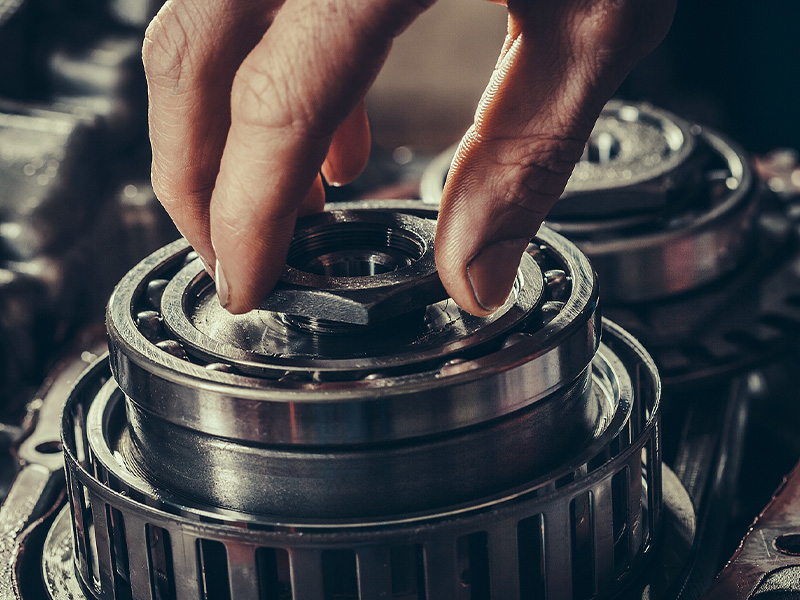
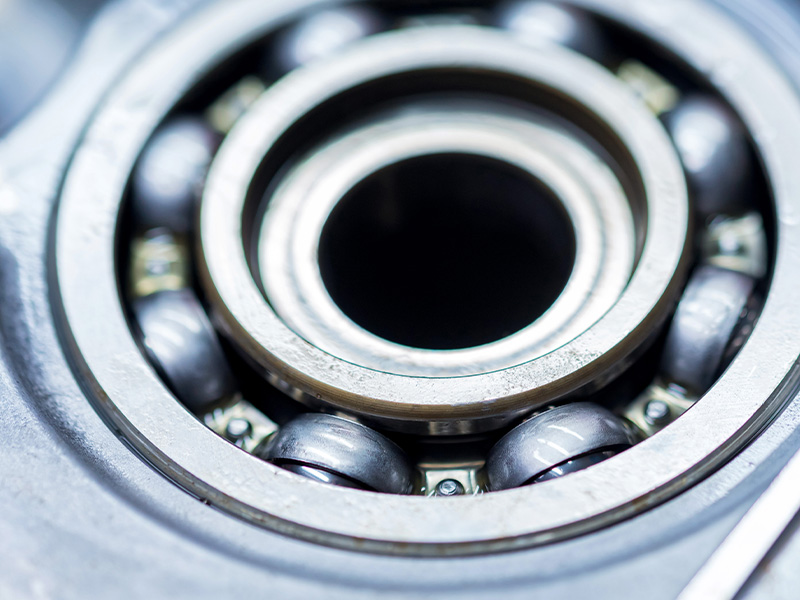
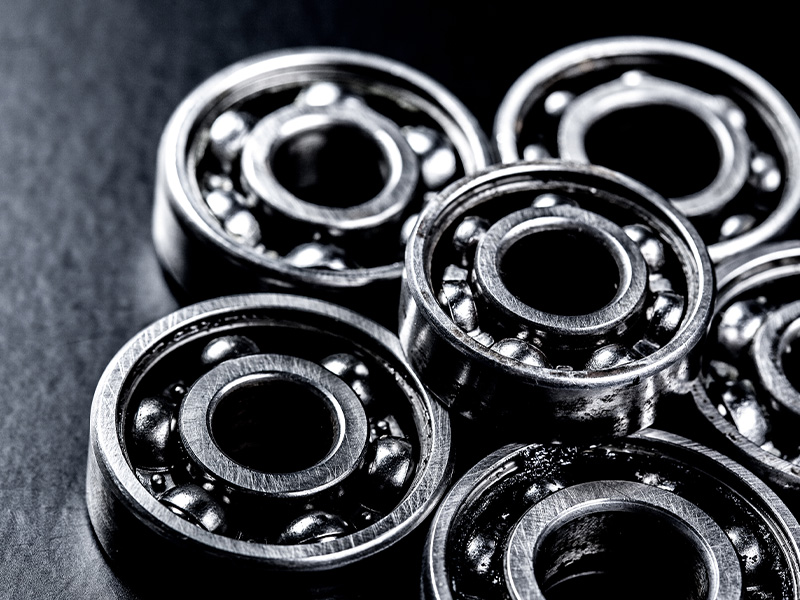
Quality is the best, safety first. During business development expenditure, the most core element for an enterprise is the quality of products, which needs to be paid attention to. In order to make the enterprise more competitive in the market, we continually improve our product's quality, which is also an essential prerequisite to enhancing the market share. Always placing the mission of offering the best products and services first. This urges us on to control quality in each manufacturing process and make sure every detail satisfies the requirements. Meanwhile, we also keep innovating, updating equipment and technology in order to improve corporate vitality and customer satisfaction.
Quality is the best, safety first. During business development expenditure, the most core element fo...
A spindle starts to leave a faint chatter mark at 8,000 rpm. The deep groove ball bearing meets its published load rating, yet the shaft deflects axially far more than the design budget allows. This is a familiar scene in precision machinery: the load number was checked, but the stiffness number was never specified. Axial stiffness determines how much a shaft moves when an axial force acts on it, and in equipment such as small motors, robots, and measuring devices, that movement matters as much as bearing life. This article explains what axial stiffness means, which design variables govern it, and how to make sure the bearing you select behaves as stiffly as the application requires. What axial stiffness means in a deep groove ball bearing Axial stiffness is the ratio of an applied axial load to the resulting axial deflection, expressed in newtons per millimetre. For a deep groove ball bearing, this ratio is not constant. The deflection between balls and raceways follows Hertzian contact behaviour: as the load increases, the contact area grows, the deflection becomes proportionally smaller, and the bearing appears stiffer. In other words, stiffness rises with load. To put a number on it, a small 608-size deep groove ball bearing might show an axial stiffness in the range of 30 to 80 N/µm depending on its clearance and the load level. A larger bearing such as a 6205 can reach several hundred N/µm under the same conditions. These figures are not fixed ratings; they are snapshots of one specific load point on a nonlinear curve. A deep groove ball bearing is symmetrical in the axial direction, meaning it can carry axial loads in both directions. Yet this symmetry has a consequence that design engineers often overlook. The bearing is built with internal radial clearance, so the balls do not contact the two raceway shoulders simultaneously. Under a small axial force, the shaft moves almost freely through the clearance until the balls seat on one shoulder. The axial stiffness in this region is effectively zero, and only after that play is consumed does the bearing begin to resist the load with its true contact stiffness. Why axial stiffness matters more than load rating A load rating answers one question: how much load can the bearing survive? Axial stiffness answers a different question: how precisely will the bearing hold the shaft? For many products, the second question is what determines quality. A small motor that allows rotor displacement generates vibration and noise. A robotic joint with excessive axial play loses positioning repeatability. A precision spindle that deflects under cutting force creates chatter and poor surface finish. Consider a motor whose rotor is positioned by two deep groove ball bearings. If the axial clearance at the raceway shoulder leaves 15 µm of free travel, the rotor shifts back and forth with every reversal of the magnetic force. The resulting axial motion directly translates into audible noise and repeated micro-impacts between balls and raceway shoulder. A preloaded bearing or a reduced-clearance bearing eliminates this behaviour at the source. None of these failures requires the bearing to be anywhere near its load limit. The bearing simply is not stiff enough for the structural loop of the machine. That is why stiffness data should be treated as a first-class specification, not a datasheet afterthought. When an assembly is designed to keep axial movement within two microns, a bearing that deflects ten microns under the same force makes every other precision component in the system pointless. Key factors that control axial stiffness The table below lists the parameters that most directly affect the axial stiffness of a deep groove ball bearing. The trade-offs matter as much as the stiffness improvement itself. Summary of the main axial stiffness tuning parameters and their practical trade-offs. Parameter Effect on axial stiffness Practical trade-off Internal clearance Smaller clearance reduces axial play and increases stiffness An excessively tight clearance raises friction and heat; the bearing can seize at operating temperature Ball diameter and ball count Larger or more balls enlarge the contact area, reducing deflection per unit load More steel means higher torque, higher inertia, and a possible reduction in dynamic capacity Raceway groove radius A smaller groove radius seats the ball more deeply and raises stiffness Deep seating generates more heat and demands higher running accuracy Axial preload Preload removes the clearance dead zone and moves the bearing onto a steeper part of the load-deflection curve Preload consumes load capacity and adds friction, shortening service life if set too high The clearance problem and how preload helps The most common reason for poor axial stiffness in practice is not insufficient ball diameter; it is clearance. Standard deep groove ball bearings are classified into clearance groups such as C2 (smaller than normal), CN (normal), and C3 (larger than normal). Larger clearance simplifies assembly and tolerates thermal expansion, but it also widens the axial displacement zone. For stiffness-critical applications, a C2 or even a custom-reduced clearance is often the simplest way to reduce axial play without changing the bearing geometry. If the application cannot accept any axial free travel, the next step is preload. A spring pressing axially on the outer ring continuously seats the balls against the raceway, so the bearing operates on the stiffer part of its deflection curve at all times. Rigid preload achieves the same result by fixing both bearing rings so that the balls are always in contact. Both approaches reduce axial play to near zero, but they add friction and generate heat, so preload values must be calculated carefully for the expected operating speed and temperature range. Radial versus axial stiffness in practice Deep groove ball bearings are sometimes described as radially dominant, and the description is fair. A radial load is carried along a direct line through the balls and both raceways, while an axial load must transfer through the raceway shoulders and induce a growing contact angle. Because of this geometry, the radial stiffness of a deep groove ball bearing is usually higher than its axial stiffness at the same load. The difference is not a defect; it is a consequence of the bearing's design. For a shaft that must be located accurately in both directions, the practical solution is often a pair of bearings or a bearing with an integrated flange. Flanged variants register the bearing axially against a housing face and simplify assembly in small electric motors and gear units. The flanged bearing selection guide explains how the flange position and housing fit affect axial shaft location. In motors with restricted space, a shielded flanged bearing such as the F696ZZ flanged bearing provides both axial support and simple housing location without an extra retaining ring. Wholesale F696ZZ Shielded Flange Bearing Ensures Smooth Running for Small MotorsNingbo Zhenhai Hualei Bearing Co.,Ltd. is China wholesale F696ZZ Shielded Flange Bearing Ensures Smooth Running for Small Motors Supplier...View Product → How to verify axial stiffness before you buy Theoretical stiffness calculations are a starting point, but the real load-deflection curve depends on manufactured clearance, raceway profile, and ball roundness. A force-deflection test is straightforward: place the bearing on a rigid support, apply an axial load in increments with a calibrated press, and measure the shaft displacement with a displacement sensor. Plotting load against deflection gives a curve whose slope at the operating load is the bearing's tangent stiffness. When miniature bearings are involved, the test setup has to be scaled down as well. The deflection at a few newtons of axial load can be just a few micrometres, so the measurement resolution is more demanding than for a large industrial bearing. This is where a bearing supplier with in-house measurement capability makes a difference when you are qualifying a new 688ZZ compact miniature bearing for a precision assembly. Wholesale 688ZZ Deep Groove Ball Bearing Features a Compact Design Ideal for LigNingbo Zhenhai Hualei Bearing Co.,Ltd. is China wholesale 688ZZ Deep Groove Ball Bearing Features a Compact Design Ideal for Light-Duty A...View Product → Note that a static load-deflection test measures static stiffness. In a running machine, the bearing also responds to dynamic effects: oil film behaviour between balls and raceways, centrifugal forces on the balls at high speed, and thermal expansion of the rings. For most applications below 60 percent of the bearing speed rating, static stiffness is a reliable basis for comparison. Speed-related softening becomes significant mainly in high-speed spindles, where direct dynamic testing is required. Practical selection steps for stiff bearing arrangements The selection process should begin with an axial deflection budget, not a load calculation. Decide how much shaft movement the application can tolerate at maximum axial force. Then compare bearing options by their predicted load-deflection behaviour at that specific force, rather than by a single stiffness number taken from a catalogue. Stiffness has no universal rating; it is a function of load, clearance, and preload. For small motors, robotics, and medical instruments, the direction of the load matters as much as its magnitude. A stainless miniature bearing such as the SMR148-2RS stainless steel bearing offers corrosion resistance and smooth running in environments where the motor is exposed to humidity or cleaning agents. Where space is extremely limited, a compact design keeps the bearing envelope small while still providing predictable axial behaviour through careful clearance selection. Wholesale SMR148-2RS Miniature Bearing Is Ideal for Small Motors, Robots and MecNingbo Zhenhai Hualei Bearing Co.,Ltd. is China wholesale SMR148-2RS Miniature Bearing Is Ideal for Small Motors, Robots and Mechanical M...View Product → Bearings selected for stiffness should also be validated in the actual housing and shaft fit. Interference fits change the internal clearance after mounting, and a bearing that appears stiff on a test bench can soften once pressed into a housing. Include the mounting condition in your stiffness evaluation rather than treating the bearing as an isolated component. For a deeper look at how small bearings support precision systems, see our overview of how miniature bearings power precision engineering and high-speed machinery. .article-section table{display:table!important;} .article-section thead{display:table-header-group!important;} .article-section tbody{display:table-row-group!important;} .article-section tr{display:table-row!important;} .article-section th{display:table-cell!important;} .article-section td{display:table-cell!important;} .article-section table caption{caption-side:bottom;font-size:16px;margin-bottom:12px;font-style:italic;color:#808080;} .article-section th{font-weight:bold;border:1px solid #cccccc;padding:8px;} .article-section td{border:1px solid #cccccc;padding:8px;} .article-section ol{margin-bottom:12px;list-style-type:decimal;list-style-position:inside;padding-left:0;} .article-section ul{margin-bottom:12px;list-style-type:disc;list-style-position:inside;} .article-section li{list-style:inherit;font-size:16px;margin-bottom:6px;} .article-section h2{font-size:22px;font-weight:bold;text-align:left;margin-bottom:12px!important;} .article-section h3{font-size:16px;font-weight:bold;text-align:left;margin-bottom:12px;} .article-section p{font-size:16px!important;margin-bottom:12px;} .product-card{display:block;margin:20px 0;border:1px solid #e5e7eb;border-radius:10px;overflow:hidden;font-style:normal;background:#fff} .pc-inner{display:flex;text-decoration:none;color:inherit;align-items:center;min-height:120px} .pc-img{width:160px;min-width:160px;aspect-ratio:4/3;height:auto;min-height:120px;object-fit:cover;flex-shrink:0;display:block;align-self:stretch} .pc-body{padding:12px 16px;flex:1;min-width:0;display:flex;flex-direction:column;align-self:stretch;justify-content:center} .pc-title{display:block;font-size:15px;font-weight:600;color:#111;margin:0 0 6px;line-height:1.4} .pc-desc{display:-webkit-box;font-size:13px;color:#6b7280;margin:0 0 8px;line-height:1.5;overflow:hidden;-webkit-line-clamp:2;line-clamp:2;-webkit-box-orient:vertical} .pc-cta{display:block;font-size:13px;font-weight:600;color:inherit;margin-top:auto} .pc-inner:hover .pc-title{text-decoration:underline} .article-section a:not(.pc-inner),article a:not(.pc-inner){color:inherit}.pc-cta{color:inherit!important}
If you are selecting a deep groove ball bearing for a motor, pump, or gearbox, the first question is not “which brand” but “how much radial load and how much axial load will the bearing see.” Radial load usually drives the bearing size; axial load determines whether a standard deep groove ball bearing is still a safe choice. In practice, the combination of these two forces is the most common reason for premature bearing failure. What Radial and Axial Loads Actually Mean Radial load acts perpendicular to the shaft. A belt pulling on a pulley, the weight of a rotor, or the meshing force of a gear all produce radial load. Axial load acts parallel to the shaft. Examples include the thrust from a helical gear, the magnetic pull of an electric motor, or a shaft pushing into a housing during assembly. A deep groove ball bearing is optimized for radial load because its raceways are deep and the balls have a small contact angle. This geometry lets the bearing take a certain amount of axial load in both directions, but there is a practical limit. If the axial component is too large, the balls slide instead of roll, and the contact ellipse moves toward the edge of the raceway. How Much Axial Load Can a Deep Groove Ball Bearing Handle? Publicly available technical data from bearing manufacturers gives a useful rule of thumb: for standard single-row deep groove ball bearings, the axial load capacity is often 10–30% of the static radial load rating. Thin-section and miniature bearings tend to sit at the lower end because their raceways are shallower and the balls are smaller. The static radial load rating, C0, is a reference value for the load that causes a permanent deformation of a certain size. The dynamic load rating, C, is used for life calculation. When engineers compare the axial load to the radial load, they should check the ratio against C0, not against C. Exceeding the recommended axial-to-radial ratio does not mean the bearing stops instantly. It means the stress distribution becomes irregular, the grease film breaks down, and the bearing loses service life faster than the standard L10 calculation predicts. 6205ZZ Deep Groove Ball Bearing for Motors and PumpsA 25×52×15mm shielded bearing made of GCr15 steel, suitable for medium radial loads in industrial equipment. Its double metal shields protect against dust and moisture, supporting reliable operation in motors, pumps, and machinery.View Product → For industrial equipment, our 6205ZZ bearing is a common choice for motors, pumps, and machinery, but it still needs the axial load check before final selection. What Happens When Axial Load Is Too High? When the axial load exceeds the bearing’s practical limit, the rolling elements and raceways behave differently. The contact angle increases locally, and the balls push against the edge of the raceway. This creates edge loading, which is a concentrated stress condition that can cause early flaking, indentation, and vibration. In a motor, you may notice increased temperature and noise. In a fan or small electric device, the bearing may become rough after a short period of operation. The failure is not always obvious from the outside because the seal still looks intact. Only when the system is disassembled can you see the uneven wear pattern on the inner and outer rings. This is also a procurement risk. If a purchasing specification only lists the radial dynamic load rating C and ignores axial load, the actual life of the bearing in the field can be significantly shorter than the calculated life. That leads to unexpected downtime, rework, and warranty claims. Selecting a Deep Groove Ball Bearing for Combined Radial and Axial Loads The practical process starts with the application data. Determine the radial force and its direction, then the axial force and its direction. For combined loads, calculate the equivalent dynamic load using the standard relationship P = XFr + YFa. For deep groove ball bearings, when the ratio of axial to radial load is small, you can simplify the calculation and treat the radial load as the governing factor. When the axial share grows, the calculation must include a higher equivalent load. Estimate radial load from belt tension, gear forces, or motor rotor weight. Estimate axial load from thrust forces, shaft alignment, or assembly methods. Check the ratio Fa/Fr against the bearing’s limiting values. Compare the equivalent load P with the dynamic load rating C and adjust speed and lubrication. Consider bearing structures that improve axial positioning, such as flanged or snap-ring bearings, without adding real axial capacity. Another point is internal clearance. A bearing with C3 clearance can tolerate a slightly higher axial load before edge loading appears, but it may run noisier. For quiet operation in fans, choose a normal clearance or even a C2. This is why your bearing supplier should know both the load and the noise requirements. Flanged deep groove ball bearings, for example, simplify axial location in small motor and pump assemblies. The flange acts as a locating feature, but it does not increase the axial load rating. The same is true for snap-ring bearings: the ring prevents shaft movement, but the ball path remains a deep groove design. F696ZZ Flanged Bearing for Small Motors and Precision InstrumentsA 6×15×5mm flanged bearing with an integrated flange for axial positioning in compact assemblies. It provides smooth rotation and stability, ideal for micro motors, electronics, and precision devices where space is limited.View Product → In a compact motor or small power tool, our F696ZZ shielded flange bearing helps to fix the shaft position while maintaining smooth rotation for small motor applications. Practical Scenarios: Motors, Fans, and Pumps A typical electric motor has radial load from gravity and, often, from a drive belt. The axial load is usually small unless the motor drives a helical gear or a worm gearbox. In those cases, a deep groove ball bearing can still handle the load if the axial force stays below the recommended percentage of the static rating. Fans and electronic devices often use compact bearings such as 6901ZZ. These bearings must rotate quietly and smoothly at high speed. A small amount of axial load is acceptable, but a heavy thrust load would make the bearing noisy and short-lived. 6901ZZ Compact Ball Bearing for Fans and Electronic DevicesA 12×24×6mm slim bearing designed for restricted spaces, offering low noise and stable performance under light to medium loads. Its double shields prevent dust ingress, making it suitable for fans, small motors, and precision equipment.View Product → Our 6901ZZ compact ball bearing is designed for fans, motors, and electronic devices where space is limited and smooth operation at speed is critical. Pumps and industrial machinery generally use heavier bearings such as 6205ZZ or oversized deep groove ball bearings. Here, the radial load is significant, but the axial component may also rise from impeller thrust or coupling misalignment. In these situations, engineers often add a separate thrust bearing or choose a larger bearing to keep the equivalent load well below the rated load. Speed also affects the axial load capacity. At high speed, the centrifugal force on the balls changes the contact angle and the oil film pressure. A 6901ZZ running at 10,000 rpm will not accept the same axial load as the same bearing running at 1,000 rpm, even though the radial load may be lower. Reference Table: Radial vs Axial Load Behavior Quick reference for radial and axial load in a deep groove ball bearing Load type Direction Typical capacity Failure mode when overloaded Radial Perpendicular to the shaft Dominated by raceway depth and ball complement Fatigue spalling and roughness Axial Parallel to the shaft Often 10–30% of the static radial rating Edge loading, noise, and early flaking Combined Both directions at once Must be converted to an equivalent load Corners of raceway show wear patterns Use this table as a quick sanity check during the initial bearing selection phase. The Role of Bearing Structures and Materials Flanged bearings and snap-ring bearings do not change the load capacity of a deep groove ball bearing; they change the ease of mounting. A flange can locate the bearing in a housing without a separate seating ring. A snap ring can hold the bearing in place on a shaft or in a bore. These features are especially useful in compact assemblies where additional components would make the design too bulky. If you need to understand the differences, we have a detailed guide on flange bearing selection that covers function, types, and of course the trade-offs. Material choice matters for corrosion resistance. Stainless steel bearings are a practical option for food machinery, medical devices, and outdoor equipment. However, stainless steel generally has slightly lower load capacity than standard chrome steel. If the application also has a high axial load, this lower reserve should be taken into account. Final Recommendation for Buyers and Design Engineers Start with the radial load, then verify the axial load. Do not assume that because a bearing is “heavy duty” or “industrial grade” it can absorb large axial forces without help. Always request the exact dimensions and load data from the bearing manufacturer, especially when the axial load is more than 20% of the radial load. For OEM and ODM projects, provide the operating loads, speed, and temperature. A direct manufacturer can then tailor the internal clearance, seal type, and material to match the real application. This approach reduces the risk of early failures and keeps total cost of ownership low. If your axial load is consistently higher than 30% of the radial load, consider using an angular contact bearing or a paired arrangement. But if the space is too tight, a custom deep groove ball bearing with modified ball size and raceway curvature can sometimes extend the axial capacity within the same envelope. This is where an OEM manufacturer with non-standard bearing experience can help. .article-section table{display: table!important;} .article-section thead{display: table-header-group!important;} .article-section tbody{display: table-row-group!important;} .article-section tr{display: table-row!important;} .article-section th{display: table-cell!important;} .article-section td{display: table-cell!important;} .article-section caption{caption-side:bottom;font-size:16px;margin-bottom:12px;font-style:italic;color:#808080;} .article-section th{font-weight:bold;border:1px solid #cccccc;padding:8px;} .article-section td{border:1px solid #cccccc;padding:8px;} .article-section ol{margin-bottom:12px;list-style-type:decimal;list-style-position:inside;padding-left:0;} .article-section ul{margin-bottom:12px;list-style-type:disc;list-style-position:inside;} .article-section li{list-style:inherit;font-size:16px;margin-bottom:6px;} .article-section h2{font-size:22px;font-weight:bold;text-align:left;margin-bottom:12px!important;} .article-section h3{font-size:16px;font-weight:bold;text-align:left;margin-bottom:12px;} .article-section p{font-size:16px!important;margin-bottom:12px;} .product-card{display:block;margin:20px 0;border:1px solid #e5e7eb;border-radius:10px;overflow:hidden;font-style:normal;background:#fff} .pc-inner{display:flex;text-decoration:none;color:inherit;align-items:center;min-height:120px} .pc-img{width:160px;min-width:160px;aspect-ratio:4/3;height:auto;min-height:120px;object-fit:cover;flex-shrink:0;display:block;align-self:stretch} .pc-body{padding:12px 16px;flex:1;min-width:0;display:flex;flex-direction:column;align-self:stretch;justify-content:center} .pc-title{display:block;font-size:15px;font-weight:600;color:#111;margin:0 0 6px;line-height:1.4} .pc-desc{display:-webkit-box;font-size:13px;color:#6b7280;margin:0 0 8px;line-height:1.5;overflow:hidden;-webkit-line-clamp:2;line-clamp:2;-webkit-box-orient:vertical} .pc-cta{display:block;font-size:13px;font-weight:600;color:inherit;margin-top:auto} .pc-inner:hover .pc-title{text-decoration:underline} .article-section a:not(.pc-inner),article a:not(.pc-inner){color:inherit}.pc-cta{color:inherit!important}
Quick Answer: Open vs. Sealed vs. Shielded at a Glance The core difference lies in how each type balances protection against friction: open bearings have no cover and require external lubrication systems, shielded bearings use a metal cover with a small clearance gap that allows relubrication while blocking large debris, and sealed bearings use a rubber or synthetic seal that makes contact with the inner ring for maximum contamination protection. Open bearings are the choice when the surrounding equipment already provides continuous lubrication and contamination control, such as in gearboxes with oil baths. Shielded bearings suit moderate-duty applications needing basic protection without sacrificing speed capability. Sealed bearings are the standard for dirty, wet, or maintenance-limited environments where contamination resistance outweighs the modest increase in rotational friction. Open Deep Groove Ball Bearings Open bearings have no protective cover on either side, leaving the internal raceway, balls, and cage fully exposed to the surrounding environment. Design and Function Without a shield or seal, open bearings rely entirely on external systems—such as an oil bath, circulating oil, or grease fitting—to supply and maintain lubrication. This design allows for direct visual inspection of the internal components and permits continuous relubrication without any barrier restricting oil or grease flow. Advantages Open bearings offer the lowest friction and heat generation of the three types, since there's no seal or shield creating drag against the rotating components. They're also the least expensive option and support the widest range of lubrication methods, including high-flow oil circulation systems used in high-speed industrial machinery. Limitations Because there's no built-in protection, open bearings are highly vulnerable to dust, moisture, and debris contamination if not housed within a well-sealed external enclosure. They also require external grease retention features, since lubricant can migrate out of an unprotected bearing over time. Shielded Deep Groove Ball Bearings Shielded bearings occupy a middle ground, using a thin metal disc attached to the outer ring that extends close to, but does not touch, the inner ring. Design and Function The metal shield sits fixed to the outer ring with a small radial clearance gap—typically 0.05-0.2mm—separating it from the rotating inner ring. This non-contact design blocks larger particles and debris while still allowing grease to escape and enter through the gap, meaning shielded bearings can, to a limited extent, be relubricated in service. Advantages Because the shield doesn't contact the inner ring, shielded bearings generate minimal additional friction compared to open bearings, making them suitable for higher-speed applications than sealed bearings typically allow. They also provide reasonable protection against larger contaminants like metal shavings or coarse dust. Limitations The small clearance gap, while beneficial for low friction, also means shielded bearings offer limited protection against fine dust, moisture, or liquid ingress. They are not recommended for washdown environments or applications with direct water or chemical splash exposure. Sealed Deep Groove Ball Bearings Sealed bearings provide the highest level of internal protection by using a rubber or synthetic elastomer seal that maintains physical contact with the inner ring. Design and Function Common seal materials include nitrile rubber (NBR) and fluoroelastomer (FKM/Viton), chosen based on temperature range and chemical exposure requirements. Because the seal lip physically contacts the inner ring surface, it creates a much more effective barrier against contamination compared to the non-contact shield design. Advantages Sealed bearings offer the best resistance to dust, moisture, and liquid contamination of the three types, and most are pre-lubricated for life, eliminating the need for ongoing relubrication maintenance. This makes them particularly valuable in hard-to-access locations or applications where routine maintenance is impractical. Limitations The physical contact between seal and inner ring generates additional friction and heat, which typically limits sealed bearings to lower maximum speeds than open or shielded equivalents. Since most sealed bearings are lubricated for life, they generally cannot be relubricated, meaning the entire bearing must be replaced once the internal grease degrades. Side-by-Side Comparison The following table summarizes the key performance and practical differences across all three bearing types. Characteristic Open Shielded Sealed Contamination Protection None (relies on housing) Moderate (large particles only) High (dust, moisture, liquids) Friction/Heat Generation Lowest Low Moderate to higher Maximum Speed Capability Highest High Lower Relubrication Capability Fully accessible Limited, via clearance gap Typically none (lubricated for life) Relative Cost Lowest Moderate Higher Table 1: Comparison of open, shielded, and sealed deep groove ball bearing characteristics How Environment Should Drive Your Selection Rather than defaulting to a single "best" type, the correct choice depends heavily on the specific operating conditions the bearing will face. Clean, Controlled Environments In gearboxes, machine tool spindles, and other applications with existing oil circulation or a well-sealed housing, open bearings are often the most cost-effective and efficient choice, since the surrounding system already handles contamination control and lubrication. Moderate-Duty Industrial Settings For general-purpose motors, fans, and conveyor systems operating in reasonably clean indoor environments, shielded bearings provide a practical balance of protection and low friction without the speed limitations of full seals. Harsh, Dirty, or Wet Conditions Applications like agricultural equipment, outdoor machinery, food processing lines with washdown requirements, or pumps handling wet environments call for sealed bearings, where contamination resistance is far more important than minimizing friction. Speed and Temperature Considerations Beyond contamination protection, rotational speed and heat generation are equally important factors that can rule out certain bearing types regardless of environmental conditions. High-speed applications, such as spindle motors or high-RPM fans, generally favor open or shielded bearings because seal contact friction in sealed bearings generates heat that increases with rotational speed, potentially leading to premature grease degradation or thermal damage at sustained high RPM. If an application requires both high speed and contamination protection, engineers often need to evaluate specialized low-friction seal designs or supplement shielded bearings with external sealing solutions in the housing itself. Maintenance Access and Lifecycle Cost Long-term cost considerations often favor different bearing types than initial purchase price alone would suggest. Accessibility for Maintenance For bearings in easily accessible locations with regular maintenance schedules, open or shielded designs allow ongoing relubrication that can extend service life significantly beyond a comparable sealed bearing's fixed lubricant lifespan. In hard-to-reach or embedded locations, sealed bearings' lubricated-for-life design eliminates the need for maintenance access altogether. Replacement vs. Relubrication Economics While sealed bearings cost more upfront, their maintenance-free design can reduce labor costs in applications where relubrication would otherwise require significant equipment downtime or disassembly, often making sealed bearings more economical over the full service life despite the higher initial price. Quick Selection Guide Use the following guidance to match bearing type to your specific application requirements: Choose open bearings when the housing provides continuous lubrication and contamination control, and maximum speed or minimal friction is a priority. Choose shielded bearings for general industrial equipment in moderately clean environments needing basic debris protection without sacrificing speed capability. Choose sealed bearings for dusty, wet, or washdown environments, or for hard-to-access locations where maintenance-free operation is essential. Choose sealed bearings when routine relubrication isn't practical, even in relatively clean environments, to reduce ongoing maintenance requirements. Avoid sealed bearings in high-speed, high-temperature applications where seal friction could accelerate lubricant breakdown. There is no universally "better" option among the three types—each represents a different trade-off between friction, protection, and maintenance requirements. The right choice depends on matching these trade-offs to your specific operating environment, speed requirements, and maintenance capabilities rather than defaulting to whichever type seems most robust on paper.
Direct Answer A flanged bearing is the right choice whenever a design needs the bearing to locate itself axially inside a through bore housing without a machined shoulder. The flange, a lip extending from one end of the outer ring, does the job a shoulder would otherwise do, which means flanged bearings simplify housing geometry, reduce machining steps, and control axial position more reliably than a plain bearing dropped into a stepped bore. The tradeoff is that flange load capacity is limited, so the flange should position the bearing, not carry the primary working load. 1 Machining Step Typical reduction versus machining a shouldered bore for a plain bearing 0.5 to 2 mm Common flange thickness range on small and miniature flanged bearings ABEC 1 to 7 Precision grades commonly available across flanged bearing product lines 10 to 20 percent Typical axial load limit of the flange relative to the bearing radial rating What A Flanged Bearing Actually Solves Understanding the alignment problem before looking at flange design A standard radial bearing has no built in way to stop itself from sliding through a straight through bore. To locate it axially, a designer traditionally machines a shoulder into the housing, a small step that the outer ring seats against, or adds a retaining ring on the far side. Both solutions work, but both also add machining operations, tighten the tolerance stack on the housing, and increase the number of ways the assembly can go wrong during manufacturing. A flanged bearing removes this requirement by extending a thin lip from one end of the outer ring, sized larger than the bore it sits in. The flange rests against the face of the housing rather than a machined internal shoulder, so the housing itself can be a simple straight bore, drilled or reamed in a single pass. This is why flanged bearings appear so consistently in compact electromechanical assemblies, where every added machining step increases cost and every added tolerance increases the chance of a misaligned rotating shaft. The economic case becomes clearer at scale. A single machined shoulder adds only seconds to a manufacturing cycle on a low volume prototype, but across a production run of tens of thousands of units, that same operation compounds into a meaningful share of total machining time and cost. It also adds a dimension that must be held to tolerance, which increases the chance of a part failing inspection and being scrapped or reworked. A flanged bearing shifts that positioning responsibility onto the bearing itself, a component already manufactured to tight tolerance as a matter of course, rather than asking the housing supplier to hold an additional critical dimension. Core Components And Their Role In Flanged Bearing Design How the flange integrates with the rest of the bearing structure without altering the internal mechanics 1 Integral Flange An extension machined or formed directly into the outer ring, providing the axial stop without any separate hardware or added assembly step. 2 Outer Ring Raceway Functions the same as on a non-flanged bearing, carrying radial load while the flange handles positioning rather than load transfer. 3 Inner Ring And Bore Mounts to the shaft exactly as in a standard bearing, since the flange modification is applied only to the outer ring in the great majority of designs. 4 Rolling Elements And Cage Identical in function to standard bearings, since the flange is a housing interface feature and does not change the internal rolling contact mechanics. 5 Seals Or Shields Fitted the same way as on non-flanged variants, and the flange face can also help keep contamination from migrating along the shaft into the housing. 6 Mounting Holes On Some Flanges Larger flanged bearing housings sometimes include bolt holes through the flange itself, allowing direct fastening rather than relying on a press fit alone. Common Flange Types Matching flange geometry to the mounting method the assembly requires Flange Type Description Best Suited For Round integral flange A continuous circular lip extending from the outer ring, no mounting holes Simple axial location in a through bore, most common in miniature bearings Slotted flange A flange with cutouts, reducing material and allowing tool clearance during assembly Compact assemblies where full flange contact is not required Bolted mounting flange A larger flange with through holes for screws, used mainly on bigger bearing units Applications needing a fixed, fastened bearing position rather than a press fit Thin profile flange A minimal thickness flange designed to add almost no axial length to the assembly Space constrained devices where every fraction of a millimeter matters Precision Tolerance Classes For Flanged Bearings How flange geometry itself carries its own tolerance requirement Flanged bearings are graded using the same ABEC and ISO 492 systems applied to standard bearings for bore, outer diameter, and running accuracy, but the flange adds an additional geometric requirement not present on plain bearings. Flange face squareness, meaning how perpendicular the flange face is to the bearing axis, and flange thickness consistency both affect how evenly the bearing seats against the housing face. A flange that is not square can introduce a small cocking angle into the entire assembly, which shows up as vibration or uneven wear even if the bearing's core dimensional grade is otherwise high. For this reason, buyers specifying flanged bearings for precision applications should confirm flange squareness tolerance separately from the general ABEC or ISO grade, since not every manufacturer publishes this value by default, and it does not automatically improve simply because a higher core precision grade was selected. A practical way to request this in a specification is to ask the manufacturer directly for a maximum flange runout value measured relative to the bore axis, rather than assuming a numeric ABEC or ISO grade alone covers the feature. Manufacturers experienced in precision flanged bearing production will have this data available, and a supplier unable to provide it should be treated as a signal to verify flange quality through incoming inspection before committing to a large production order. Applications Where Flanged Bearings Are The Right Choice Industries where axial self location outweighs the flange load limitation Robotics And Automation Small Motors And Actuators Consumer Electronics RC And Hobby Devices Medical Instrument Housings Camera And Optical Mechanisms In robotics and automation, flanged bearings are used extensively in gearbox stages and joint modules where a straight bore housing keeps the surrounding structure simple while still giving the bearing a reliable, repeatable seated position. In small motors and actuators, flanged bearings mounted directly into a stamped or molded housing eliminate the need for a separate retaining feature, which matters when the housing itself is produced at high volume and any added machining step multiplies across every unit produced. Consumer electronics and hobby devices, including RC vehicles and small drones, use flanged bearings because the housings are frequently molded plastic, where machining a precise internal shoulder is far more difficult and costly than molding a simple straight bore. In medical instrument housings and camera or optical mechanisms, the flange also serves a secondary purpose by acting as a light barrier against dust and debris migrating along the shaft, complementing whatever seal is fitted to the bearing itself. Selection Criteria For Engineers A practical framework for specifying flanged versus non-flanged bearings Axial load through the flange should stay light. The flange is a locating feature, not a primary thrust bearing. If the application applies meaningful continuous axial load, a dedicated thrust bearing or a properly designed shoulder and retaining ring combination will outperform relying on the flange alone. Selection Factor Question To Answer Why It Matters Housing manufacturing method Is the housing machined, molded, or stamped Flanged bearings offer the largest cost benefit in molded or stamped housings Axial load magnitude How much continuous axial force will the flange actually carry Excessive flange load can deform the flange or loosen the fit over time Flange thickness available Does the assembly have room for the added axial length of the flange Thin profile flanges exist specifically for space constrained designs Mounting method Will the bearing be press fit or bolted through the flange Determines whether a plain integral flange or a bolted mounting flange is required Precision requirement Does the application need controlled flange squareness High precision assemblies should specify this separately from the core ABEC grade Cost And Manufacturing Tradeoffs Weighing flange unit price against the machining cost it eliminates Flanged bearings typically carry a modest unit price premium over an equivalent non-flanged bearing, generally in the range of ten to twenty five percent, reflecting the additional forming or machining step required to produce the flange itself and the added inspection needed to confirm flange squareness. In isolation this premium looks like added cost, but it needs to be compared against what it replaces rather than against the plain bearing price alone. A machined shoulder in a metal housing typically costs more per unit than the flange premium once tooling wear, cycle time, and the added inspection point are included, and the gap widens further when the housing is a molded plastic part, since a straight through bore is a far simpler mold feature than an internal shoulder with a controlled step height. For high volume production, this comparison usually favors the flanged bearing decisively. For low volume or prototype work, the difference is smaller and either approach can be reasonable depending on existing tooling and design constraints, and a design team should run this comparison against its own actual production volume rather than assuming the outcome without checking real quoted numbers from both manufacturing paths. Installation Considerations Practices that preserve the alignment benefit the flange is meant to provide Press against the ring, not the flange. Installation force should be applied to the outer ring face during press fitting, since pressing directly on the flange can bend or crack it, especially on thin profile designs. Confirm bore chamfer. A small chamfer at the housing bore entrance helps the flange seat flush without catching on a sharp edge during installation. Check flange seating across the full face. A flange that seats unevenly against the housing face indicates either a housing squareness problem or bearing damage from installation, and either condition should be corrected before the assembly is put into service. Avoid over torquing bolted flanges. On bolted mounting flange designs, excessive torque can distort the outer ring and introduce preload that was never intended by the bearing design. Verify shaft alignment separately. The flange controls axial position of the outer ring, not shaft alignment, so radial alignment between mating bearings still needs to be checked independently in multi bearing assemblies. Key Takeaways Flanged bearings earn their place in precision manufacturing by turning a multi step housing alignment problem into a single straightforward bore, without asking the designer to sacrifice rotational accuracy to get that simplicity. Core benefit: the flange replaces a machined shoulder or retaining ring, reducing housing complexity and manufacturing cost, especially in molded or stamped assemblies. Load limitation: the flange should locate the bearing, not carry primary axial load, and applications with heavy continuous thrust need a dedicated solution instead. Precision detail: flange squareness and thickness consistency deserve their own specification, separate from the bearing's general ABEC or ISO tolerance grade. Installation care: press on the ring rather than the flange, and confirm even seating across the full flange face before the assembly goes into service. Best fit: compact electromechanical assemblies, molded plastic housings, and high volume production where every added machining step carries real cost across the full run. The overarching principle is that a flanged bearing is a design decision about the housing as much as it is a component decision about the bearing. Chosen for the right reason, in the right load environment, it removes complexity from the surrounding assembly while preserving the same rotational accuracy engineers expect from any properly specified precision bearing. Specifying it correctly from the start, with flange squareness and load limits documented alongside the standard bearing parameters, is what turns a small component decision into a reliable, repeatable manufacturing outcome. .fb-article { --primary: #1c50a2; --primary-dark: #0f3570; --primary-light: #4a76c4; --steel: #5a6b7d; --copper: #b8722f; --bg-page: #f5f7fa; --bg-panel: #ffffff; --ink: #1e2530; --ink-soft: #495364; --line: #d7dee8; font-family: "Segoe UI", "Helvetica Neue", Arial, sans-serif; color: var(--ink); background: var(--bg-page); line-height: 1.7; padding: 0 20px 60px 20px; } .fb-article h1 { font-family: "Segoe UI", Arial, sans-serif; font-size: 34px; font-weight: 800; color: var(--primary-dark); letter-spacing: 0.2px; margin: 40px 0 6px 0; line-height: 1.25; } .fb-article .fb-hero { background: linear-gradient(135deg, var(--primary-dark) 0%, var(--primary) 60%, var(--primary-light) 100%); border-radius: 4px; padding: 34px 30px; margin: 22px 0 30px 0; position: relative; overflow: hidden; } .fb-article .fb-hero::before { content: ""; position: absolute; top: -40px; right: -40px; width: 180px; height: 180px; border: 18px solid rgba(255,255,255,0.08); border-radius: 50%; } .fb-article .fb-hero::after { content: ""; position: absolute; bottom: -60px; right: 60px; width: 120px; height: 120px; border: 12px solid rgba(255,255,255,0.06); border-radius: 50%; } .fb-article .fb-eyebrow { color: rgba(255,255,255,0.75); font-size: 12px; font-weight: 700; letter-spacing: 2px; text-transform: uppercase; margin-bottom: 10px; position: relative; z-index: 2; } .fb-article .fb-conclusion { color: #ffffff; font-size: 19px; font-weight: 500; line-height: 1.65; max-width: 800px; position: relative; z-index: 2; margin: 0; } .fb-article .fb-conclusion strong { color: #ffe9c9; font-weight: 800; } .fb-article .fb-stat-row { display: flex; flex-wrap: wrap; gap: 14px; margin: 26px 0 34px 0; } .fb-article .fb-stat-card { flex: 1 1 200px; background: var(--bg-panel); border: 1px solid var(--line); border-left: 4px solid var(--copper); border-radius: 3px; padding: 16px 18px; } .fb-article .fb-stat-card .fb-stat-number { font-size: 26px; font-weight: 800; color: var(--primary-dark); display: block; } .fb-article .fb-stat-card .fb-stat-label { font-size: 13px; color: var(--ink-soft); margin-top: 4px; display: block; } .fb-article h2 { font-size: 23px; font-weight: 800; color: var(--primary-dark); margin: 46px 0 6px 0; padding-left: 16px; border-left: 5px solid var(--primary); line-height: 1.4; } .fb-article .fb-section-sub { color: var(--steel); font-size: 14px; margin: 4px 0 18px 21px; font-style: italic; } .fb-article .fb-panel { background: var(--bg-panel); border: 1px solid var(--line); border-radius: 4px; padding: 22px 24px; margin: 16px 0 24px 0; } .fb-article p { margin: 0 0 14px 0; color: var(--ink); font-size: 16px; } .fb-article p:last-child { margin-bottom: 0; } .fb-article table { width: 100%; border-collapse: collapse; margin: 16px 0 26px 0; background: var(--bg-panel); border: 1px solid var(--line); border-radius: 4px; overflow: hidden; } .fb-article table tr:first-child td { background: var(--primary-dark); color: #ffffff; font-weight: 700; font-size: 14px; letter-spacing: 0.4px; text-transform: uppercase; padding: 12px 16px; } .fb-article table td { padding: 11px 16px; border-bottom: 1px solid var(--line); font-size: 15px; color: var(--ink); vertical-align: top; } .fb-article table tr:last-child td { border-bottom: none; } .fb-article table tr:nth-child(even):not(:first-child) td { background: #eef2f8; } .fb-article .fb-component-grid { display: grid; grid-template-columns: repeat(auto-fit, minmax(260px, 1fr)); gap: 16px; margin: 18px 0 26px 0; } .fb-article .fb-component-card { background: var(--bg-panel); border: 1px solid var(--line); border-radius: 4px; padding: 18px 20px; position: relative; padding-left: 54px; } .fb-article .fb-component-card .fb-tag { position: absolute; left: 16px; top: 18px; width: 26px; height: 26px; border-radius: 50%; background: var(--primary); color: #ffffff; font-size: 13px; font-weight: 800; display: flex; align-items: center; justify-content: center; } .fb-article .fb-component-card h3 { margin: 0 0 6px 0; font-size: 16px; color: var(--primary-dark); font-weight: 700; } .fb-article .fb-component-card p { font-size: 14px; color: var(--ink-soft); margin: 0; } .fb-article ul.fb-list { list-style: none; margin: 16px 0 26px 0; padding: 0; } .fb-article ul.fb-list li { padding: 10px 0 10px 28px; border-bottom: 1px dashed var(--line); position: relative; font-size: 15.5px; color: var(--ink); } .fb-article ul.fb-list li:last-child { border-bottom: none; } .fb-article ul.fb-list li::before { content: ""; position: absolute; left: 0; top: 17px; width: 10px; height: 10px; background: var(--primary); border-radius: 2px; transform: rotate(45deg); } .fb-article ul.fb-list li strong { color: var(--primary-dark); } .fb-article .fb-callout { background: #eef2f8; border: 1px solid var(--line); border-left: 5px solid var(--primary); border-radius: 4px; padding: 16px 20px; margin: 18px 0 26px 0; font-size: 15px; color: var(--ink-soft); } .fb-article .fb-callout strong { color: var(--primary-dark); } .fb-article .fb-tag-strip { display: flex; flex-wrap: wrap; gap: 12px; margin: 18px 0 26px 0; } .fb-article .fb-tag-pill { background: var(--primary-dark); color: #ffffff; padding: 9px 18px; border-radius: 20px; font-size: 14px; font-weight: 600; } .fb-article .fb-summary { background: var(--primary-dark); border-radius: 4px; padding: 28px 26px; margin: 40px 0 10px 0; color: #ffffff; } .fb-article .fb-summary h2 { color: #ffffff; border-left: 5px solid var(--copper); margin-top: 0; } .fb-article .fb-summary p { color: rgba(255,255,255,0.9); } .fb-article .fb-summary ul.fb-list li { border-bottom: 1px dashed rgba(255,255,255,0.2); color: rgba(255,255,255,0.95); } .fb-article .fb-summary ul.fb-list li::before { background: var(--copper); } .fb-article .fb-summary ul.fb-list li strong { color: #ffe9c9; } @media (max-width: 640px) { .fb-article h1 { font-size: 26px; } .fb-article .fb-hero { padding: 24px 18px; } .fb-article .fb-conclusion { font-size: 16px; } .fb-article table td { font-size: 13.5px; padding: 9px 10px; } }
Direct Answer Stainless steel bearings are the correct choice whenever a rotating assembly must resist moisture, washdown chemicals, or marine salt exposure without sacrificing rolling accuracy. The decision that matters most is grade selection: martensitic grades such as 440C deliver hardness close to standard chrome steel, while austenitic grades such as 304 and 316 trade some load capacity for substantially higher corrosion resistance. Choosing the wrong grade for the environment is the single most common cause of premature stainless bearing failure in the field. 58 to 60 HRC Typical hardness of 440C martensitic stainless bearing steel 16 to 18 percent Chromium content range that gives stainless steel its passive oxide layer ABEC 1 to 7 Precision grades commonly available across stainless bearing product lines 2x to 5x Typical cost premium over standard chrome steel bearings of equal size Why Corrosion Resistance Requires A Different Material Strategy Understanding the metallurgy behind stainless bearing performance Standard bearing steel, most commonly grade 52100 chrome steel, achieves excellent hardness and fatigue resistance but has almost no inherent corrosion resistance. A thin film of moisture left on an unprotected chrome steel raceway can produce visible surface rust within hours, and once rust forms on a raceway, the bearing is effectively scrap because rolling contact fatigue initiates at corrosion pits far faster than at a clean surface. Stainless bearing steel solves this problem by adding chromium, typically in the range of sixteen to eighteen percent by weight for the most common grades, which forms a thin passive chromium oxide layer on the surface. This layer self-repairs when scratched, as long as oxygen is present, which is what gives stainless steel its characteristic corrosion resistance. The tradeoff is metallurgical. Adding chromium and reducing carbon content, which is necessary to keep the alloy corrosion resistant, generally reduces the maximum achievable hardness compared with standard chrome steel, and hardness is directly tied to load capacity and fatigue life in rolling contact. This is why stainless steel bearings are not a universal upgrade over chrome steel bearings. They solve a specific problem, environmental corrosion, at a specific cost, which is typically some combination of reduced load capacity, reduced maximum operating temperature, or higher unit price. Specifying stainless steel where the environment does not require it adds cost without adding value, while specifying standard chrome steel in a corrosive environment guarantees early failure. It is also worth understanding that corrosion resistance is not a single property but a spectrum that depends on the specific corrosive agent involved. A stainless grade that resists atmospheric moisture well may still be vulnerable to chloride ions found in seawater or industrial cleaning agents, which attack the passive layer through a mechanism called pitting corrosion. This is why grade selection cannot be reduced to a simple question of whether a bearing is stainless or not. The specific alloy composition determines which corrosive environments it can withstand and for how long, and manufacturers publish corrosion resistance data against standardized test environments precisely because performance varies so much by exposure type. Temperature also interacts with corrosion resistance in ways that are easy to overlook during initial specification. Elevated temperature accelerates most corrosion mechanisms, so a stainless bearing that performs adequately at room temperature in a mildly corrosive fluid may degrade far faster if the same fluid is heated, as often happens in sterilization cycles, chemical processing lines, or engine bay applications. Engineers specifying stainless bearings for any application involving both heat and moisture or chemical exposure should treat the combined condition as the design case, not the room temperature baseline. Core Components And Their Role In Corrosion Resistant Design Every part of the bearing must resist the same environment, not just the rings 1 Stainless Rings Inner and outer rings machined from stainless bar stock provide the corrosion resistant raceway surface that a chrome steel ring cannot offer in wet or chemical environments. 2 Stainless Balls Rolling elements are typically made from the same or a compatible stainless grade, since mixing a standard steel ball with a stainless ring can create galvanic corrosion risk at the contact zone. 3 Corrosion Resistant Cage Cages are commonly made from stainless steel, PTFE, or engineering polymer, since a standard steel or brass cage would corrode long before the rings and balls show any degradation. 4 Seals Rated For The Environment Rubber seal compounds are selected for chemical compatibility with the specific washdown fluid, solvent, or marine environment, since a standard nitrile seal can swell or degrade in some chemicals. 5 Compatible Lubricant Food grade or chemically inert lubricants are used where regulatory compliance is required, and water resistant grease formulations are used where washdown exposure is frequent, while synthetic lubricants rated for wide temperature swings are chosen for outdoor and marine deployments. 6 Fasteners And Housings Surrounding hardware, including set screws, snap rings, and housing bolts, should match the bearing corrosion class, since a standard steel fastener can rust and contaminate the assembly. Comparing Common Stainless Steel Bearing Grades Selecting between martensitic and austenitic families based on load and environment Grade Family Typical Hardness Best Suited For 440C Martensitic 58 to 60 HRC Applications needing near chrome steel load capacity with moderate corrosion resistance 420 Martensitic 50 to 55 HRC General purpose stainless bearings where extreme hardness is not required 304 Austenitic Cannot be hardened by heat treatment Light load bearings needing maximum corrosion resistance and non-magnetic behavior 316 Austenitic Cannot be hardened by heat treatment Marine and chemical processing environments with aggressive chloride exposure 440A Martensitic 54 to 58 HRC Applications wanting a balance between 440C hardness and improved corrosion resistance Precision Tolerance Classes For Stainless Bearings Grade availability differs slightly from standard steel bearing product lines Stainless steel bearings are graded using the same ABEC and ISO 492 tolerance systems applied to standard steel bearings, but not every stainless grade is available at every precision level from every manufacturer. Austenitic grades such as 304 and 316 are more commonly stocked at lower to mid tolerance grades because their primary application, corrosion resistance in food, marine, and chemical processing equipment, rarely demands instrument grade accuracy. Martensitic 440C stainless is the grade most often available up to higher precision classes, since its hardness supports the tighter dimensional control required at those grades. ABEC Grade ISO Equivalent Typical Stainless Application ABEC 1 Class 0 Food processing conveyors and general washdown machinery ABEC 3 Class 6 Pharmaceutical processing equipment and marine deck hardware ABEC 5 Class 5 Medical carts, laboratory automation, and chemical dosing pumps ABEC 7 Class 4 Surgical instruments and precision laboratory analyzers requiring low noise How Stainless Steel Bearings Are Manufactured Extra process controls needed to protect corrosion resistance during production Manufacturing a stainless steel bearing follows the same general sequence as standard steel bearing production, but several steps require additional controls to avoid compromising corrosion resistance before the bearing ever reaches service. Material sourcing. Stainless bar and wire stock is certified for chemical composition, since chromium content below specification can silently reduce corrosion performance without any visible defect. Machining with dedicated tooling. Stainless steel work hardens more readily than chrome steel during cutting, so manufacturers use dedicated tooling and cutting parameters to avoid surface hardening that would interfere with later grinding. Heat treatment for martensitic grades. 440C and similar grades are hardened and tempered under controlled atmosphere to prevent surface oxidation that would need to be removed later. Passivation. After machining, rings and balls are chemically passivated, typically in a citric or nitric acid bath, to strip embedded free iron from the surface and strengthen the passive chromium oxide layer. Contamination control during grinding. Grinding stainless components alongside standard steel components in the same equipment can embed carbon steel particles into the stainless surface, creating localized corrosion sites, so many manufacturers dedicate separate grinding lines. Cleanroom or controlled assembly. Higher grade stainless bearings intended for medical or food contact use are assembled in controlled environments to avoid contaminating a corrosion resistant part with non-stainless debris. Final passivation verification. Finished bearings may be tested with a salt spray or humidity chamber cycle to confirm the passive layer meets the specified corrosion resistance standard before release. Applications Where Stainless Steel Bearings Are The Right Choice Industries where corrosion resistance is not optional Food And Beverage Processing Marine And Offshore Equipment Medical And Surgical Devices Chemical Processing Pharmaceutical Manufacturing Wastewater Treatment Laboratory Automation Outdoor And Coastal Equipment In food and beverage processing, stainless steel bearings are used throughout conveyors, mixers, and packaging equipment, where frequent washdown with water and sanitizing chemicals would rust a standard bearing within days. Regulatory frameworks in this industry often require food contact surfaces and nearby components to resist corrosion and avoid contaminating the product line with rust particles, making stainless the default rather than an option. In marine and offshore equipment, chloride exposure from saltwater and salt air is one of the most aggressive corrosion environments a bearing can face, which is why 316 stainless, with its added molybdenum content, is frequently specified over 304 for winches, deck hardware, and propulsion system components. In medical and surgical devices, stainless bearings support instruments that must withstand repeated autoclave sterilization cycles involving high heat and steam, an environment that would quickly degrade a non-stainless bearing. In chemical processing and wastewater treatment, bearings are exposed to a wide range of aggressive fluids, and grade selection must account for the specific chemical resistance profile required, since not all stainless grades perform equally against every chemical. Selection Criteria For Engineers A practical framework for specifying the right stainless bearing grade Environment first, load second. Identify the specific corrosive exposure the bearing will face, including chemical type, chloride presence, and sterilization method, before finalizing load and speed requirements, since environment often narrows the grade choice before load calculations even begin. A useful discipline for engineering teams is to document the corrosive exposure profile of an application before requesting bearing quotes, rather than sending a generic request for a stainless bearing and leaving grade selection to the supplier. Supplying details on chemical contact, temperature range, sterilization frequency, and required service life allows a bearing manufacturer to recommend a grade and seal combination that has actually been validated for that exposure, rather than defaulting to whichever stainless grade happens to be in stock. This small step at the specification stage prevents a large share of the premature corrosion failures reported across food, marine, and medical equipment applications. Selection Factor Question To Answer Why It Matters Chemical exposure What fluids or chemicals will contact the bearing Determines whether 304, 316, or a specialty alloy is required for adequate resistance Load and speed Can an austenitic grade carry the required load or is martensitic hardness needed Austenitic grades trade hardness for corrosion resistance, limiting load capacity Sterilization method Will the assembly undergo autoclave, gamma, or chemical sterilization Affects seal material, lubricant stability, and long term corrosion performance Magnetic sensitivity Does the application require a non-magnetic bearing Austenitic grades are non-magnetic while martensitic grades are magnetic Regulatory compliance Does the industry require food grade or medical grade certification Determines acceptable lubricant, seal material, and documentation requirements Market Trends Shaping Stainless Bearing Supply Demand drivers and sourcing patterns across corrosion resistant applications Demand for stainless steel bearings has grown alongside stricter hygiene regulations in food and pharmaceutical manufacturing, expanding offshore wind and marine infrastructure, and the continued rise of minimally invasive and reusable medical instruments that must withstand repeated sterilization cycles. Industry data covering the corrosion resistant bearing segment has generally shown growth outpacing the broader standard steel bearing market, reflecting the fact that regulatory and reliability requirements in these end markets are becoming stricter rather than more relaxed over time. A related trend is increased specification of hybrid designs that pair stainless rings with ceramic rolling elements, particularly in food processing and pharmaceutical equipment where both corrosion resistance and contamination avoidance matter simultaneously. Ceramic balls do not corrode at all, and pairing them with stainless rings can extend service life further in the most demanding washdown environments, though at a higher cost than an all stainless design. Sourcing patterns also show a preference for established stainless bearing manufacturers with documented passivation processes and traceability records, especially among medical device and food equipment buyers who must be able to demonstrate regulatory compliance during audits. Buyers in less regulated industrial applications have more flexibility to source from a wider supplier base focused primarily on cost competitiveness at standard tolerance grades. Cost Factors And Total Cost Of Ownership Why the corrosion resistance premium is usually justified in the right environment Stainless steel bearings typically cost two to five times more than an equivalent standard chrome steel bearing, driven by more expensive raw material, more difficult machining, and additional passivation processing. In applications without meaningful corrosion exposure, this premium delivers no return and standard chrome steel remains the correct economic choice. In corrosive environments, the calculation reverses sharply. A standard bearing that fails from rust within weeks or months generates repeated replacement cost, unplanned downtime, and in regulated industries such as food and pharmaceutical manufacturing, potential contamination events that carry cost far beyond the part itself. A stainless bearing that runs for years without corrosion related failure, even at several times the unit price, produces a lower total cost of ownership once replacement frequency, labor, and downtime are included in the comparison. Buyers should also weigh grade selection against total cost rather than defaulting to the highest corrosion resistance available. Specifying 316 stainless in an environment where 304 would perform adequately adds cost without proportional benefit, while under-specifying 304 in a chloride heavy marine environment where 316 is required simply moves the failure further down the timeline rather than preventing it. Frequently Raised Engineering Questions Short answers to the questions design and procurement teams ask most often Question Short Answer Is 316 stainless always better than 304 Not always. 316 offers superior chloride resistance due to added molybdenum, but 304 is adequate for many general moisture exposures at a lower cost. Can stainless bearings match the load capacity of chrome steel bearings 440C martensitic stainless comes close, but austenitic grades such as 304 and 316 carry meaningfully lower dynamic load ratings at equivalent size. Do stainless bearings need special lubricant Not always, but food grade, medical grade, or chemically inert lubricants are required in regulated industries and should be confirmed against the specific application. Are stainless bearings magnetic Martensitic grades such as 440C are magnetic, while austenitic grades such as 304 and 316 are largely non-magnetic, which matters in sensitive electronic or instrumentation environments. Why does a stainless bearing sometimes still corrode Contamination from carbon steel particles during handling, chloride pitting beyond the grade rating, or incompatible cleaning chemicals are the most common causes of unexpected corrosion. Maintenance And Service Life Considerations Practices that preserve corrosion resistance over the life of the bearing Avoid mixing metals. Contact between stainless components and standard carbon steel hardware can create galvanic corrosion at the contact point, so fasteners and adjacent parts should match the corrosion class where possible. Rinse after chemical exposure. Residual cleaning chemicals or process fluids left on a bearing surface can slowly degrade the passive layer even on a properly specified grade, so rinsing after washdown extends service life. Verify lubricant compatibility. Lubricant chemistry should be checked against the specific process fluids the bearing will contact, since an incompatible lubricant can break down and leave the raceway unprotected. Inspect seals regularly. Seal degradation from repeated chemical or thermal exposure is often the first failure point in a stainless bearing assembly, occurring well before the stainless rings or balls show any distress. Watch for chloride pitting. In marine and chemical environments, periodic visual inspection for small surface pits can catch early stage corrosion before it progresses into the raceway and causes rolling contact fatigue. A properly specified and well maintained stainless steel bearing can reasonably be expected to match or exceed the service life of a standard chrome steel bearing operating in a clean, dry environment, even though the two are rarely compared directly since they are typically deployed in very different conditions. The more relevant comparison for most buyers is between a stainless bearing and a chrome steel bearing placed in the same corrosive environment, and in that comparison the stainless option consistently delivers a longer and more predictable service life, which is ultimately the entire reason the material exists as a distinct product category within precision bearing manufacturing. Key Takeaways Stainless steel bearings solve a specific engineering problem, environmental corrosion, and should be specified based on that problem rather than treated as a universal premium upgrade over standard steel. Grade selection: martensitic 440C for hardness with moderate corrosion resistance, austenitic 304 or 316 for maximum corrosion resistance at reduced load capacity. Component consistency: rings, balls, cage, seals, and lubricant must all match the corrosion resistance requirement, not just the rings. Manufacturing controls: passivation and contamination control during production are what actually deliver the corrosion resistance the grade promises. Selection order: identify chemical and environmental exposure first, then confirm load capacity, rather than starting from load and adding corrosion resistance as an afterthought. Cost logic: the price premium is unjustified without corrosion exposure and easily justified once replacement, downtime, and contamination risk are included in the comparison. The overarching principle is that stainless steel bearings perform best when specified deliberately against a defined environment, not selected by habit or by the assumption that stainless is always the safer choice. A precision manufacturing team that matches grade, component material, and lubricant to the actual chemical and thermal exposure of the application will get long, reliable service from a stainless bearing that is smaller than a coin but responsible for the reliability of an entire corrosion exposed assembly. Documented grade selection, verified passivation, and compatible seal and lubricant choices together form the difference between a stainless bearing that performs as expected for years and one that fails quietly within a single operating season. .ssb-article { --primary: #1c50a2; --primary-dark: #0f3570; --primary-light: #4a76c4; --steel: #5a6b7d; --copper: #b8722f; --bg-page: #f5f7fa; --bg-panel: #ffffff; --ink: #1e2530; --ink-soft: #495364; --line: #d7dee8; font-family: "Segoe UI", "Helvetica Neue", Arial, sans-serif; color: var(--ink); background: var(--bg-page); line-height: 1.7; margin: 0 auto; padding: 0 20px 60px 20px; } .ssb-article h1 { font-family: "Segoe UI", Arial, sans-serif; font-size: 34px; font-weight: 800; color: var(--primary-dark); letter-spacing: 0.2px; margin: 40px 0 6px 0; line-height: 1.25; } .ssb-article .ssb-hero { background: linear-gradient(135deg, var(--primary-dark) 0%, var(--primary) 60%, var(--primary-light) 100%); border-radius: 4px; padding: 34px 30px; margin: 22px 0 30px 0; position: relative; overflow: hidden; } .ssb-article .ssb-hero::before { content: ""; position: absolute; top: -40px; right: -40px; width: 180px; height: 180px; border: 18px solid rgba(255,255,255,0.08); border-radius: 50%; } .ssb-article .ssb-hero::after { content: ""; position: absolute; bottom: -60px; right: 60px; width: 120px; height: 120px; border: 12px solid rgba(255,255,255,0.06); border-radius: 50%; } .ssb-article .ssb-eyebrow { color: rgba(255,255,255,0.75); font-size: 12px; font-weight: 700; letter-spacing: 2px; text-transform: uppercase; margin-bottom: 10px; position: relative; z-index: 2; } .ssb-article .ssb-conclusion { color: #ffffff; font-size: 19px; font-weight: 500; line-height: 1.65; max-width: 800px; position: relative; z-index: 2; margin: 0; } .ssb-article .ssb-conclusion strong { color: #ffe9c9; font-weight: 800; } .ssb-article .ssb-stat-row { display: flex; flex-wrap: wrap; gap: 14px; margin: 26px 0 34px 0; } .ssb-article .ssb-stat-card { flex: 1 1 200px; background: var(--bg-panel); border: 1px solid var(--line); border-left: 4px solid var(--copper); border-radius: 3px; padding: 16px 18px; } .ssb-article .ssb-stat-card .ssb-stat-number { font-size: 26px; font-weight: 800; color: var(--primary-dark); display: block; } .ssb-article .ssb-stat-card .ssb-stat-label { font-size: 13px; color: var(--ink-soft); margin-top: 4px; display: block; } .ssb-article h2 { font-size: 23px; font-weight: 800; color: var(--primary-dark); margin: 46px 0 6px 0; padding-left: 16px; border-left: 5px solid var(--primary); line-height: 1.4; } .ssb-article .ssb-section-sub { color: var(--steel); font-size: 14px; margin: 4px 0 18px 21px; font-style: italic; } .ssb-article .ssb-panel { background: var(--bg-panel); border: 1px solid var(--line); border-radius: 4px; padding: 22px 24px; margin: 16px 0 24px 0; } .ssb-article p { margin: 0 0 14px 0; color: var(--ink); font-size: 16px; } .ssb-article p:last-child { margin-bottom: 0; } .ssb-article table { width: 100%; border-collapse: collapse; margin: 16px 0 26px 0; background: var(--bg-panel); border: 1px solid var(--line); border-radius: 4px; overflow: hidden; } .ssb-article table tr:first-child td { background: var(--primary-dark); color: #ffffff; font-weight: 700; font-size: 14px; letter-spacing: 0.4px; text-transform: uppercase; padding: 12px 16px; } .ssb-article table td { padding: 11px 16px; border-bottom: 1px solid var(--line); font-size: 15px; color: var(--ink); vertical-align: top; } .ssb-article table tr:last-child td { border-bottom: none; } .ssb-article table tr:nth-child(even):not(:first-child) td { background: #eef2f8; } .ssb-article .ssb-component-grid { display: grid; grid-template-columns: repeat(auto-fit, minmax(260px, 1fr)); gap: 16px; margin: 18px 0 26px 0; } .ssb-article .ssb-component-card { background: var(--bg-panel); border: 1px solid var(--line); border-radius: 4px; padding: 18px 20px; position: relative; padding-left: 54px; } .ssb-article .ssb-component-card .ssb-tag { position: absolute; left: 16px; top: 18px; width: 26px; height: 26px; border-radius: 50%; background: var(--primary); color: #ffffff; font-size: 13px; font-weight: 800; display: flex; align-items: center; justify-content: center; } .ssb-article .ssb-component-card h3 { margin: 0 0 6px 0; font-size: 16px; color: var(--primary-dark); font-weight: 700; } .ssb-article .ssb-component-card p { font-size: 14px; color: var(--ink-soft); margin: 0; } .ssb-article ul.ssb-list { list-style: none; margin: 16px 0 26px 0; padding: 0; } .ssb-article ul.ssb-list li { padding: 10px 0 10px 28px; border-bottom: 1px dashed var(--line); position: relative; font-size: 15.5px; color: var(--ink); } .ssb-article ul.ssb-list li:last-child { border-bottom: none; } .ssb-article ul.ssb-list li::before { content: ""; position: absolute; left: 0; top: 17px; width: 10px; height: 10px; background: var(--primary); border-radius: 2px; transform: rotate(45deg); } .ssb-article ul.ssb-list li strong { color: var(--primary-dark); } .ssb-article .ssb-callout { background: #eef2f8; border: 1px solid var(--line); border-left: 5px solid var(--primary); border-radius: 4px; padding: 16px 20px; margin: 18px 0 26px 0; font-size: 15px; color: var(--ink-soft); } .ssb-article .ssb-callout strong { color: var(--primary-dark); } .ssb-article .ssb-industry-strip { display: flex; flex-wrap: wrap; gap: 12px; margin: 18px 0 26px 0; } .ssb-article .ssb-industry-pill { background: var(--primary-dark); color: #ffffff; padding: 9px 18px; border-radius: 20px; font-size: 14px; font-weight: 600; } .ssb-article .ssb-summary { background: var(--primary-dark); border-radius: 4px; padding: 28px 26px; margin: 40px 0 10px 0; color: #ffffff; } .ssb-article .ssb-summary h2 { color: #ffffff; border-left: 5px solid var(--copper); margin-top: 0; } .ssb-article .ssb-summary p { color: rgba(255,255,255,0.9); } .ssb-article .ssb-summary ul.ssb-list li { border-bottom: 1px dashed rgba(255,255,255,0.2); color: rgba(255,255,255,0.95); } .ssb-article .ssb-summary ul.ssb-list li::before { background: var(--copper); } .ssb-article .ssb-summary ul.ssb-list li strong { color: #ffe9c9; } @media (max-width: 640px) { .ssb-article h1 { font-size: 26px; } .ssb-article .ssb-hero { padding: 24px 18px; } .ssb-article .ssb-conclusion { font-size: 16px; } .ssb-article table td { font-size: 13.5px; padding: 9px 10px; } }
A motor that has run for years rarely announces a bearing failure early. The first sign is a low hum, then a rising vibration, and finally a seized rotor. In most motors and rotating machines, the component standing between normal service and an expensive breakdown is a deep groove ball bearing. It is the most widely used rolling bearing in industry, for good reason: it carries radial and axial loads at the same time, runs at high speed, fits into a compact envelope, and comes in standardized metric sizes that are easy to replace. The short answer to what are deep groove ball bearings used for is that they keep rotating shafts running smoothly in electric motors, pumps, compressors, gearboxes, fans, home appliances, power tools, robotics, and food machinery. The sections below explain how the design works, where it appears in real equipment, and what to check when you specify or source it. What Is a Deep Groove Ball Bearing? A deep groove ball bearing consists of an inner ring, an outer ring, a complement of precision steel balls, and a cage that keeps the balls evenly spaced. The raceway grooves on both rings are deeper than those of other ball bearing types, which gives the bearing its name. The deep, continuous grooves let the balls contact the raceways over a large area, so the bearing carries a substantial radial load while also accepting moderate axial loads in both directions. That combination is the main reason the type appears in such a wide range of machines. The design is compact too. Its cross-section is thinner than a roller bearing of the same bore size, saving space inside motor end caps and gearbox housings. Metric dimensions follow the 60xx, 62xx, 68xx, and 69xx series, so bearings from different manufacturers are interchangeable in the same housing. Sizes run from miniature bearings with a bore of only a few millimetres up to large-bore bearings for heavy industrial shafts. For an overview of the available variants, see our deep groove ball bearing product range. What Are Deep Groove Ball Bearings Used For? Deep groove ball bearings are used wherever a shaft must rotate with low friction under a combination of radial and axial forces. Five application groups cover most real-world installations. Electric Motors and Generators Electric motors are the largest single application. A typical AC motor carries two deep groove ball bearings, one at each end of the rotor, to keep the shaft centred while it spins at speeds from a few hundred to tens of thousands of revolutions per minute. The bearings support the radial load of the rotor plus any belt or coupling force, and they absorb the small axial loads from thermal expansion and magnetic pull. Low noise matters as much as load capacity, because a quiet bearing reduces total motor noise without extra damping. In small motors, fans, and electronic devices where radial space is tight, the 6901ZZ compact ball bearing is a frequent specification. Wholesale 6901ZZ Compact Ball Bearing for Fans, Motors and Electronic Devices SuNingbo Zhenhai Hualei Bearing Co.,Ltd. is China wholesale 6901ZZ Compact Ball Bearing for Fans, Motors and Electronic Devices Suppliers a...View Product → Pumps, Compressors, and General Industrial Machinery Pumps and compressors use deep groove ball bearings at both shaft ends to support the impeller and handle the radial forces created by fluid pressure and shaft deflection. The 6205 series is among the most widely specified bearings in this class, appearing in centrifugal pumps, gearboxes, conveyors, and general machines. These duties value load capacity and a robust cage over absolute quietness; the industrial-grade 6205ZZ ball bearing is designed for motors, pumps, and machinery that run for long shifts. Automotive applications follow the same logic, with deep groove ball bearings supporting alternators, gearbox shafts, and wheel hubs while handling both radial and cornering loads. Wholesale 6205ZZ Industrial Grade Ball Bearing for Motors, Pumps and Machinery SNingbo Zhenhai Hualei Bearing Co.,Ltd. is China wholesale 6205ZZ Industrial Grade Ball Bearing for Motors, Pumps and Machinery Suppliers ...View Product → The deep groove design also tolerates a degree of shaft misalignment and deflection better than more rigid bearing types, which extends service life in machines that see moderate shock loads. Home Appliances and Power Tools Washing machines, vacuum cleaners, food processors, mixers, and electric garden tools use small deep groove ball bearings in their motors and drive trains. The priorities are low noise, long maintenance-free life, and low cost. Sealed versions with rubber contact seals keep grease in and detergent, dust, or moisture out, so the appliance runs for years without a service visit. Power tools add impact and vibration; the bearing must hold its internal clearance stable under load reversals and occasional shock. Robotics, Automation, and Precision Equipment Robotic arms, servo drives, encoders, and CNC machines need smooth, predictable rotation with minimal clearance. Miniature deep groove ball bearings are the standard solution because their compact geometry reduces inertia, improving positioning accuracy and response speed. The same basic design that carries heavy radial loads in a pump also delivers the low-friction rotation that precision mechanisms depend on; our guide to how miniature bearings power precision engineering and high-speed machinery explains why this versatility is possible. When moisture reaches the joint, stainless steel prevents corrosion. The SMR148-2RS miniature stainless steel bearing is intended for small motors and robots that need smooth rotation plus moisture resistance. Wholesale SMR148-2RS Miniature Bearing Is Ideal for Small Motors, Robots and MecNingbo Zhenhai Hualei Bearing Co.,Ltd. is China wholesale SMR148-2RS Miniature Bearing Is Ideal for Small Motors, Robots and Mechanical M...View Product → Food Machinery and Hygiene-Sensitive Environments Food processing lines, including conveyors, mixers, fillers, slicers, and packaging machines, expose bearings to water, steam, caustic cleaners, and acidic ingredients. Chrome steel corrodes in those conditions, so stainless steel deep groove ball bearings are the preferred answer in washdown zones. The same material suits medical equipment, beverage dispensers, and outdoor devices. When cleanliness is critical, sealed stainless bearings keep the lubricant captive, block ingress, and lower the risk of grease contamination. Why Deep Groove Ball Bearings Are the Default Choice Several technical and commercial reasons explain the type's dominance: Combined load capacity: deep raceways accept radial loads plus moderate axial loads in both directions. High-speed capability: the ball-and-cage design generates less heat than sliding-contact bearings. Low running torque and low noise: direct benefits for motors, appliances, and precision instruments. Compact cross-section: saves space and weight in motors, gearboxes, and hand tools. Full standardization: metric dimensions follow ISO/DIN series, making bearings interchangeable and multi-sourced. Low cost at scale: high-volume production keeps the unit price low for OEM buyers. In practice, select the bearing so the equivalent dynamic load stays within its published rating and the expected L10 life matches the machine's design life. For most standard motors and gearboxes, the bearing is not the limiting component: it outlasts the winding or the gear contact when lubrication and sealing are correct. How to Choose the Right Deep Groove Ball Bearing Selection starts with the envelope: the bore diameter must suit the shaft journal, and the outer diameter and width must fit the housing. The second step is load. Radial load dominates in most applications, but the axial component matters too; the deep groove design handles moderate axial loads, while heavy pure thrust loads point to a different bearing type. Speed, operating temperature, and required life follow from the machine specification. Sealing and Lubrication The most important operating decision is the seal or shield arrangement. How different sealing options affect the performance of a deep groove ball bearing in service. Design Code Friction Speed capability Protection Typical application Open bearing — Lowest Highest None; relies on housing seals Oil-lubricated gearboxes, clean environments Metal shields ZZ Low High Blocks large particles; retains grease Electric motors, general industrial machinery Rubber contact seals 2RS Higher Reduced Keeps grease in, liquid and dust out Food machinery, wet, dusty or washdown areas The trade-off is straightforward: rubber seals protect the bearing from contamination but add friction and reduce the maximum speed, while shielded bearings run faster with less protection. A motor that runs many hours a day is usually best served by a ZZ bearing with grease lubrication; a pump in a dusty plant is safer with 2RS seals. Material and Special Features Chrome steel (GCr15 or SUJ2) is the standard material and covers most applications. Stainless steel adds corrosion resistance for food, medical, and marine equipment. Flanged outer rings locate the bearing axially in a housing bore without a separate circlip, saving parts and machining; our flanged bearing selection guide compares the design options in detail. Snap-ring versions (NR designation) locate the bearing with a circlip and are common in motors and small power equipment. If no standard size fits the envelope, non-standard bearings can be manufactured to your drawing, which is a practical route for OEM projects with unusual constraints. Sourcing Deep Groove Ball Bearings for Production Buying bearings for production differs from replacing a failed part. A production buyer must be confident that every batch matches the approved sample in dimensions, noise, internal clearance, and grease fill, and that the supplier keeps that consistency for years. This is one reason OEMs prefer working directly with a manufacturer rather than a trading intermediary. The company behind the HLGS brand has specialized in miniature and small-sized deep groove ball bearings since 2001 and describes itself as a trusted direct manufacturer that welcomes OEM and ODM cooperation. It states that every product is tested before shipment, that each production step is controlled, and that its quality management systems are aligned with ISO 9001 and ISO/TS 16949. When a quality engineer evaluates a new supplier, the useful questions are concrete: how is noise measured and what limits apply? What is the dimensional sampling plan? Can a batch be traced to raw material and production date? Is internal clearance delivered as CN or C3? A direct manufacturer answers these questions from its own process records instead of forwarding them to another factory. Deep groove ball bearings are not the most exotic bearing type, but they are the workhorse behind most rotating equipment. Their combination of load capacity, speed, low noise, compactness, standardization, and cost makes them the first choice in most rotating machines. When specifying one, the four decisions that shape most of its service life are bore size, sealing arrangement, material, and the quality system behind the supplier. Get those right, and the bearing is usually the last component you will need to worry about. .article-section table{display: table!important;} .article-section thead{display: table-header-group!important;} .article-section tbody{display: table-row-group!important;} .article-section tr{display: table-row!important;} .article-section th{display: table-cell!important;} .article-section td{display: table-cell!important;} .article-section caption{caption-side:bottom;font-size:16px;margin-bottom:12px;font-style:italic;color:#808080;} .article-section th{font-weight:bold;border:1px solid #cccccc;padding:8px;} .article-section td{border:1px solid #cccccc;padding:8px;} .article-section ol{margin-bottom:12px;list-style-type:decimal;list-style-position:inside;padding-left:0;} .article-section ul{margin-bottom:12px;list-style-type:disc;list-style-position:inside;} .article-section li{list-style:inherit;font-size:16px;margin-bottom:6px;} .article-section h2{font-size:22px;font-weight:bold;text-align:left;margin-bottom:12px!important;} .article-section h3{font-size:16px;font-weight:bold;text-align:left;margin-bottom:12px;} .article-section p{font-size:16px!important;margin-bottom:12px;} .product-card{display:block;margin:20px 0;border:1px solid #e5e7eb;border-radius:10px;overflow:hidden;font-style:normal;background:#fff} .pc-inner{display:flex;text-decoration:none;color:inherit;align-items:center;min-height:120px} .pc-img{width:160px;min-width:160px;aspect-ratio:4/3;height:auto;min-height:120px;object-fit:cover;flex-shrink:0;display:block;align-self:stretch} .pc-body{padding:12px 16px;flex:1;min-width:0;display:flex;flex-direction:column;align-self:stretch;justify-content:center} .pc-title{display:block;font-size:15px;font-weight:600;color:#111;margin:0 0 6px;line-height:1.4} .pc-desc{display:-webkit-box;font-size:13px;color:#6b7280;margin:0 0 8px;line-height:1.5;overflow:hidden;-webkit-line-clamp:2;line-clamp:2;-webkit-box-orient:vertical} .pc-cta{display:block;font-size:13px;font-weight:600;color:inherit;margin-top:auto} .pc-inner:hover .pc-title{text-decoration:underline} .article-section a:not(.pc-inner),article a:not(.pc-inner){color:inherit}.pc-cta{color:inherit!important}
Ball Bearing Engineering Guide A deep groove ball bearing is a single row rolling element bearing whose inner and outer raceways form a continuous groove deep enough to hold the ball centered under both radial and moderate axial load. It is the most widely produced bearing ball bearing type in the world, used anywhere a shaft needs to spin smoothly, quietly, and at low friction. SINGLE ROW / 8-BALL LAYOUT Definition What Is a Deep Groove Ball Bearing, Exactly A deep groove ball bearing is a rolling element bearing built from an inner ring, an outer ring, a set of steel balls, and a cage, where the raceway grooves on both rings are machined slightly larger than the ball radius so the ball sits in a deep, close-fitting channel. That geometry is what lets a deep groove ball bearing carry radial load, axial load in both directions, and high rotational speed inside one compact part. The name comes directly from the shape of the raceway. In a plain radial bearing the groove is shallow and only resists load pushing straight through the shaft. In a deep groove ball bearing the groove radius is cut only marginally larger than the ball itself, usually within a few percent, so the ball never has room to climb out of the channel even when the shaft pushes sideways. That single geometric decision is why deep groove ball bearings became the default choice across almost every machine category, from a kitchen blender motor to a conveyor gearbox. When people search for a bearing ball or a bearing ball bearing without knowing the technical name, they are almost always describing this exact part. It is the bearing most engineers picture first because it appears in more catalog pages, more OEM drawings, and more replacement parts lists than any other rolling bearing family. Why the groove depth matters A deeper groove increases the contact arc between ball and raceway. More contact arc spreads the load over a larger area, which raises both the radial and axial load rating without increasing the outer dimensions of the bearing. Why it runs so fast Because the balls roll rather than slide, and because the design needs no separate thrust component, friction stays low. That low friction is the main reason deep groove ball bearings tolerate the highest speed factors of any common bearing type. Anatomy The Parts Inside a Deep Groove Ball Bearing Every deep groove ball bearing, no matter how small or large, is built from the same five functional parts. Understanding each one makes it much easier to read a bearing size chart or a bearing dimensions chart later, because every dimension on that chart maps to one of these components. 01 Inner ringPresses onto the shaft and carries the inner raceway groove. Its bore diameter is the first number in any bearing size chart. 02 Outer ringSits in the housing bore and carries the outer raceway groove. Its outside diameter, together with the bore, defines the cross section of the bearing. 03 Ball complementA ring of hardened steel balls, usually eight to ten in a small or medium bore, that rolls between the two raceways and physically carries the load. 04 Cage or retainerKeeps the balls evenly spaced around the raceway so they do not touch each other, which would create sliding friction and rapid wear. 05 Seal or shieldAn optional cover pressed or fixed onto the outer ring that keeps lubricant in and dirt out. Open, shielded, and sealed versions all share the same internal geometry. Note: the term ball bearing is often used loosely to describe the whole assembly, while bearing ball on its own usually refers only to the loose steel ball component sold separately for repair or regreasing work. Working Principle How a Deep Groove Ball Bearing Carries Load A deep groove ball bearing works on a point contact principle. Each steel ball touches the inner raceway at one point and the outer raceway at one point, and load passes through those two tiny contact patches instead of across a full line, the way it would in a roller bearing. Point contact keeps rolling resistance low, which is why deep groove ball bearings spin more freely than almost any other bearing family of the same size. Because the raceway groove is deep on both rings, the line connecting the two contact points is not perfectly straight through the center of the ball, it sits at a small angle, often quoted as roughly zero degrees at rest but shifting slightly under axial load. That shifting contact angle is what allows a single row deep groove ball bearing to resist thrust from either direction without needing a second, opposing bearing. A tapered roller bearing or an angular contact bearing needs to be paired to handle two way thrust. A deep groove single row ball bearing does it alone, in one part, at one price. Radial capacity Radial load pushes straight down through the shaft into the housing. The full circle of balls shares this load, with the balls directly under the load line carrying the largest share. Axial capacity Axial load pushes along the shaft centerline. The deep groove lets the contact points shift slightly so a portion of every ball still resists the thrust, in either direction. Configurations Single Row Deep Groove Ball Bearing vs Double Row Most of what people mean by a deep groove ball bearing is the single row deep groove ball bearing, which is by far the more common configuration. A double row version doubles the ball complement in one wider bearing, which raises radial capacity without stacking two separate single row bearings on the shaft. The table below lines up the two configurations side by side. Feature Single row deep groove ball bearing Double row deep groove ball bearing Ball rows 1 2 Typical width Narrow, standard series Roughly 1.3 to 1.6x the width of a single row equivalent Radial capacity Baseline Roughly 1.5 to 1.8x higher Axial capacity Moderate, both directions Higher, both directions Cost per unit Lower Higher Common use Electric motors, pumps, gearboxes, appliances Heavy pulleys, high radial load fans, textile machinery In practice, deep groove single row ball bearings cover more than nine out of ten industrial applications, because most shafts do not need the extra radial margin a double row design provides. Double row bearings are reserved for situations where space along the shaft is limited but the radial load is unusually high. Advantages Why Deep Groove Ball Bearings Are the Default Choice Ask any bearing engineer what are deep groove ball bearings good for and the answer is almost always the same: everything that is not an extreme case. They are not the highest load bearing available, and they are not the fastest bearing available, but they are the best all around compromise between load, speed, cost, and simplicity, which is exactly why global production volume for this single bearing type outpaces every other rolling bearing family combined. Low friction, low heat generation High limiting speed Two way axial capacity in one part Simple, low cost manufacturing Wide size and tolerance availability Low maintenance under normal duty Quiet running at speed Easy interchange between brands Relative operating speed by bearing type Illustrative limiting speed factor, same bore size, grease lubrication, indexed to 100 for the deep groove ball bearing Deep groove Angular contact Cylindrical roller Tapered roller 100 85 70 50 Sealing and Shielding Open, Shielded and Sealed Deep Groove Ball Bearings A deep groove ball bearing can be supplied with several different protection levels, and the suffix letters after the size number tell you which one you are holding. This matters as much as the raw dimensions when you are matching a replacement bearing ball bearing to a machine. Suffix Protection type Best suited for Open No shield or seal, packed with grease by the user or oil bath lubricated Clean, controlled environments with a dedicated lubrication system ZZ / 2Z Metal shields on both sides, non contact Light dust protection, higher speed than sealed types RS / 2RS Rubber seals on both sides, light contact General industrial and appliance use, keeps grease sealed for life RZ / 2RZ Rubber seals, low friction non contact design Higher speed applications that still need seal level protection Sizing Deep Groove Ball Bearing Size Chart and Dimensions Every deep groove ball bearing is described by three core measurements: bore diameter, outside diameter, and width. Together these three numbers make up the bearing dimensions chart that appears on every manufacturer datasheet. The table below is a standard ball bearing size chart for the most common metric series, covering the 60 extra light, 62 light, and 63 medium series. Bearing number Bore (mm) Outside dia (mm) Width (mm) Dynamic load (kN) Limiting speed (grease, rpm) 6000 10 26 8 4.6 28000 6001 12 28 8 5.1 26000 6002 15 32 9 5.6 24000 6003 17 35 10 6.0 22000 6004 20 42 12 9.4 19000 6200 10 30 9 5.1 26000 6201 12 32 10 6.8 24000 6202 15 35 11 7.6 22000 6203 17 40 12 9.6 20000 6204 20 47 14 12.7 18000 6205 25 52 15 14.0 16000 6300 10 35 11 7.6 22000 6301 12 37 12 9.7 20000 6302 15 42 13 11.4 19000 6303 17 47 14 13.5 17000 6304 20 52 15 15.9 15000 Figures above are representative catalog level values used for general comparison. Always confirm exact bearing sizes and bearing dimensions against the current manufacturer datasheet before ordering, since load ratings vary slightly between production standards. Outside diameter growth by series, 20 mm bore Comparing how outside diameter changes across the 60, 62 and 63 series at the same bore size, from the bearing size chart above 6004 series 6204 series 6304 series 42mm 47mm 52mm How to read a bearing designation A code such as 6205-2RS-C3 packs bearing sizes and options into one string. Breaking it apart makes the whole bearing dimensions chart easier to use going forward. Code segment Meaning 62 Series and type, here a light series deep groove ball bearing 05 Bore code, multiply by 5 to get bore in mm, so 05 equals 25mm 2RS Rubber seals fitted on both sides C3 Internal clearance class, C3 is looser than the standard clearance Materials Materials Used to Build a Deep Groove Ball Bearing The rings and balls in a standard deep groove ball bearing are made from chrome alloy bearing steel, most commonly grade GCr15, which is through hardened to roughly 60 to 64 HRC. That hardness lets the small ball to raceway contact patch handle repeated stress cycles without deforming. Cages are typically stamped steel for smaller bore bearings and machined brass or engineered polymer for larger or higher speed bearings. Chrome steel, GCr15 The standard material for the vast majority of deep groove ball bearings. Good hardness, good fatigue life, and low cost make it the default across industrial and consumer equipment. Stainless steel, 440C Used where moisture or mild corrosive exposure is a concern, such as food processing lines, marine equipment, and outdoor machinery. Ceramic hybrid Silicon nitride balls paired with steel rings reduce weight and friction further, used in high speed spindles and specialized electric motor designs. Engineered plastic cage Reduces cage mass and friction at high speed, common in electric motor bearings that must run quietly for long service intervals. Applications What Are Deep Groove Ball Bearings Used For The honest answer to what are deep groove ball bearings used for is almost anything that spins. Because the design handles radial load, moderate thrust in both directions, and high speed all in one compact and inexpensive part, it became the go to rotating support across nearly every industry that builds machinery. Industry Typical location Why deep groove ball bearings fit Electric motors Drive end and non drive end shaft support High speed, low noise, low friction heat Automotive Alternators, water pumps, gearbox shafts, wheel hub subassemblies Compact size, reliable under vibration Home appliances Washing machine drums, fans, blenders, vacuum motors Low cost, quiet running, long grease life Agricultural machinery Gearboxes, pump shafts, conveyor rollers Tolerant of dust with sealed variants Industrial fans and pumps Impeller shaft support High limiting speed, good axial capacity Conveyor systems Roller and pulley shafts Simple mounting, wide size range Power tools Motor shaft and gear stage support Small envelope, high speed capability Textile machinery Spindles and roller shafts Precision running, low vibration Share of global deep groove ball bearing demand by end use Illustrative distribution used for general orientation, actual figures vary by region and year Electric motors Automotive Appliances Industrial equipment Other 28% 24% 19% 15% 14% Selection How to Select the Right Deep Groove Ball Bearing Confirm the shaft and housing dimensions Measure the shaft diameter for bore size and the housing bore for outside diameter, then cross reference against a bearing sizes chart to shortlist candidate part numbers. Calculate radial and axial load Add up the actual forces the bearing will see in operation, including any belt tension or gear mesh force, not just the static weight of the rotating assembly. Check the required speed Compare your operating rpm against the limiting speed column of the ball bearing dimensions chart, then apply a safety margin for grease life and ambient temperature. Choose a sealing type Pick open bearings only if you have a controlled lubrication system, otherwise choose 2RS or ZZ based on the dust, moisture, and speed profile of the environment. Select the clearance class Standard clearance suits most general purpose work, while C3 clearance is common for electric motors that run hot and need extra internal room. Confirm the tolerance grade ABEC or ISO P0 tolerance is fine for general machinery, while precision spindles and high speed equipment need P6 or tighter. Installation and Maintenance Installing and Maintaining a Deep Groove Ball Bearing Mounting pressure Always press against the ring being fitted, the inner ring when mounting onto a shaft and the outer ring when pressing into a housing, so force never passes through the balls. Heat assisted fitting For an interference fit, heating the bearing to roughly 80 to 100 degrees Celsius lets it slide onto the shaft without force, then it shrinks into place as it cools. Lubrication interval Sealed bearings are typically greased for life, while open and shielded bearings on continuous duty equipment usually need regreasing every three to twelve months depending on speed and temperature. Alignment check Shaft and housing must stay concentric within the bearing manufacturer tolerance, since misalignment concentrates load on a narrow band of the raceway and shortens fatigue life sharply. Common failure modes Symptom Likely cause Prevention Grinding or roughness Contamination inside the raceway Switch to a sealed variant, improve housing sealing Overheating Over greasing or too tight a fit Follow fill quantity guidance, verify fit tolerance Flaking or spalling Fatigue from sustained overload Recheck load calculation, upgrade to a higher capacity series Rust marks on raceway Moisture ingress or storage humidity Use sealed bearings, store in original packaging Loose fit, shaft slip Undersized shaft or worn housing bore Confirm tolerance against ISO fit tables before mounting Sourcing Where to Source Deep Groove Ball Bearings Consistent dimensions, verified steel grade, and stable heat treatment matter just as much as the numbers printed on a bearing dimensions chart. A supplier that runs its own forging, turning, heat treatment, and grinding lines can hold tolerance and load rating far more consistently than a trading company that only repackages bearings from mixed sources. Ningbo Zhenhai Hualei Bearing Co., Ltd. Ningbo Zhenhai Hualei Bearing Co., Ltd. manufactures deep groove ball bearings across the 60, 62, and 63 series, along with open, ZZ, and 2RS sealing variants, sized from small instrument bore bearings up to medium industrial bore bearings. The company is a practical option for buyers who need dependable bearing sizes, stable supply volume, and support matching a bearing ball bearing to an existing drawing or replacing an obsolete part number. 60 / 62 / 63Series coverage across standard metric bearing sizes Open / ZZ / 2RSSealing options available across most part numbers GCr15Chrome bearing steel used for rings and balls OEM supportAssistance matching part numbers to existing drawings Frequently Asked Questions Deep Groove Ball Bearing FAQ What is a deep groove ball bearing used for in everyday equipment It supports a rotating shaft against radial load and moderate side to side thrust at the same time, which is why it shows up in motors, pumps, fans, and appliance drums rather than in equipment built only for pure thrust or extremely heavy radial load. What are deep groove ball bearings used for compared with roller bearings Deep groove ball bearings favor speed and low friction, while roller bearings favor higher radial capacity at lower speed. Most general machinery uses deep groove ball bearings unless the load is unusually heavy for the available shaft size. How do I read bearing sizes from a part number The last two digits of most standard part numbers give the bore in millimeters when multiplied by five, and the series digits in front indicate the outside diameter and width family, both of which are listed on a standard bearing size chart. Can a single row deep groove ball bearing replace a double row bearing Only if the radial load is within the single row rating. A single row deep groove ball bearing has lower radial capacity than a double row unit in the same outside diameter, so the load calculation should always be rechecked before substituting. What is the difference between a bearing ball and a ball bearing A bearing ball is the individual steel sphere, sold loose for repair or regreasing work. A ball bearing is the complete assembly, rings, balls, and cage together, ready to mount on a shaft. How long does a deep groove ball bearing last Service life depends on load, speed, lubrication, and alignment, but a correctly selected and properly mounted deep groove ball bearing under normal industrial duty commonly runs for several years before the raceway shows fatigue. Summary The Short Version A deep groove ball bearing is the everyday workhorse of rotating machinery. Its deep raceway groove lets one compact, affordable part carry radial load, axial load in both directions, and high rotational speed at the same time, which is why it appears in more designs than any other bearing type. Whether you are reading a ball bearing size chart to match a replacement part, comparing single row and double row options, or sourcing volume production from a manufacturer such as Ningbo Zhenhai Hualei Bearing Co., Ltd., the same underlying principle holds true, the groove depth is the feature, and everything else about the bearing follows from it. .dgbb-wrap { --dgbb-primary: #1c50a2; --dgbb-primary-dark: #0f2f61; --dgbb-primary-mid: #2c6bc7; --dgbb-primary-tint: #eaf1fb; --dgbb-primary-tint2: #d3e2f7; --dgbb-steel: #6b7686; --dgbb-steel-light: #cfd6e0; --dgbb-accent: #e8862f; --dgbb-ink: #17202b; --dgbb-ink-soft: #45505f; --dgbb-line: #d8e0ec; --dgbb-white: #ffffff; font-family: 'Inter', -apple-system, BlinkMacSystemFont, sans-serif; color: var(--dgbb-ink); line-height: 1.7; width: 100%; box-sizing: border-box; } .dgbb-wrap * { box-sizing: border-box; } .dgbb-wrap h1, .dgbb-wrap h2, .dgbb-wrap h3 { font-family: 'Space Grotesk', 'Inter', sans-serif; color: var(--dgbb-primary-dark); line-height: 1.25; margin: 0 0 16px 0; } .dgbb-wrap p { margin: 0 0 16px 0; color: var(--dgbb-ink-soft); font-size: 16.5px; } .dgbb-wrap a { color: var(--dgbb-primary); } .dgbb-mono { font-family: 'JetBrains Mono', monospace; } /* ---------- Hero ---------- */ .dgbb-hero { background: linear-gradient(135deg, var(--dgbb-primary-dark) 0%, var(--dgbb-primary) 62%, var(--dgbb-primary-mid) 100%); border-radius: 22px; padding: 56px 48px; position: relative; overflow: hidden; color: #fff; } .dgbb-hero::before { content: ""; position: absolute; inset: 0; background-image: linear-gradient(rgba(255,255,255,0.06) 1px, transparent 1px), linear-gradient(90deg, rgba(255,255,255,0.06) 1px, transparent 1px); background-size: 34px 34px; opacity: 0.5; pointer-events: none; } .dgbb-hero-inner { position: relative; display: flex; gap: 48px; align-items: center; flex-wrap: wrap; } .dgbb-hero-text { flex: 1 1 420px; min-width: 300px; } .dgbb-eyebrow { display: inline-flex; align-items: center; gap: 8px; background: rgba(255,255,255,0.14); border: 1px solid rgba(255,255,255,0.3); color: #fff; font-family: 'JetBrains Mono', monospace; font-size: 12.5px; letter-spacing: 0.06em; text-transform: uppercase; padding: 6px 14px; border-radius: 999px; margin-bottom: 18px; } .dgbb-wrap .dgbb-hero h1 { color: #fff; font-size: 40px; font-weight: 700; margin-bottom: 18px; letter-spacing: -0.01em; } .dgbb-hero p.dgbb-lead { color: rgba(255,255,255,0.92); font-size: 18px; max-width: 640px; margin-bottom: 0; } .dgbb-hero-diagram { flex: 1 1 320px; min-width: 280px; display: flex; justify-content: center; } /* ---------- Body sections ---------- */ .dgbb-section { padding: 52px 4px; border-bottom: 1px solid var(--dgbb-line); } .dgbb-section:last-of-type { border-bottom: none; } .dgbb-kicker { font-family: 'JetBrains Mono', monospace; font-size: 12.5px; letter-spacing: 0.08em; text-transform: uppercase; color: var(--dgbb-primary); font-weight: 600; margin-bottom: 10px; } .dgbb-section h2 { font-size: 28px; font-weight: 700; } .dgbb-section h3 { font-size: 19px; font-weight: 600; margin-top: 28px; } .dgbb-answer-box { background: var(--dgbb-primary-tint); border-left: 4px solid var(--dgbb-primary); border-radius: 10px; padding: 22px 26px; margin: 20px 0 28px 0; } .dgbb-answer-box p { color: var(--dgbb-ink); font-size: 17px; margin-bottom: 0; } .dgbb-answer-box strong { color: var(--dgbb-primary-dark); } /* ---------- Two column grid ---------- */ .dgbb-grid-2 { display: grid; grid-template-columns: 1fr 1fr; gap: 24px; margin: 24px 0; } @media (max-width: 720px) { .dgbb-grid-2 { grid-template-columns: 1fr; } } .dgbb-card { background: #fff; border: 1px solid var(--dgbb-line); border-radius: 14px; padding: 22px 24px; } .dgbb-card h3 { margin-top: 0; color: var(--dgbb-primary-dark); font-size: 17px; } .dgbb-card p { margin-bottom: 0; font-size: 15.5px; } /* ---------- Component list ---------- */ .dgbb-component-list { list-style: none; margin: 0; padding: 0; display: grid; gap: 12px; } .dgbb-component-list li { display: flex; gap: 16px; align-items: flex-start; background: #fff; border: 1px solid var(--dgbb-line); border-radius: 12px; padding: 16px 18px; } .dgbb-component-num { flex: 0 0 auto; width: 32px; height: 32px; border-radius: 8px; background: var(--dgbb-primary); color: #fff; font-family: 'JetBrains Mono', monospace; font-size: 13px; font-weight: 600; display: flex; align-items: center; justify-content: center; } .dgbb-component-list b { color: var(--dgbb-primary-dark); display: block; margin-bottom: 3px; } .dgbb-component-list span { color: var(--dgbb-ink-soft); font-size: 15px; } /* ---------- Tables ---------- */ .dgbb-table-scroll { overflow-x: auto; margin: 22px 0; border-radius: 12px; border: 1px solid var(--dgbb-line); } table.dgbb-table { border-collapse: collapse; width: 100%; font-size: 15px; background: #fff; } table.dgbb-table tr.dgbb-thd td, table.dgbb-table tr.dgbb-thd th { background: var(--dgbb-primary); color: #fff; font-family: 'JetBrains Mono', monospace; font-weight: 600; font-size: 12.5px; letter-spacing: 0.03em; text-transform: uppercase; text-align: left; padding: 13px 16px; white-space: nowrap; } table.dgbb-table td, table.dgbb-table th { padding: 12px 16px; text-align: left; border-bottom: 1px solid var(--dgbb-line); color: var(--dgbb-ink-soft); } table.dgbb-table tr:last-child td { border-bottom: none; } table.dgbb-table tr:nth-child(even):not(.dgbb-thd) { background: #f8fafd; } table.dgbb-table td.dgbb-num { font-family: 'JetBrains Mono', monospace; color: var(--dgbb-primary-dark); font-weight: 600; } /* ---------- Chart blocks ---------- */ .dgbb-chart-block { background: #fff; border: 1px solid var(--dgbb-line); border-radius: 16px; padding: 28px 30px 20px 30px; margin: 24px 0; } .dgbb-chart-title { font-family: 'Space Grotesk', sans-serif; font-weight: 600; font-size: 16px; color: var(--dgbb-primary-dark); margin-bottom: 4px; } .dgbb-chart-sub { font-size: 13.5px; color: var(--dgbb-steel); margin-bottom: 18px; } /* ---------- Ordered steps ---------- */ .dgbb-steps { counter-reset: dgbb-step; list-style: none; margin: 0; padding: 0; } .dgbb-steps li { counter-increment: dgbb-step; position: relative; padding: 4px 0 24px 46px; border-left: 2px solid var(--dgbb-primary-tint2); margin-left: 15px; } .dgbb-steps li:last-child { border-left-color: transparent; padding-bottom: 4px; } .dgbb-steps li::before { content: counter(dgbb-step); position: absolute; left: -17px; top: 0; width: 32px; height: 32px; border-radius: 50%; background: var(--dgbb-primary); color: #fff; font-family: 'JetBrains Mono', monospace; font-weight: 600; font-size: 13px; display: flex; align-items: center; justify-content: center; } .dgbb-steps b { color: var(--dgbb-primary-dark); display: block; margin-bottom: 4px; font-size: 16px; } .dgbb-steps p { margin-bottom: 0; } /* ---------- Tags / pills ---------- */ .dgbb-pill-row { display: flex; flex-wrap: wrap; gap: 10px; margin: 18px 0; } .dgbb-pill { background: var(--dgbb-primary-tint); color: var(--dgbb-primary-dark); border: 1px solid var(--dgbb-primary-tint2); padding: 7px 14px; border-radius: 999px; font-size: 13.5px; font-weight: 600; } /* ---------- FAQ ---------- */ .dgbb-faq-item { border: 1px solid var(--dgbb-line); border-radius: 12px; padding: 20px 22px; margin-bottom: 14px; background: #fff; } .dgbb-faq-item h3 { margin: 0 0 8px 0; font-size: 16.5px; color: var(--dgbb-primary-dark); } .dgbb-faq-item p { margin-bottom: 0; font-size: 15px; } /* ---------- Callout / company panel ---------- */ .dgbb-company-panel { background: linear-gradient(120deg, var(--dgbb-primary-dark), var(--dgbb-primary)); border-radius: 20px; padding: 40px 42px; color: #fff; position: relative; overflow: hidden; } .dgbb-company-panel::after { content: ""; position: absolute; right: -60px; top: -60px; width: 220px; height: 220px; border-radius: 50%; border: 1px solid rgba(255,255,255,0.18); } .dgbb-company-panel::before { content: ""; position: absolute; right: -10px; top: -10px; width: 140px; height: 140px; border-radius: 50%; border: 1px solid rgba(255,255,255,0.18); } .dgbb-company-panel h2 { color: #fff; } .dgbb-company-panel p { color: rgba(255,255,255,0.9); } .dgbb-company-grid { display: grid; grid-template-columns: repeat(4, 1fr); gap: 18px; margin-top: 26px; position: relative; } @media (max-width: 780px) { .dgbb-company-grid { grid-template-columns: repeat(2, 1fr); } } .dgbb-company-stat { background: rgba(255,255,255,0.1); border: 1px solid rgba(255,255,255,0.22); border-radius: 12px; padding: 16px 18px; } .dgbb-company-stat b { display: block; font-family: 'Space Grotesk', sans-serif; font-size: 24px; margin-bottom: 4px; } .dgbb-company-stat span { font-size: 13px; color: rgba(255,255,255,0.85); } /* ---------- Divider label ---------- */ .dgbb-note { font-size: 13.5px; color: var(--dgbb-steel); border-top: 1px dashed var(--dgbb-line); padding-top: 12px; margin-top: 18px; } .dgbb-wrap ul.dgbb-plain { margin: 0 0 16px 0; padding-left: 20px; color: var(--dgbb-ink-soft); } .dgbb-wrap ul.dgbb-plain li { margin-bottom: 8px; font-size: 16px; }

Direct Answer Small-sized bearings, typically ranging from about 1 millimeter to 30 millimeters in outer diameter, are the components that allow precision manufacturing to hold tight rotational tolerances inside compact spaces. Their performance depends on four factors above all others: raceway geometry accuracy, ball or roller grade, cage material, and lubrication retention. Get these four right and a small bearing will outperform its size, running for tens of thousands of hours inside medical devices, robotics joints, optical instruments, and micro motors. 1 to 30 mm Typical outer diameter range classified as small-sized ABEC 7 to 9 Common precision grades used in instrument-class bearings ±0.5 to 2 micron Typical raceway roundness tolerance at high precision grades 30,000+ hours Achievable service life in properly specified applications What Qualifies As A Small-Sized Bearing Defining the size class before discussing engineering choices In manufacturing terminology, a small-sized bearing generally refers to rolling element bearings with an outer diameter under 30 millimeters, and in many catalogs the classification narrows further to bearings with a bore under 10 millimeters. Below that threshold, engineers often use the term miniature bearing, and below roughly 3 millimeters in outer diameter, the term instrument bearing or micro bearing applies. The distinction matters because the physics of rolling contact changes at small scale. Surface finish defects that would be irrelevant on a 100 millimeter bearing become proportionally significant on a 5 millimeter bearing. A scratch of 0.3 micron depth is a rounding error on a large industrial bearing, but on a miniature bearing raceway it can measurably shorten fatigue life. This is why small-sized bearing production sits closer to precision instrument manufacturing than to heavy industrial machining. Another way to understand the size class is through the ratio between wall thickness and load. A large industrial bearing has generous ring wall thickness relative to the loads it carries, which gives the steel room to absorb minor manufacturing variation without measurable effect on running accuracy. A small bearing has comparatively thin rings, so any variation in heat treatment, grinding pressure, or raw material cleanliness shows up directly in the finished part. Engineers who move from designing with large bearings to designing with small bearings often need to rethink assumptions about acceptable variance, because tolerances that were previously treated as background noise become primary design variables. Small-sized bearings are also unusual in that their catalog price is a poor predictor of engineering value. A miniature bearing costing a few dollars can be the single component that determines whether an entire surgical instrument passes calibration, while a much larger and more expensive bearing elsewhere in the same device may carry a far less demanding tolerance requirement. This is why procurement teams in precision manufacturing are advised to specify small bearings by performance requirement first, and by unit cost second. Core Components And Their Engineering Roles Each part contributes a distinct function to overall bearing performance 1 Inner And Outer Rings Provide the raceway surfaces the rolling elements travel on. Ring roundness and raceway groove geometry directly set the achievable running accuracy of the finished bearing. 2 Rolling Elements Balls or short cylindrical rollers that carry the load between rings. Sphericity and diameter matching across a full set of balls determine vibration and noise behavior. 3 Cage Or Retainer Keeps rolling elements evenly spaced and prevents contact between them. Cage material choice affects maximum speed, temperature tolerance, and acoustic noise. 4 Seals Or Shields Protect the internal raceway from contamination and retain lubricant. Contact seals add friction but improve sealing; non-contact shields reduce friction but allow more ingress. 5 Lubricant Grease or oil film that separates rolling surfaces and reduces wear. In small bearings the lubricant volume is tiny, so its retention and stability become critical design factors. 6 Snap Ring Or Flange Used on flanged variants to simplify housing alignment, an important feature when the surrounding assembly itself has very tight positional tolerances. Materials Used In Small-Sized Bearing Manufacturing Material choice trades off load capacity, corrosion resistance, and cost Material Typical Use Key Property Chrome steel, grade 52100 General purpose small bearings for industrial and consumer devices High hardness and good fatigue life at moderate cost Stainless steel, grade 440C Medical instruments, food processing equipment, marine devices Corrosion resistance in humid or washdown environments Silicon nitride ceramic High speed spindles, semiconductor handling equipment Low density, high stiffness, and non-conductive rolling elements Polymer or plastic composites Disposable medical devices, lightweight consumer products Low cost, corrosion immunity, but reduced load capacity Titanium alloy rings Aerospace actuators and weight critical assemblies High strength to weight ratio with good corrosion resistance Precision Tolerance Classes And Manufacturing Standards How international grading systems define achievable accuracy Two grading systems dominate small-sized bearing specification: the ABEC scale used widely in North America and the ISO 492 tolerance classes used internationally. Both grade bearings by how tightly dimensional and running accuracy are controlled during manufacturing. Higher numbers indicate tighter tolerances, and the jump between grades is not linear. Moving from ABEC 5 to ABEC 7 can mean cutting raceway roundness deviation roughly in half. Grade selection should always trace back to a specific runout budget in the surrounding assembly rather than being chosen by habit. A gearbox that only needs to transmit torque smoothly at moderate speed rarely benefits from paying for ABEC 9 tolerances, since the gear mesh itself will introduce more positional error than the bearing does. By contrast, an optical scanning head or a gyroscope has almost no tolerance budget left for the bearing to consume, so specifying anything below ABEC 7 would guarantee a failed design from the outset. Matching grade to actual requirement, rather than defaulting to the highest available class, is one of the most common cost saving decisions available to a design engineer working with small bearings. It is also worth noting that tolerance grade covers dimensional and running accuracy, but not necessarily internal clearance, surface finish of the raceway groove, or noise performance. Two bearings built to the same ABEC grade from different manufacturers can behave differently under load because internal clearance class, ball grade, and cage design are specified separately. A complete small bearing specification therefore lists tolerance grade alongside internal clearance class, typically expressed as C2 through C5, and ball grade, typically expressed on the G scale where a lower number indicates a rounder, more precisely sized ball. ABEC Grade ISO Equivalent Typical Application ABEC 1 Class 0 General industrial machinery, low speed applications ABEC 3 Class 6 Electric motors, pumps, and moderate speed rotating equipment ABEC 5 Class 5 Robotics joints, precision gearboxes, camera mechanisms ABEC 7 Class 4 Surgical tools, dental handpieces, optical scanning heads ABEC 9 Class 2 Gyroscopes, high speed spindles, metrology instruments How Small-Sized Bearings Are Manufactured A step by step view of the process behind micron level accuracy Producing a small-sized bearing to precision grade tolerances involves far more process control than its physical size would suggest. The sequence below reflects the general workflow used across most precision bearing manufacturers, though exact steps vary by product line and internal quality system. Raw material selection. Bar stock or wire stock is chosen for chemical purity and internal cleanliness, since inclusions in the steel become fatigue initiation points once the part is under rolling contact load. Turning and forming. Rings are turned close to final shape, and balls or rollers are formed from wire or blanks using precision cold heading or grinding operations. Heat treatment. Rings and rolling elements are hardened, typically to a range around 58 to 65 on the Rockwell C scale, then tempered to relieve internal stress while retaining hardness. Grinding. Raceway surfaces, bores, and outer diameters are ground to near final dimension. This step establishes most of the roundness and surface finish that later determines tolerance grade. Lapping and honing. A final super finishing pass reduces surface roughness on the raceway to a mirror like finish, which reduces friction and extends fatigue life. Ball or roller sorting. Rolling elements are measured and sorted into diameter groups within fractions of a micron, so that every element in a finished bearing matches within the required grade tolerance. Assembly. Rings, rolling elements, and cage are assembled in a controlled environment, often a cleanroom for higher precision grades, to avoid introducing particulate contamination. Lubrication and sealing. Grease or oil is applied in a metered quantity, and seals or shields are pressed into place if the design calls for them. Final inspection. Completed bearings are checked for radial and axial runout, noise signature, torque, and dimensional conformance before release. Common Types Of Small-Sized Bearings Matching bearing geometry to load direction and motion requirement Deep groove ball bearings handle combined radial and light axial loads and are the default choice for small motors, fans, and general rotating shafts. Angular contact ball bearings are designed for higher axial loads and are commonly paired in sets inside precision spindles where preload control matters. Miniature flanged bearings add an outer ring flange that locates the bearing directly in a housing bore without a shoulder, simplifying compact assemblies. Thin section bearings keep a small cross section relative to bore diameter, useful where radial space is limited but a larger bore is still required. Needle roller bearings use thin cylindrical rollers to maximize load capacity within a very limited radial envelope. Instrument ball bearings sit at the smallest end of the size range, often under 3 millimeters in outer diameter, and are built to instrument grade tolerances by default. Applications Across Precision Manufacturing Industries Where compact rotational accuracy becomes a design requirement Medical Devices Robotics And Automation Optics And Imaging Aerospace Actuators Semiconductor Equipment Consumer Electronics Micro Motors Dental And Surgical Tools In medical devices, small-sized bearings support surgical drills, dental handpieces, and infusion pump mechanisms, where both dimensional accuracy and biocompatible materials are required at the same time. In robotics, harmonic drive gear stages and joint modules rely on angular contact bearing pairs to remove backlash while keeping the joint housing compact. In optics and imaging, small bearings drive lens focus mechanisms and scanning mirrors, where even a few microns of runout can visibly degrade image sharpness. Semiconductor handling equipment uses ceramic hybrid small bearings specifically because standard steel bearings would introduce particulate contamination into a clean room process. Aerospace actuators use small-sized bearings inside flap and slat drive mechanisms, flight control surfaces, and camera gimbal assemblies mounted on drones and satellites, where the combined requirement for low weight, wide temperature range operation, and long unattended service life narrows material choice to high grade stainless or titanium alloy rings. Consumer electronics manufacturers use miniature bearings inside camera autofocus modules, hard disk drive spindles, and small cooling fans, applications where unit cost pressure is high but a minimum running accuracy is still required to avoid audible noise or vibration in a handheld or desktop device. Cost Factors And Total Cost Of Ownership Why the lowest unit price rarely produces the lowest total cost Unit price for a small-sized bearing is driven primarily by tolerance grade, material, and production volume. Moving from a standard grade chrome steel bearing to a stainless or ceramic hybrid equivalent can raise unit price by a wide margin, and moving from a mid tolerance grade to an instrument grade bearing adds a further increase because of the additional grinding, sorting, and inspection steps required. However, unit price is only one component of total cost in a precision manufacturing context. The larger cost driver is often downstream. A bearing specified below the required precision grade can cause an entire subassembly to fail final calibration, generating rework cost that far exceeds any savings on the bearing itself. In medical device manufacturing, a single bearing related nonconformance discovered late in production can trigger a full batch quality investigation. For this reason, precision manufacturers generally treat small bearing selection as a reliability decision first and a purchasing decision second, and many maintain approved supplier lists specifically to avoid variability between nominally equivalent parts from different sources. Total cost of ownership also depends on service interval. A permanently sealed miniature bearing with a long life lubricant may cost more up front than an open bearing requiring periodic relubrication, but if the assembly is inaccessible after final assembly, as is common in sealed medical devices or sealed consumer electronics, the sealed bearing is the only option that avoids a costly disassembly cycle later in the product life. Selection Criteria For Engineers A practical checklist for specifying the right small-sized bearing Load direction first. Confirm whether the application applies pure radial load, combined radial and axial load, or a moment load, since this decision alone eliminates most unsuitable geometries before any other factor is considered. Selection Factor Question To Answer Why It Matters Speed rating What is the maximum operating rpm Cage material and lubricant type both set a hard speed ceiling Environment Is there moisture, chemical exposure, or vacuum Determines seal type and whether stainless or ceramic is required Precision grade How much runout can the assembly tolerate Sets the ABEC or ISO class and therefore the base unit cost Space envelope What bore, outer diameter, and width will physically fit Small changes in width can shift load capacity significantly Expected life How many operating hours are required before service Drives lubricant selection and whether relubrication is feasible Market Trends And Growth Data Demand drivers reshaping small-sized bearing supply chains Demand for small-sized bearings has tracked closely with the growth of minimally invasive medical devices, collaborative robotics, and compact consumer electronics. Industry analyses covering the miniature and small bearing segment have consistently pointed to a compound annual growth rate in the mid single digits through the current decade, with medical and robotics end markets growing faster than the segment average because both fields keep shrinking device footprints while raising performance requirements at the same time. A second trend is the gradual shift toward ceramic hybrid construction in small bearings for semiconductor and electronics manufacturing equipment, driven by the need to eliminate metallic particulate generation and reduce electrical conductivity through the bearing. A third trend is increased use of precoated, maintenance free lubrication systems, since many small bearing applications are sealed permanently and cannot be relubricated once installed. Regional supply patterns are also shifting. A significant share of global small-sized bearing production remains concentrated among a small number of established manufacturers in Japan, Germany, Switzerland, and the United States, particularly at the highest precision grades where process control and inspection infrastructure represent a substantial barrier to entry. At the same time, manufacturers in other regions have expanded capacity for mid tolerance grade small bearings aimed at consumer electronics and general industrial automation, where cost competitiveness matters more than instrument grade accuracy. Buyers sourcing small bearings for medical or aerospace applications typically continue to specify established precision manufacturers regardless of unit cost difference, because supplier qualification and traceability requirements in those industries limit the pool of acceptable sources. Frequently Raised Engineering Questions Short answers to the questions design teams ask most often Question Short Answer Can a small-sized bearing be relubricated after installation Open and shielded types generally can be. Fully sealed miniature bearings usually cannot without disassembly, so they are treated as life sealed components. Does a higher ABEC or ISO grade always mean longer service life Not directly. Precision grade controls running accuracy, while fatigue life is controlled more by load, speed, lubrication, and material cleanliness. Are ceramic hybrid small bearings a direct replacement for steel bearings In many cases yes, but housing fit, preload, and lubricant compatibility should be reverified before substitution since ceramic balls behave differently under load. What causes premature failure most often in small bearings Contamination ingress and improper installation force are the two most common root causes reported across precision manufacturing failure analyses. Maintenance And Service Life Considerations Practical factors that determine how long a small bearing actually lasts Contamination control matters more at small scale, since a particle that would be negligible in a large bearing can be comparable in size to the raceway film thickness in a miniature bearing. Lubricant migration can occur over time in sealed miniature bearings, so grease formulations with low bleed rates are preferred for long service applications. Handling during installation should avoid applying force through the rolling elements, since small bearing rings can be marked permanently by uneven press fitting. Thermal expansion mismatch between the bearing and its housing should be checked when the assembly operates across a wide temperature range, since fits that are correct at room temperature can become too tight or too loose at operating temperature. Vibration monitoring in higher value assemblies can detect early raceway fatigue before a failure propagates into surrounding components. Key Takeaways Small-sized bearings are not simply scaled down versions of large industrial bearings. Their design, material selection, and tolerance control follow the logic of precision instrument manufacturing, where micron level accuracy is the baseline expectation rather than an upgrade. Size definition: outer diameters generally under 30 millimeters, with instrument grade bearings falling under 3 millimeters. Performance drivers: raceway geometry, rolling element grade, cage material, and lubrication retention control real world performance more than any single specification number. Material choice: chrome steel for general use, stainless for corrosive environments, and ceramic hybrid for high speed or contamination sensitive processes. Tolerance grade: ABEC and ISO classes should be matched to the actual runout budget of the assembly, not selected by default at the highest available grade. Growth outlook: medical devices, robotics, and semiconductor equipment continue to push demand for higher precision, smaller footprint bearing solutions. The overarching lesson for engineers and buyers alike is that a small-sized bearing should be specified with the same rigor applied to any other precision instrument component. Treating it as a commodity item chosen from a catalog by bore size alone is the most common source of downstream reliability problems in compact precision assemblies. Treating it as a designed component, with tolerance grade, material, and lubrication chosen deliberately against the actual operating requirement, is what allows a part smaller than a coin to reliably determine the performance of an entire precision manufactured product. .ssb-article { --primary: #1c50a2; --primary-dark: #0f3570; --primary-light: #4a76c4; --steel: #5a6b7d; --copper: #b8722f; --bg-page: #f5f7fa; --bg-panel: #ffffff; --ink: #1e2530; --ink-soft: #495364; --line: #d7dee8; font-family: "Segoe UI", "Helvetica Neue", Arial, sans-serif; color: var(--ink); background: var(--bg-page); line-height: 1.7; margin: 0 auto; padding: 0 20px 60px 20px; } .ssb-article h1 { font-family: "Segoe UI", Arial, sans-serif; font-size: 34px; font-weight: 800; color: var(--primary-dark); letter-spacing: 0.2px; margin: 40px 0 6px 0; line-height: 1.25; } .ssb-article .ssb-hero { background: linear-gradient(135deg, var(--primary-dark) 0%, var(--primary) 60%, var(--primary-light) 100%); border-radius: 4px; padding: 34px 30px; margin: 22px 0 30px 0; position: relative; overflow: hidden; } .ssb-article .ssb-hero::before { content: ""; position: absolute; top: -40px; right: -40px; width: 180px; height: 180px; border: 18px solid rgba(255,255,255,0.08); border-radius: 50%; } .ssb-article .ssb-hero::after { content: ""; position: absolute; bottom: -60px; right: 60px; width: 120px; height: 120px; border: 12px solid rgba(255,255,255,0.06); border-radius: 50%; } .ssb-article .ssb-eyebrow { color: rgba(255,255,255,0.75); font-size: 12px; font-weight: 700; letter-spacing: 2px; text-transform: uppercase; margin-bottom: 10px; position: relative; z-index: 2; } .ssb-article .ssb-conclusion { color: #ffffff; font-size: 19px; font-weight: 500; line-height: 1.65; max-width: 800px; position: relative; z-index: 2; margin: 0; } .ssb-article .ssb-conclusion strong { color: #ffe9c9; font-weight: 800; } .ssb-article .ssb-stat-row { display: flex; flex-wrap: wrap; gap: 14px; margin: 26px 0 34px 0; } .ssb-article .ssb-stat-card { flex: 1 1 200px; background: var(--bg-panel); border: 1px solid var(--line); border-left: 4px solid var(--copper); border-radius: 3px; padding: 16px 18px; } .ssb-article .ssb-stat-card .ssb-stat-number { font-size: 26px; font-weight: 800; color: var(--primary-dark); display: block; } .ssb-article .ssb-stat-card .ssb-stat-label { font-size: 13px; color: var(--ink-soft); margin-top: 4px; display: block; } .ssb-article h2 { font-size: 23px; font-weight: 800; color: var(--primary-dark); margin: 46px 0 6px 0; padding-left: 16px; border-left: 5px solid var(--primary); line-height: 1.4; } .ssb-article .ssb-section-sub { color: var(--steel); font-size: 14px; margin: 4px 0 18px 21px; font-style: italic; } .ssb-article .ssb-panel { background: var(--bg-panel); border: 1px solid var(--line); border-radius: 4px; padding: 22px 24px; margin: 16px 0 24px 0; } .ssb-article p { margin: 0 0 14px 0; color: var(--ink); font-size: 16px; } .ssb-article p:last-child { margin-bottom: 0; } .ssb-article table { width: 100%; border-collapse: collapse; margin: 16px 0 26px 0; background: var(--bg-panel); border: 1px solid var(--line); border-radius: 4px; overflow: hidden; } .ssb-article table tr:first-child td { background: var(--primary-dark); color: #ffffff; font-weight: 700; font-size: 14px; letter-spacing: 0.4px; text-transform: uppercase; padding: 12px 16px; } .ssb-article table td { padding: 11px 16px; border-bottom: 1px solid var(--line); font-size: 15px; color: var(--ink); vertical-align: top; } .ssb-article table tr:last-child td { border-bottom: none; } .ssb-article table tr:nth-child(even):not(:first-child) td { background: #eef2f8; } .ssb-article .ssb-component-grid { display: grid; grid-template-columns: repeat(auto-fit, minmax(260px, 1fr)); gap: 16px; margin: 18px 0 26px 0; } .ssb-article .ssb-component-card { background: var(--bg-panel); border: 1px solid var(--line); border-radius: 4px; padding: 18px 20px; position: relative; padding-left: 54px; } .ssb-article .ssb-component-card .ssb-tag { position: absolute; left: 16px; top: 18px; width: 26px; height: 26px; border-radius: 50%; background: var(--primary); color: #ffffff; font-size: 13px; font-weight: 800; display: flex; align-items: center; justify-content: center; } .ssb-article .ssb-component-card h3 { margin: 0 0 6px 0; font-size: 16px; color: var(--primary-dark); font-weight: 700; } .ssb-article .ssb-component-card p { font-size: 14px; color: var(--ink-soft); margin: 0; } .ssb-article ul.ssb-list { list-style: none; margin: 16px 0 26px 0; padding: 0; } .ssb-article ul.ssb-list li { padding: 10px 0 10px 28px; border-bottom: 1px dashed var(--line); position: relative; font-size: 15.5px; color: var(--ink); } .ssb-article ul.ssb-list li:last-child { border-bottom: none; } .ssb-article ul.ssb-list li::before { content: ""; position: absolute; left: 0; top: 17px; width: 10px; height: 10px; background: var(--primary); border-radius: 2px; transform: rotate(45deg); } .ssb-article ul.ssb-list li strong { color: var(--primary-dark); } .ssb-article .ssb-callout { background: #eef2f8; border: 1px solid var(--line); border-left: 5px solid var(--primary); border-radius: 4px; padding: 16px 20px; margin: 18px 0 26px 0; font-size: 15px; color: var(--ink-soft); } .ssb-article .ssb-callout strong { color: var(--primary-dark); } .ssb-article .ssb-industry-strip { display: flex; flex-wrap: wrap; gap: 12px; margin: 18px 0 26px 0; } .ssb-article .ssb-industry-pill { background: var(--primary-dark); color: #ffffff; padding: 9px 18px; border-radius: 20px; font-size: 14px; font-weight: 600; } .ssb-article .ssb-summary { background: var(--primary-dark); border-radius: 4px; padding: 28px 26px; margin: 40px 0 10px 0; color: #ffffff; } .ssb-article .ssb-summary h2 { color: #ffffff; border-left: 5px solid var(--copper); margin-top: 0; } .ssb-article .ssb-summary p { color: rgba(255,255,255,0.9); } .ssb-article .ssb-summary ul.ssb-list li { border-bottom: 1px dashed rgba(255,255,255,0.2); color: rgba(255,255,255,0.95); } .ssb-article .ssb-summary ul.ssb-list li::before { background: var(--copper); } .ssb-article .ssb-summary ul.ssb-list li strong { color: #ffe9c9; } @media (max-width: 640px) { .ssb-article h1 { font-size: 26px; } .ssb-article .ssb-hero { padding: 24px 18px; } .ssb-article .ssb-conclusion { font-size: 16px; } .ssb-article table td { font-size: 13.5px; padding: 9px 10px; } }
The Direct Answer: Flanges Solve Axial Positioning and Simplify Mounting Without Extra Hardware A flanged bearing is a standard ball or roller bearing with an integrated collar (the flange) extending from the outer ring. The flange's primary job is to locate the bearing axially within a housing bore, preventing it from sliding through or shifting along the shaft during operation — a problem that standard bearings without a flange must otherwise solve using retaining rings, shoulder steps machined into the housing, or spacers and locknuts. In practical terms, this means flanged bearings reduce the number of components needed in an assembly, simplify machining requirements for the housing, and make alignment more repeatable across production runs. In applications like conveyor rollers, printer mechanisms, and small motor housings, switching from a standard bearing plus a retaining assembly to a single flanged bearing can reduce the part count in that section of the assembly by 2–4 components. The rest of this article breaks down exactly which problems flange design addresses, where it falls short, and how to decide between flanged and standard bearings for a specific application. Problem 1: Axial Positioning Without Additional Hardware The most immediate problem flange design solves is keeping the bearing in a fixed axial position relative to the housing, without relying on separate retaining components. How Standard Bearings Handle This Problem With a standard (non-flanged) bearing, the outer ring is a plain cylinder, meaning nothing inherently stops it from sliding along the bore axis under vibration or thrust load. Designers typically address this with a machined shoulder in the housing on one side and a retaining ring, snap ring, or end cap on the other. Each of these solutions requires additional machining precision and assembly steps. How the Flange Solves It Directly A flanged bearing's collar sits flush against the face of the housing bore, acting as its own stop. This means the housing only needs a straight, unshouldered bore rather than a stepped one — a meaningfully simpler and cheaper machining operation, particularly in thin-walled housings like sheet metal brackets or injection-molded plastic components, where machining a precise internal shoulder is difficult or impossible. Problem 2: Mounting in Thin or Soft Housing Materials Standard bearings rely on a certain amount of housing wall thickness and material rigidity to maintain a secure press fit. Flanges address the cases where this assumption breaks down. Why Thin Housings Are Problematic for Standard Bearings In applications using thin sheet metal, plastic, or aluminum housings — common in consumer electronics, small appliances, and light machinery — a standard bearing relies entirely on the interference fit between the outer ring and the bore. If the housing wall is too thin or the material too soft, this fit can loosen over time due to vibration, thermal cycling, or repeated load cycles, allowing the bearing to work its way out of position. How the Flange Compensates Because the flange bears directly against the housing face (often secured with mounting screws through flange holes, in the case of flanged housing units), it does not rely solely on interference fit to stay in place. This makes flanged bearings especially well suited to plastic housings and stamped sheet metal brackets, where a standard press-fit bearing might loosen within a relatively short service life. Problem 3: Simplifying Assembly and Reducing Part Count Beyond the mechanical function, flange design has a direct impact on manufacturing efficiency and assembly labor. Fewer Components to Source and Stock A standard bearing assembly requiring axial retention might need a retaining ring, a matching groove machined into the shaft or bore, and possibly a spacer — each of which is a separate part number to source, inspect, and stock. A flanged bearing consolidates this into a single component, which reduces bill-of-materials complexity and lowers the risk of assembly errors from missing or mismatched hardware. Faster Assembly Line Throughput In high-volume manufacturing, every additional fastening step adds cycle time. Replacing a multi-step retaining ring installation with a single insertion (or insertion plus a couple of screws) can shave measurable time off each assembly cycle — a difference that compounds significantly across production runs in the tens or hundreds of thousands of units. Problem 4: Maintaining Alignment in Multi-Bearing Systems Systems with multiple bearings supporting a single shaft — common in conveyor systems, printer rollers, and linear motion assemblies — face a particular alignment challenge that flange design helps address. The Alignment Problem in Multi-Point Support When a shaft is supported at two or more points, even small variances in axial positioning at each bearing location can introduce misalignment, leading to uneven load distribution and premature wear. Standard bearings depend entirely on housing machining accuracy to maintain consistent axial position across multiple mounting points. How Flanges Improve Repeatability Because the flange face provides a consistent, self-locating reference surface, flanged bearings improve positional repeatability across multiple mounting points without requiring each housing bore to be machined to the same tight tolerance as would be needed for a shouldered design. This is a major reason flanged units are common in modular conveyor systems, where identical bearing units are installed across many stations along a line. Where Flange Design Does Not Help (and Can Even Be a Drawback) Flanged bearings are not a universal upgrade over standard bearings. Understanding their limitations is just as important as understanding their benefits. Increased Radial Footprint The flange itself adds material beyond the outer ring diameter, meaning a flanged bearing occupies more radial space than an equivalent standard bearing. In applications where space is tightly constrained — miniature devices, compact gear trains, or nested assemblies — this added footprint can rule out flanged designs entirely, even where the axial positioning benefit would otherwise be useful. Reduced Load Capacity at the Flange Interface Depending on flange thickness and material, the flange itself has a lower load tolerance than the main bearing structure. In high-thrust-load applications, relying on the flange alone to absorb repeated heavy axial loads can lead to flange deformation or cracking over time — meaning flanged bearings are best suited to positioning and light-to-moderate thrust retention, not as a substitute for a dedicated thrust bearing in heavy-load scenarios. Higher Unit Cost Flanged bearings typically cost 10–25% more than an equivalent standard bearing of the same size and grade, due to the additional material and machining involved in forming the flange. For applications where axial retention can be achieved cheaply through housing design (such as die-cast metal housings where a shoulder is easy to incorporate), a standard bearing paired with a simple retaining feature may be the more economical choice. Flanged vs. Standard Bearings: Side-by-Side Comparison The table below summarizes the core trade-offs discussed above to help clarify which option better fits a given design scenario. Comparison of flanged and standard bearings across key design factors Factor Flanged Bearing Standard Bearing Axial Positioning Self-locating via flange face Requires shoulder, retaining ring, or spacer Housing Machining Complexity Lower (straight bore) Higher (shouldered bore often needed) Suitability for Thin/Soft Housings Strong fit Weaker, relies on interference fit only Radial Space Required Larger (flange adds diameter) Smaller, more compact Heavy Thrust Load Capacity Moderate (flange has limits) Depends on paired thrust bearing design Unit Cost 10–25% higher Baseline Common Flange Types and What They Are Designed to Solve Not all flanged bearings are the same — different flange configurations address slightly different mounting problems. Full Flange A full flange extends completely around the circumference of the bearing, providing the maximum axial retention surface. This type is common in applications with continuous vibration, such as skateboard wheels and small conveyor rollers, where consistent, all-around contact against the housing face is beneficial. Slotted (Broken) Flange A slotted flange has small gaps or notches cut into the flange ring, often to allow adhesive or additional retention compound to bond through the flange into the housing. This variant is used when a mechanical fit alone is not considered fully reliable, such as in some high-vibration industrial equipment. Flanged Housing Units Rather than a flange on the bearing itself, some designs use a separate flanged pillow block or flange unit that houses a standard bearing insert. These typically include mounting holes for bolting directly to a frame or wall, solving a different problem: eliminating the need for a machined bore altogether, which is common in agricultural and material handling equipment where surface-mounting is more practical than bore-mounting. Decision Framework: When to Choose Flanged Over Standard Bringing the above factors together, the following framework helps determine which bearing type better fits a specific design scenario. Choose flanged bearings when: the housing is thin-walled, plastic, or difficult to machine with a shoulder; when axial positioning needs to be repeatable across multiple mounting points; or when reducing part count and assembly time is a priority Choose standard bearings when: radial space is tightly constrained; the housing can be easily and precisely machined with a shoulder; or the application involves heavy, sustained thrust loads better handled by a dedicated thrust bearing arrangement Consider flanged housing units when surface mounting to a frame or wall is more practical than mounting inside a bore, such as in agricultural or conveyor equipment Final Summary Flange design solves a specific and well-defined set of problems: axial positioning without extra hardware, reliable mounting in thin or soft housing materials, reduced part count and assembly complexity, and improved alignment repeatability across multi-bearing systems. These benefits come at the cost of a larger radial footprint, somewhat limited heavy-thrust capacity, and a modest price premium. The practical takeaway for engineers and purchasers alike is that flanged bearings are a targeted solution, not a universal upgrade. They are the right choice when housing constraints or assembly efficiency make self-locating axial retention valuable, and the wrong choice when compact radial size or heavy thrust load capacity is the primary design driver. Evaluating the specific mounting environment and load profile — rather than defaulting to either bearing type out of habit — remains the most reliable way to make the correct selection for a given application.
The Direct Answer: Match Precision Class to Rotational Accuracy Needs, Not to the Highest Available Grade For most general-purpose applications — small motors, fans, toys, and basic instrumentation — ABEC 1 / ISO Normal class miniature bearings are sufficient and represent the most cost-effective choice. For applications requiring higher rotational accuracy and lower vibration, such as precision instruments, medical devices, or optical equipment, ABEC 5 / ISO P5 class is the common middle-ground standard. Only applications with extreme accuracy demands — gyroscopes, high-speed dental drills, aerospace actuators, or precision measurement equipment — justify the cost premium of ABEC 7 or ABEC 9 / ISO P4 or P2 class bearings, which can cost 3–8 times more than standard-grade equivalents for a marginal, though sometimes critical, improvement in accuracy. The core mistake many purchasing engineers make is over-specifying precision class "to be safe," which inflates procurement cost without improving product performance. The sections below explain exactly what precision class measures, how the major classification systems compare, and how to match a class selection to real application requirements using concrete tolerance data. What Precision Class Actually Measures Precision class is not a single number but a set of standardized tolerance limits covering several distinct dimensional and rotational characteristics. Understanding what is actually being measured is the first step to making an informed selection. Dimensional Tolerances This covers the allowable deviation in bore diameter, outer diameter, and width from the nominal specification. For a miniature bearing with a 3mm bore, standard-grade tolerance might allow a deviation of a few microns, while a higher precision class tightens that range considerably, which matters directly for press-fit assembly consistency. Running Accuracy This includes radial runout (how much the shaft wobbles off-center during rotation) and axial runout (how much the bearing shifts along its rotational axis). Running accuracy is usually the single most important factor for applications sensitive to vibration or positional accuracy, such as optical scanning equipment or precision spindles. Raceway Groove and Ball Uniformity Higher precision classes also require tighter control over ball diameter variation and raceway groove consistency, which directly affects noise level and smoothness of rotation. In miniature bearings, where balls may be as small as 0.5mm to 3mm in diameter, even minor variation has a proportionally larger effect on performance than in standard-size bearings. Comparing the Major Classification Systems Purchasing engineers frequently encounter two parallel classification systems, and confusion between them is one of the most common sourcing errors. Knowing how they map to each other is essential when comparing quotes from different manufacturers or regions. ABEC vs. ISO Classification The ABEC (Annular Bearing Engineering Committee) system, used primarily in North America, and the ISO system, used internationally, both classify bearings by precision but use different numbering conventions. ABEC 1 corresponds roughly to ISO Normal class, while higher grades run in parallel but not always in exact numerical correspondence, which is why relying on the standard name alone — without checking the actual tolerance table — can lead to mismatched expectations between buyer and supplier. Approximate correspondence between ABEC and ISO precision classes ABEC Class ISO Equivalent Relative Accuracy Level Typical Price Multiplier ABEC 1 Normal (P0) Standard 1x (baseline) ABEC 3 P6 Improved 1.3–1.8x ABEC 5 P5 High 2–3x ABEC 7 P4 Very High 4–6x ABEC 9 P2 Ultra High 6–8x Why ABEC Numbers Alone Don't Tell the Full Story ABEC ratings primarily define dimensional and running tolerances but do not directly specify factors like internal clearance, lubrication quality, or cage material — all of which also affect real-world performance. Two ABEC 5 bearings from different manufacturers can perform noticeably differently if one uses a lower-grade lubricant or a less consistent cage design, which is why precision class should be treated as one factor among several, not the sole spec to check. Matching Precision Class to Application Requirements The most efficient sourcing decision comes from working backward: identifying what your application actually needs, rather than starting from an assumption about what class "sounds right." Step 1: Identify Rotational Speed Requirements Higher rotational speeds generally benefit from tighter precision classes, since dimensional inconsistencies become more pronounced — and more damaging — at higher RPMs. A miniature bearing operating below 10,000 RPM in a low-vibration environment rarely needs more than ABEC 1 or ABEC 3, while applications exceeding 30,000–50,000 RPM, such as dental handpieces or small precision spindles, typically require ABEC 5 or higher to maintain stability and minimize heat generation from vibration. Step 2: Determine Positional Accuracy Tolerance If the end application involves precise positioning — such as an optical lens actuator, a scanning mirror, or a measurement instrument — radial and axial runout become critical. In these cases, even a few microns of runout can translate into measurable error at the output stage, making ABEC 5 or P5 class a reasonable minimum starting point rather than an optional upgrade. Step 3: Assess Noise and Vibration Sensitivity Consumer electronics and medical devices often have strict acoustic or vibration requirements. Since higher precision classes generally correlate with tighter ball uniformity and smoother raceway finishes, moving up one class level can meaningfully reduce operating noise — an important consideration for applications like hearing aid motors or portable medical pumps, even when raw rotational accuracy is not the primary concern. Step 4: Weigh Cost Against Performance Margin Since higher precision classes carry a substantial cost premium, it is worth calculating whether the performance gain translates into measurable product value. For a component being produced at high volume, jumping from ABEC 1 to ABEC 5 unnecessarily can add a significant amount to per-unit cost with no functional benefit to the end user — a common and avoidable procurement inefficiency. Precision Class by Common Application Category The following breakdown reflects commonly observed industry practice across typical miniature bearing use cases, and can serve as a practical starting reference during specification review. Toys, low-cost fans, general consumer hardware: ABEC 1 (ISO Normal) is typically sufficient Small DC motors, household appliance components: ABEC 1–3 covers most requirements Medical devices, precision instruments, camera lens mechanisms: ABEC 5 (ISO P5) is the common standard Dental and surgical handpieces, high-speed spindles: ABEC 7 (ISO P4) is frequently required Gyroscopes, aerospace actuators, ultra-precision measurement tools: ABEC 9 (ISO P2) is reserved for these extreme-accuracy cases Common Mistakes Purchasing Engineers Should Avoid Even experienced procurement teams occasionally fall into avoidable errors when specifying precision class. Being aware of these patterns helps prevent both overspending and underperformance. Over-Specifying "Just to Be Safe" As noted earlier, defaulting to a higher precision class without a specific performance justification is one of the most common and costly mistakes in bearing procurement, particularly at scale where the price difference compounds across large order volumes. Ignoring Internal Clearance Class Precision class and internal clearance class (C2, CN, C3, etc.) are separate specifications that are sometimes conflated. A high precision class paired with the wrong clearance class for the application's thermal and fit conditions can still result in poor performance, so both should be specified together rather than assuming one determines the other. Not Verifying Supplier Test Data As mentioned earlier, precision class ratings can vary in real-world consistency between manufacturers. Requesting actual inspection reports and runout test data, rather than relying solely on the stated ABEC or ISO class, is a reliable way to confirm that a supplier's product genuinely meets the claimed tolerance before committing to a bulk order. Overlooking Total Cost of Ownership A lower precision class bearing that fails prematurely due to vibration-related wear can end up costing more in warranty claims and field replacements than the upfront savings justified. Precision class decisions should account for expected product lifespan and failure cost, not just unit price. A Practical Checklist for Specification Documents When preparing a purchasing specification or requesting quotes from suppliers, the following checklist helps ensure precision class is documented clearly and unambiguously. State both the ABEC and ISO equivalent class explicitly to avoid regional labeling confusion Specify internal clearance class separately from precision class Request radial and axial runout values in microns, not just the class name Confirm cage material and lubrication type alongside the precision class Ask for a sample batch inspection report before committing to full production volume Final Recommendations Choosing the right precision class for miniature bearings ultimately comes down to matching the tolerance requirements of the application to the appropriate standard, rather than defaulting to the highest available grade. To summarize the key decision points: Use ABEC 1 / ISO Normal for general-purpose, low-speed applications where cost efficiency is the priority Reserve ABEC 5 / ISO P5 for applications with meaningful positional accuracy or noise sensitivity requirements Limit ABEC 7 and ABEC 9 to genuinely high-speed or ultra-precision use cases where the performance gain is measurable Always specify clearance class, cage material, and lubrication alongside precision class Verify supplier tolerance claims with actual test data rather than relying on labeling alone By applying this structured, requirement-driven approach, purchasing engineers can avoid both the performance risk of under-specifying and the unnecessary cost of over-specifying — resulting in a bearing selection that is both technically sound and commercially efficient.
The Direct Answer: A Deep Groove Ball Bearing Supports Both Radial and Axial Loads Using a Simple, Efficient Ball-and-Raceway Design A deep groove ball bearing is a type of rolling-element bearing built around a simple structure: an inner ring, an outer ring, a set of steel balls, and a cage that keeps the balls evenly spaced. The defining feature is the deep, uninterrupted groove machined into both the inner and outer raceways, which allows the bearing to carry radial loads (forces perpendicular to the shaft) as well as moderate axial loads (forces along the shaft) in both directions — something many other bearing types cannot do without additional components. This combination of load versatility, low friction, and mechanical simplicity is exactly why deep groove ball bearings account for an estimated over 80% of all rolling bearings used globally across electric motors, household appliances, automotive components, and general industrial machinery. The rest of this guide breaks down the internal structure piece by piece, explains how the working principle translates into real performance, and covers the practical factors that determine which variant is right for a given application. The Core Components of a Deep Groove Ball Bearing Understanding the structure starts with breaking the bearing down into its four primary components, each of which plays a distinct mechanical role. Inner Ring and Outer Ring The inner ring mounts onto the rotating shaft, while the outer ring fits into the stationary housing. Both rings are machined with a curved groove (the raceway) that closely matches the curvature of the balls — typically the groove radius is slightly larger than the ball radius, usually by a factor known as the osculation ratio, commonly around 51–54% of the ball diameter. This close conformity is what allows the bearing to distribute load evenly across a wider contact area rather than concentrating stress at a single point. Balls The balls are the rolling elements that sit between the inner and outer raceways. They are typically manufactured from high-carbon chromium steel (such as AISI 52100) and ground to extremely tight tolerances — often within a few tenths of a micron for precision-grade bearings. Because the balls make point contact (rather than line contact, as in roller bearings) with the raceways, friction is minimized, which is a key reason deep groove ball bearings are favored in high-speed applications. Cage (Retainer) The cage keeps the balls evenly spaced around the raceway, preventing them from clustering together or colliding with one another during rotation. Cages are typically made from stamped steel, machined brass, or molded polymer (such as nylon 66), with the material choice depending on speed requirements and operating temperature — polymer cages, for instance, are common in high-speed applications due to their light weight and low inertia. Seals and Shields (Optional) Many deep groove ball bearings include seals or shields on one or both sides to keep lubricant in and contaminants out. These are denoted by suffixes in the bearing's part number, such as -2RS (rubber seals on both sides) or -2Z (metal shields on both sides), and the choice between them affects both sealing performance and maximum operating speed. How the Working Principle Translates Into Load Capacity The mechanical behavior of a deep groove ball bearing comes down to how the balls interact with the curved raceways under load. Radial Load Handling When a radial force is applied to the shaft, it is transmitted through the inner ring, into the balls, and out through the outer ring into the housing. Because the raceway groove is deep and continuous, the contact zone between the ball and the raceway remains stable even as the balls rotate through the load zone, allowing the bearing to carry substantial radial loads relative to its size. Axial (Thrust) Load Handling The deep groove design also allows the bearing to resist axial loads in both directions, unlike angular contact bearings which typically handle thrust in only one direction per bearing. However, this capacity is limited — deep groove ball bearings are generally rated to handle axial loads up to roughly 50–70% of their radial load rating, depending on internal geometry and clearance class, which is why applications with heavy, sustained thrust loads often pair them with dedicated thrust bearings. Internal Clearance and Its Effect on Performance Internal clearance — the small amount of play between the balls and the raceways before load is applied — directly affects noise, vibration, and load distribution. Standard clearance classes (C2, CN, C3, C4, C5, from tightest to loosest) are selected based on factors like expected operating temperature and fit tolerances; for example, a tighter fit on the shaft often calls for a slightly looser internal clearance class to compensate for the resulting reduction in clearance during installation. Why the Design Enables High Rotational Speeds One of the most practically important characteristics of deep groove ball bearings is their ability to operate at high rotational speeds, which comes down to two structural factors. Point Contact Reduces Friction Because the balls contact the raceway at a single point rather than along a line, rolling friction is significantly lower compared to roller-type bearings. This lower friction translates directly into lower heat generation at high speeds, which is why deep groove ball bearings are the standard choice in applications like electric motor shafts, spindle assemblies, and high-speed fans. Speed Ratings in Practice Manufacturers typically publish a limiting speed value for each bearing size, often expressed in a "dN value" (bore diameter in millimeters multiplied by rotational speed in RPM). Standard-grade deep groove ball bearings commonly achieve dN values in the range of 300,000–500,000, while specialized high-speed variants with ceramic balls or optimized cage designs can exceed this considerably. The actual limiting speed for a given application also depends heavily on lubrication type, cooling, and load conditions. Common Variants and How They Differ Structurally While the basic principle remains consistent, several structural variations exist to address different application needs. Common deep groove ball bearing variants and their structural differences Variant Structural Feature Typical Use Case Open Type No seals or shields Applications with external lubrication systems Shielded (Z / 2Z) Metal shield, non-contact Moderate contamination, higher speed tolerance Sealed (RS / 2RS) Rubber seal, light contact Dusty or humid environments requiring grease retention Filling Slot Type Notch cut into raceway shoulders Higher ball count for increased radial load capacity Flanged Type Integrated outer ring flange Simplified axial positioning in housing bores Lubrication: A Structural Requirement, Not an Afterthought Lubrication is integral to how the bearing's working principle functions in practice, not simply a maintenance add-on. The Role of the Lubricant Film Under load, a thin film of lubricant separates the ball surface from the raceway surface, a phenomenon known as elastohydrodynamic lubrication (EHL). This film, often only a fraction of a micron thick, prevents direct metal-to-metal contact, which is what allows the bearing to achieve its rated fatigue life rather than wearing out prematurely through surface damage. Grease vs. Oil Lubrication Most sealed deep groove ball bearings come pre-packed with grease sufficient for the bearing's operating life under normal conditions. Oil lubrication, by contrast, is typically reserved for higher-speed or higher-temperature applications where continuous circulation and cooling are needed, such as in machine tool spindles or turbine auxiliary systems. Typical Applications Based on Structural Advantages The structural characteristics described above directly explain why deep groove ball bearings appear across such a wide range of industries. Electric motors: low friction and moderate axial load capacity suit continuous rotation at moderate to high speed Household appliances: compact size and low noise operation fit washing machines, fans, and blenders Automotive components: sealed variants resist contamination in wheel hubs, alternators, and accessory drives Industrial gearboxes and pumps: combined radial and axial load handling reduces the need for multiple bearing types Conveyor systems: robust sealing options protect against dust and debris in continuous operation Key Selection Factors Rooted in Structure Understanding the internal structure directly informs which specification details matter most when selecting a bearing for a given application. Bore Size and Load Rating Bearing bore size must match the shaft diameter, while the dynamic and static load ratings (listed in manufacturer catalogs) determine whether the bearing can handle the expected operating forces with an appropriate service life margin, typically calculated using the L10 fatigue life formula. Precision Class Precision classes (ABEC or ISO P0–P6 systems) define dimensional and rotational accuracy. Standard-grade bearings (ABEC 1 / ISO P0) are sufficient for most general industrial use, while higher precision grades are reserved for applications like precision machine tools where rotational accuracy directly affects product quality. Sealing Requirements The operating environment should guide the choice between open, shielded, and sealed types — using a sealed bearing in a clean, well-lubricated environment adds unnecessary friction, while using an open bearing in a dusty environment shortens service life considerably. Final Summary Deep groove ball bearings achieve their widespread use through a structurally simple but mechanically effective design: a deep, continuous raceway groove that allows point-contact balls to carry both radial and moderate axial loads with low friction. Understanding this structure clarifies several practical takeaways: The deep raceway groove is what enables bidirectional axial load support, distinguishing this bearing type from single-direction thrust bearings Point contact between balls and raceways minimizes friction, supporting high rotational speeds Lubrication is not optional — the elastohydrodynamic film is central to achieving rated fatigue life Sealing type, precision class, and internal clearance should all be matched to the specific operating environment With this foundational understanding of structure and working principle in place, selecting the right deep groove ball bearing for a specific machine or system becomes a matter of matching these structural characteristics to the actual load, speed, and environmental conditions the bearing will face in operation.
Direct Answer: Load Capacity Comparison In terms of raw load capacity, a Cylindrical Roller Bearing generally outperforms a Deep Groove Ball Bearing, particularly under radial loads. This is because roller bearings use line contact between the rolling elements and the raceway, distributing load across a larger surface area, while a Deep Groove Ball Bearing relies on point contact, which concentrates stress into a smaller zone. As a result, for the same bore size, a Cylindrical Roller Bearing can typically handle radial loads that are 30% to 50% higher than a comparable Deep Groove Ball Bearing. However, the Deep Groove Ball Bearing holds a clear advantage in handling combined radial and axial loads, as well as in applications requiring higher rotational speeds and lower friction. Choosing between the two ultimately depends on the direction and magnitude of the load, the required speed, and the available installation space. Below, we break down the technical reasoning behind these differences and provide practical guidance for selecting the right bearing type. Why Contact Geometry Determines Load Capacity The fundamental difference between these two bearing types lies in how the rolling elements interact with the inner and outer raceways. A Deep Groove Ball Bearing uses spherical balls that touch the raceway at a single point. A single row deep groove ball bearing is the most common configuration, offering a balanced combination of radial and limited axial load support, but the point contact inherently limits how much load can be transferred before stress concentration causes premature wear or deformation. A Cylindrical Roller Bearing, by contrast, uses cylindrical rollers that make line contact with the raceway. This line contact spreads the applied load over a much larger surface, significantly reducing contact stress per unit area. This is why Cylindrical Roller Bearings are the preferred choice in heavy-duty industrial machinery such as gearboxes, rolling mills, and large electric motors, where radial loads are substantial and axial loads are minimal or nonexistent. Contact Stress and Fatigue Life Lower contact stress in a Cylindrical Roller Bearing translates directly into longer fatigue life under heavy radial loads. According to standard bearing life calculations (based on the L10 fatigue life model), a Cylindrical Roller Bearing can achieve a rated dynamic load capacity roughly 40% higher than a same-size Deep Groove Ball Bearing, assuming identical operating speed and lubrication conditions. Load Capacity Data Comparison The table below illustrates typical dynamic load rating differences for bearings of comparable bore size, based on common industry reference values. Bore Size (mm) Deep Groove Ball Bearing (kN) Cylindrical Roller Bearing (kN) 30 19.5 28.6 50 35.8 52.0 80 58.2 89.5 Approximate dynamic load ratings for comparable bore sizes, illustrating the general capacity advantage of Cylindrical Roller Bearings under radial loading. These figures are representative rather than absolute, since actual load ratings vary by series, cage design, and material grade. Still, the pattern is consistent: as bore size increases, the gap in radial load capacity between the two bearing types tends to widen further. Axial Load Handling: Where the Deep Groove Ball Bearing Excels While Cylindrical Roller Bearings dominate in pure radial load scenarios, they are largely incapable of supporting axial (thrust) loads unless specifically designed with flanges or combined with a separate thrust bearing. A Deep Groove Ball Bearing, by contrast, can support axial loads in both directions simultaneously with radial loads, making it far more versatile for applications where shaft loading is not purely radial. This is particularly relevant in electric motors, fans, pumps, and household appliances, where a single-row deep groove ball bearing is often chosen specifically because it eliminates the need for a secondary thrust bearing, simplifying design and reducing overall system cost. Typical Axial-to-Radial Load Ratio Deep Groove Ball Bearing: can typically handle axial loads up to 50% to 70% of the radial load capacity, depending on internal clearance and contact angle. Cylindrical Roller Bearing: axial load capacity is minimal or zero in standard configurations, requiring flanged or specialized designs for any thrust support. Speed Capability and Its Relationship to Load Load capacity does not exist in isolation from speed. A Deep Groove Ball Bearing generates less friction due to point contact, allowing it to operate at higher rotational speeds under lighter loads. A Cylindrical Roller Bearing, while capable of carrying heavier loads, tends to generate more heat at high speeds due to the larger contact area, which can reduce its effective speed rating unless enhanced lubrication or cooling is applied. This creates a practical trade-off: applications requiring high speed with moderate loads, such as spindles or small motors, often favor the single row deep groove ball bearing, while applications requiring heavy radial loads at moderate speeds, such as industrial gearboxes, favor the Cylindrical Roller Bearing. Practical Selection Guidelines Selecting between these two bearing types should be based on a clear understanding of the application's load profile. The following considerations can help guide the decision. Determine whether the load is purely radial, purely axial, or combined. Combined loads generally favor a Deep Groove Ball Bearing. Assess the magnitude of the radial load. Heavy radial loads with minimal axial component favor a Cylindrical Roller Bearing. Evaluate required rotational speed, since higher speeds typically favor a single row deep groove ball bearing due to lower friction. Consider space constraints, as Cylindrical Roller Bearings often require slightly more radial space for equivalent load capacity. Factor in maintenance and lubrication access, since Deep Groove Ball Bearings are generally more tolerant of minor misalignment and less frequent lubrication cycles. Summary of Key Differences Characteristic Deep Groove Ball Bearing Cylindrical Roller Bearing Radial Load Capacity Moderate High Axial Load Capacity Moderate (Bidirectional) Minimal or None Speed Capability High Moderate Misalignment Tolerance Better Limited General performance comparison summarizing the trade-offs between Deep Groove Ball Bearings and Cylindrical Roller Bearings. In conclusion, neither bearing type is universally superior. The Cylindrical Roller Bearing wins on pure radial load capacity, while the Deep Groove Ball Bearing offers greater versatility across combined loading conditions, higher speeds, and simpler installation. A single row deep groove ball bearing remains one of the most widely used bearing types precisely because it balances these factors effectively across a broad range of general-purpose industrial and commercial applications. References / Sources AIMS Industrial. Deep Groove Ball Bearing Guide: 6200/6300, Seals & Brands. aimsindustrial.com.au(2025). Ningbo Sanya Bearing Co., Ltd. Grooved vs. Deep Groove Ball Bearings: Key Differences & Applications. sanyabearing.com Lily Bearing. Spherical vs. Cylindrical Roller Bearings: Engineer's Guide. blog.lily-bearing.com BearingBrain. Ball Bearing vs Roller Bearing: When to Use Which. bearingbrain.com
Address: 7 Miaohou Rd, Xiepu Industry Zone, Ningbo, China 315203
TEL:
TEL: (86) 176 9106 6117
E-mail: jinl@hlgsbearing.com
E-mail: chen_sidan@hlgsbearing.com
Copyright © Ningbo Zhenhai Hualei Bearing Co.,Ltd. All Rights Reserved